80–25
45 Years of Insecurity in Northern Nigeria
Each dot represents one documented incident. Scroll to explore the story decade by decade.
Patterns of Violence
| Maitatsine 1980s | Boko Haram 2000s | Banditry 2015–25 | |
|---|---|---|---|
| Trigger | Religious fervor | Political Islam | Economic collapse |
| Spread mechanism | Preacher networks | Preacher networks + Cells + Social Media | Gang proliferation |
| State response | Military crackdown | Military crackdown | Military + negotiation |
| Reboot period | 1–5 years | 6–12 months | Continuous |
| Documentation gap | Huge | Significant | Still growing |
| Deaths recorded | 6,795 | 921 | 1,023 |
Scroll to explore each decade in detail →
The 1980s
6,820
Deaths
617
Injured
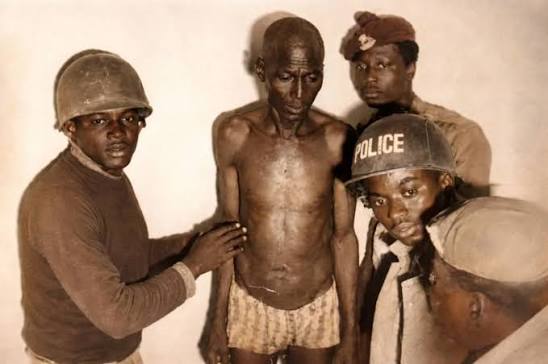
On December 18th, 1980, what began as a routine police operation to suppress a radical Islamic sect would spiral into a bloodbath that claimed an estimated 4,177 lives and forced the flight of hundreds of thousands. The radical Maitatsine sect, known locally as Yan Tatsine, had long operated on the margins of Kano's teeming, impoverished neighbourhoods. Their leader, Muhammadu Marwa, a charismatic preacher who rejected the authority of the hadith and declared himself a prophet, had built a fortified enclave among the city's most desperate. When security forces moved to suppress his activities, they found themselves facing an armed insurrection. Thousands of sect members, armed with improvised weapons and firearms, surged through the streets. They attacked established mosques that rejected their teachings, slaughtering civilians who refused to convert. The Kano Municipal area, specifically the Shahauci and Yan Awaki districts, became a war zone. The federal government responded with overwhelming force. President Shehu Shagari deployed the 3rd Infantry Division. The military shelled the sect's enclave. Marwa was wounded during his escape and died shortly after. The government established the Aniagolu Commission to investigate. The ripple effects extended far beyond Kano's burning streets. In the aftermath, Nigerian authorities ordered the mass expulsion of hundreds of thousands of West African immigrants and their families.
About two years later, on October 26th, 1982, the police had arrested 16 sect members for preaching without a licence. When officers attempted to search their buildings in the Bulumkutu district of Maiduguri, the zealots resisted. The confrontation escalated into violence that spread like wildfire through the Borno State capital. For six hours, heavily armed police reinforcements waged a counter-offensive against the Maitatsine fighters. By the time the smoke cleared, at least 300 people lay dead, with some estimates suggesting the toll was far higher. The Borno State Government established a Commission of Inquiry. The 1982 Bulumkutu uprising was significant for what it revealed: the Maitatsine movement was a resilient, adaptable insurgency capable of reconstituting itself after the death of its leader. A new leader had emerged, Musa Makaniki, who would go on to lead a later uprising in Yola. The tragic cycle had begun: suppression, resurrection, violence, suppression.
When the Maiduguri crackdown made national headlines, police in Kaduna attempted a preemptive raid on a suspected Maitatsine hideout three days later. The sect members had fortified residential buildings in the Rigasa and Tudun Wada districts, which were narrow alleyways that would become death traps for security forces. What unfolded was an urban siege. The sect used child soldiers, a tactical innovation that foreshadowed Boko Haram's later practices. They ambushed security forces in the labyrinthine alleyways. The Nigerian Army was forced to deploy helicopters for aerial bombardment. The neighbourhoods were placed under military occupation. The death toll reached approximately 1,500.
On February 27th, 1984, sect members escaped from jail. Led by Musa Suleiman (the disciple of Marwa better known as Musa Makaniki) they went on a rampage through the crowded Jimeta marketplace, targeting Christians and moderate Muslims with deliberate precision. The death toll was staggering: 718 confirmed killed, 607 injured. Approximately half of Yola's 60,000 inhabitants were left homeless. The Nigerian military was deployed once again. The Council of State ordered an investigation.
The final major Maitatsine uprising erupted in Gombe's Pantami ward in April 1985. When police attempted to arrest sect members led by Yusuf Adamu, the confrontation escalated into a full-scale armed insurrection. More than 100 people died. The Bauchi State Government imposed a strict curfew. The state's military governor, Brigadier Sani Sami, declared that anyone found outside between 6 p.m. and 6 a.m. would be considered a fanatic and “shot on sight.” A total of 146 suspected sect members were arrested. The movement's survivors and ideological heirs would later form the core of what became Boko Haram.
The 1987 Kafanchan riots introduced a new, more organised dimension to Nigerian religious violence. A Christian pastor with a Muslim background made remarks about the Koran considered offensive by Muslim students. Violence erupted at the College of Education and quickly spread to the town and then to major cities (Zaria, Kaduna, Katsina). At least 25 people died. More than 100 churches were burned. Homes, businesses, and vehicles were destroyed. Unlike the Maitatsine revolts, which were driven by a radical Islamic sect attacking the state, the 1987 riots were a communal conflict in which organised Muslim groups attacked Christians, their churches, and associated businesses. Rioters were paid, bussed in from outside Kaduna, and given specific targets. The Babangida military government banned all special religious associations and organisations in all institutions of higher learning. A five-member judicial tribunal was established to try detainees, with the power to impose the death penalty.
In March the following year, the foundation walls of a Christian Chapel under construction on Kaduna Polytechnic's main campus were destroyed, an act of desecration that triggered fierce confrontation between Christian and Muslim student groups. The violence spilled over into the surrounding neighbourhoods of Tudun Wada. The Military Government of Kaduna State, led by Lieutenant Colonel Abubakar Umar, imposed a curfew and ordered the immediate closure of the Polytechnic. At least 10 people were injured.
The 1990s
2,337
Deaths
851
Injured
On April 19th, 1991, a publication allegedly insulted the Prophet Muhammad. Followers of the Shiite Islamic Movement in Nigeria, led by the Katsina-based cleric Mallam Yakubu Yahaya, mobilised a crowd of 20,000. They stormed a Daily Times sales outlet, forcibly removed copies of the offending publication, and burned them. The situation turned into chaos. Buildings and cars were set ablaze. Widespread destruction followed. Approximately 200 people were arrested. The military governor imposed an overnight curfew. The government established a federal commission of inquiry.
In Tafawa Balewa, in April 1991, a dispute over a municipal abattoir sparked a fierce confrontation in the town of Tafawa Balewa, Bauchi State. Christians used the facility to slaughter pigs and dogs, which Muslims consider ritually impure. Christians refused a local government proposal to move their slaughtering to a different location. The violence spread to Bauchi city the next day when Muslims saw the bodies of their co-religionists in the morgue. At least 48 people died. Dozens of churches were burned. Homes and businesses were destroyed.
The Bauchi State Government imposed a dusk-to-dawn curfew, banned all public gatherings, and deployed police and soldiers to restore order. A federal commission of inquiry chaired by Justice Babalakin was established to investigate.
The 1991 Tafawa Balewa riot was one of the first major ethno-religious conflicts in the newly created Bauchi State. It established a deadly pattern: violence over an ostensibly local issue that quickly escalated into communal warfare with national implications. The government's failure to address the underlying grievances, including ethnic rivalry, control of local government, and the demand for a separate Sayawa chiefdom, meant that Tafawa Balewa would erupt again in 1995, 2001, 2005, 2010, 2011, and beyond.
The violence that began in Tafawa Balewa spilled over into the state capital. Christians and Muslims attacked each other in the urban center. Churches and mosques burned. Widespread destruction followed. More than 200 people died in this second wave, a significant escalation from the 48 deaths reported the previous day. The military's response was delayed, with the army not deployed until the second day of rioting. By then, Christians had gone on the offensive with automatic weapons.
In Katsina, ongoing clashes between Islamic fundamentalists and police in Katsina had resulted in at least 10 deaths and the arrest of 263 individuals by January 8th, 1992. These confrontations were a continuation of the religious violence that had first erupted in Katsina in April 1991. The government arrested over 260 people, with many held without trial, as documented by Africa Watch. The ongoing violence followed the swearing-in of a new civilian governor, Saidu Barda, on January 2nd, 1992. Shi'ite leader Mallam Yakubu Yahaya and his followers were put on trial for their involvement in clashes with the police.
In Zangon-Kataf, Kaduna State, a dispute over the relocation of the central market in Zangon-Kataf town, Kaduna State, escalated into violent confrontations. The first Atyap chairman of the Zangon-Kataf Local Government Council had announced that the weekly market would be moved from the Hausa-dominated town center to a “neutral” site on the outskirts. The Hausa community resisted, arguing that the new site was part of the Muslim annual Eid praying ground. On February 6th, the Thursday market day when the new site was to open, a Hausa resident organised a mob to disrupt the proceedings. The killing of an Atyap man at the new market site served as the immediate trigger for a full-scale communal riot. The Kaduna State Government established a Judicial Commission of Inquiry. However, the perceived failure to arrest and prosecute the instigators led to a breakdown in trust, directly fueling the far deadlier “May Massacre” three months later.
Simultaneously, in Wukari environs, Taraba State, a major communal crisis erupted involving Tiv and Jukun militias. The violence led to widespread destruction, with thousands affected. At least 100 people were killed. The violence was part of a larger, protracted conflict that had been brewing since 1990. The immediate trigger in September 1990 was a dispute over a piece of land in Nwuban, Katon Bagha District, which escalated into attacks and counter-attacks. The conflict peaked in 1991-1992, affecting almost all settlements and witnessing the systematic destruction of villages and the displacement of thousands. Tiv villages between Wukari and Gidan Idi were forcibly ejected, and Jukun villages were established in their place. The violence represented a decisive rupture in Tiv-Jukun relations: intermarriage became rare, mistrust deepened, and inflammatory publications by both sides further poisoned the atmosphere.
The Zangon-Kataf conflict escalated sharply when Kataf militias launched a major attack on Hausa-Fulani settlements, killing scores of people in what became one of the deadliest single days of the crisis. The attack triggered a new wave of reprisals, arson, and displacement. The death toll reached 1,528 killed, 518 injured. Over 60,000 people fled their homes. The violence spread to Kaduna, Zaria, and Ikara. President Ibrahim Babangida visited the ruins of Zangon-Kataf and described it as a “national tragedy.” He established the Civil Disturbances Special Tribunal, which eventually sentenced Atyap leader Major-General Zamani Lekwot and several others to death (sentences later commuted). The military used “shoot-on-sight” orders and helicopters to clear the streets in Kaduna city.
On January 19th, 1993, there was a violent attack by the radical Kalakato (Kala Kato) religious sect in Funtua, Katsina State. The attackers assaulted a local village head and burnt down a police vehicle. The sect members went on a rampage, leading to the deaths of an estimated 50 people and widespread destruction of properties. The Kala Kato sect, like Maitatsine, rejected the authority of the Hadith and followed only the Quran. This put them at odds with mainstream Islamic groups. The sect emerged in the 1980s as a militant faction.
The attack on a symbol of local authority mirrored the Maitatsine's targeting of traditional rulers and police. This pattern of sectarian violence would continue to manifest in Nigeria for decades, most notably in the Boko Haram insurgency, which shares ideological roots with these earlier movements.
On April 12th, 1994, the military governor of Plateau State appointed Alhaji Aminu Mato, a Hausa-Fulani, as the Sole Administrator of the newly created Jos North Local Government Area. This decision was met with immediate and fierce opposition from indigenous ethnic groups (Berom, Anaguta, and Afizere) who felt marginalised. Protests and riots erupted, leading to violent clashes between the indigenous groups and the Hausa-Fulani community. The crisis resulted in the burning of part of the Jos Main Market. Five people died. The Plateau State Government established the Justice J. Aribiton Fiberesima Commission of Inquiry to investigate the causes, identify culprits, assess property damage, and recommend ways to prevent future occurrences.
The 1994 Jos riots were a watershed event, marking the beginning of a protracted cycle of ethno-religious violence in Plateau State. The conflict over political appointments in Jos North LGA would be repeated with even deadlier consequences in 2001, 2008, and beyond.
In Goron Dutse Prison, Kano, December 26th, 1994, Gideon Akaluka, an Igbo Christian trader, was beheaded while in police custody. Akaluka had been arrested following allegations that his wife had used pages of the Quran as toilet paper for their baby. While being held at Goron Dutse Prison for his own “protection,” a mob of radicalised youths scaled the prison walls, overpowered the guards, beheaded him, and paraded his severed head on a spike through the streets of Kano.
The police were heavily criticised for their failure to protect a suspect in their custody. The military government under Sani Abacha moved swiftly to suppress further rioting, as the event threatened to trigger a massive ethnic war between the Igbo and Hausa communities. Several arrests were made, but the masterminds were never brought to justice. This pattern would be repeated in the 2022 killing of Deborah Samuel in Sokoto.
In May, 1999, violent ethno-religious riots erupted between Christians and Muslims in Kaduna, the state capital. The immediate trigger was a dispute over the succession of an Emir, though broader tensions stemmed from the federal government's consideration of Sharia law. More than 100 people died. The Nigerian military was deployed to restore order after the police were overwhelmed.
In February the following year, the Kaduna State government announced its intention to introduce Sharia law. In response, the Kaduna branch of the Christian Association of Nigeria organised a peaceful protest march. Thousands of Christians assembled at churches and marched through the streets chanting “No to sharia!” The march was attacked by Muslim youths. Widespread, deadly clashes erupted. The violence, which lasted several days, quickly spiraled out of control. Massive destruction occurred on both sides. The fighting spread beyond Kaduna city to other parts of the state.
The death toll reached 1,295. More than 200,000 people were forced to flee their homes, many seeking refuge in army barracks and police stations. The military was deployed after police were overwhelmed. A 24-hour curfew was imposed. The federal government eventually suspended the implementation of Sharia law in several states.
The 2000s
5,631
Deaths
1,405
Injured
36
Kidnapped
The February 2000 riots were the first wave of what became known as the “Sharia 1” crisis, the single worst outbreak of violence in Nigeria since the 1967-70 civil war.
Just as the city was beginning to stabilise from the catastrophic February riots, a second wave of violence erupted. The trigger was the discovery of the body of a local resident in a religiously contested area, which quickly spiraled into fresh rounds of reprisal killings. This wave was shorter but arguably more intense. Both sides were now heavily armed and organised into community defense militias. Entire districts that had survived February were targeted and burned. The clash was ignited after the discovery of the body of a Christian in the Narayi district, triggering fighting between residents of the predominantly Christian Narayi and the largely Muslim neighbouring community of Barnawa. More than 300 people died. The military, already on high alert, intervened more rapidly than in February, using “shoot-on-sight” orders to break up mobs. Among the dead was a member of the House of Representatives, Ibrahim Abdullahi, who was killed by rioters who mounted a roadblock on the Kaduna-Abuja expressway. Governor Ahmed Makarfi subsequently fast-tracked the “Tripartite” legal system as a compromise to ease the Sharia debate.
In Bambam, Gombe State, Muslims and Christians held simultaneous pro- and anti-Sharia marches on September 7th, 2000 that initially ended peacefully around noon. But chaos erupted shortly afterward. Armed marauders, reportedly joined by attackers from neighbouring communities, indiscriminately assaulted residents of both faiths, burning homes, shops, and places of worship while shouting religious slogans. Twenty-five people died. The Gombe State Government deployed mobile policemen to the area. Because Gombe lacked a major military formation, the Governor requested a battalion of troops from the Federal Government.
In response, Governor Hashidu established an inter-religious council to promote religious harmony and study the implications of implementing Sharia law. The committee's report, presented in November 2000, recommended against the introduction of Sharia law with over 98% of respondents opposed to its implementation.
On February 24th, 2001, a violent riot broke out in Gombe town following a visit by the Israeli Ambassador to Nigeria on February 20th. The protesters, primarily young members of the Shia Islamic sect, took to the streets to demonstrate against the ambassador's presence, viewing it as an affront to the Muslim community during a period of heightened tension over Sharia law. When police attempted to disperse the crowd and ban the protest, clashes erupted. The rioters went on a rampage, setting fire to Calvary Baptist Church and another church building, and destroying other Christian properties. During the confrontation, police were forced to use live ammunition when they discovered the rioters were armed with “sophisticated military weapons.” Five people died, 50 were injured. Forty Muslims were arrested. Governor Abubakar Hashidu confirmed the deaths, assured Muslims that the administration would implement the Sharia legal system, and urged them to remain calm.
On June 13th, 2001, a dispute arose between Tiv farmer Iortimin Umande and Fulani cattle pastoralists over a herd trespassing into a farm in Tse Ikyambe/Tsokundi District, Wukari LGA. The clash escalated, leading to the death of one person. The single fatality did not immediately escalate into large-scale violence. But a subsequent Fulani retaliatory attack on the Tiv settlement of Zegeate on June 23rd triggered a chain of reprisals. By September, the conflict had exploded into full-scale ethnic warfare. On October 10th, Tiv militia ambushed and killed 19 soldiers, prompting massive military reprisals against civilians in Benue State. The 2001-2002 conflict remains one of the deadliest episodes in the long history of Tiv-Jukun violence.
In Gwaram, Jigawa State, June 21st, Muslim youths set fire to 15 church buildings, destroying them completely. At 14 of these churches, the pastor's residence was also torched, leaving the pastors and their families homeless. The 15th pastor escaped having his home burned because he rented a house owned by a Muslim. The Barnabas Fund, a Christian charity, documented the attacks and appealed for assistance for the displaced pastors and their families. The attacks occurred after the introduction of Sharia law in Jigawa State in 2000, which heightened religious tensions and empowered hardline Muslim vigilantes.
Fulani militias attacked Tor Damisa village, Donga LGA, Taraba State on July 2nd, 2001. Twenty people died. The federal government deployed troops to the area to quell the violence. However, soldiers later became embroiled in the conflict, and in October 2001, 19 soldiers were killed by a Tiv militia, leading to massive military reprisals against Tiv villages in Benue State, resulting in over 200 deaths.
Following a massive ethno-religious eruption in June and July 2001, the Tafawa Balewa and Bogoro areas of Bauchi State experienced a second wave of coordinated violence. The Church of Christ in Nigeria and other Christian organisations reported that Muslim mercenaries, described as armed groups in mobile police and army uniforms, launched lethal raids on Sayawa-majority villages. More than 100 people died. At least 3,000 were displaced. The Federal Government deployed anti-riot police and military units to create a buffer zone. However, the area remained unsafe for weeks, with the Nigerian Red Cross reporting difficulty in accessing victims due to ongoing guerrilla-style skirmishes.
On August 13th, 2001, a Fulani man was killed and another injured by Tiv militias at the cattle market along Katsina Ala Road, Wukari LGA. The attack was part of the wider 2001-2002 escalation of the Tiv-Jukun conflict. The cattle market was a known flashpoint, and the attack fits a pattern of increasingly organised violence. On September 5th, 2001, Ikyaior community in Katsina-Ala LGA, Benue State, was attacked. Fourteen people were killed —12 Tiv and 2 Igbo. Chonku village in Wukari LGA was attacked by Tiv militias on the same day. Casualties unspecified. The following day, Jootar community in Ukum LGA was attacked, leaving three people dead.
On September 7th, 2001, mass violence erupted in Jos, Plateau State, triggered by the controversial appointment of a Muslim, Alhaji Mukhtar Mohammed, as the local coordinator of the federal poverty alleviation programme for Jos North LGA in August 2001. Approximately 1,000 people died, 500 were injured, and 50,000 were displaced. The Plateau State government imposed a 24-hour curfew and sealed the state's borders. The military was eventually deployed and succeeded in restoring order after the police proved unable to control the situation. The 2001 violence destroyed Jos's image as the “Home of Peace and Tourism.” It shifted the conflict from purely political to existential. This period saw the first widespread use of mass graves in the city's history.
In Gboogboo, September 8th, 2001, there were multiple attacks on different Benue communities. Gboogboo community in Katsina Ala LGA was attacked, resulting in two deaths. Toho Abanyi village in Katsina Ala LGA was also attacked, leaving two people dead. Three vehicles were burnt at Jootar along with passengers, resulting in fatalities. Four days later, Jandekyura community in Wukari LGA was attacked by Fulani militias. Casualties unspecified. On the same day, police reported that Tiv militias killed one of their officers in Jandekyura. The attack showed escalation into direct confrontation with state security forces. The following day, Sondi and Jandekyura communities in Wukari LGA were attacked during ongoing clashes. Casualties unspecified. The following day, Gur village near Jootar in Ukum LGA was attacked by communal militias. Casualties unspecified. On the same day, Fyayi village in Wukari LGA, Taraba State, was destroyed by Tiv militias. Casualties unspecified.
The following day Jukun militias attacked Vaase community in Gboko LGA, Benue State, killing one mentally ill person. Also on September 15th, Fulani militias attacked Vaase village in Gboko LGA. Casualties unspecified. Two days later, Tiv militias attacked Rafin Kada community in Wukari LGA, Taraba State. Casualties unspecified. Three days later, Tiv militias burnt down Arufu, Ikwe, and Akwana communities in Wukari LGA, Taraba State. Casualties unspecified.
September 25th, 2001, Tiv militias attacked Chinkai community, killing one person and injuring four. The attack reflected the persistence of violence in Wukari villages. On September 26th, Tiv militias attacked Chinkai community again, casualties not specified. OnOctober 1st, 2001, Tiv militias attacked Rafin Kada again, killing two boys and injuring three. The operation lasted four hours and twenty-five minutes. Three days later, Tiv militias attacked Dooshima village and mounted a roadblock, which was dismantled by combined Fulani, Jukun, and Hausa youth.
On October 7th, 2001 Muslim youths attacked three church buildings and ten Christian-owned shops in Kaduna city, using gas bombs to set the structures on fire. The attack occurred as tensions were already high because of the United States military strikes against Afghanistan earlier that month and lingering religious divisions over the introduction of Sharia law. Police launched an investigation, patrolled the streets heavily, and imposed a curfew. The Kaduna State Government stated that only one church had been damaged and that the cause of the fire was unclear. The attack occurred just days after the United States began military strikes in Afghanistan on October 7th, a context that likely emboldened Islamist sentiment in Kaduna's predominantly Muslim district, as evidenced by posters of Osama bin Laden appearing in the area.
On the same day, Abako community in Kastina-Ala LGA, Benue State was attacked during the Tiv–Jukun communal crisis. Casualties unspecified. Three days later, Tiv militia captured 19 soldiers at Vaase, moved them to Zaki-Biam, and killed them. The targeted killing of state security actors became a critical turning point, provoking sustained military reprisals.
On October 13th, 2001, Dan-Anacha community in Gassol LGA, Taraba State was attacked during Tiv–Jukun clashes. Casualties unspecified.
Between October 22nd and 24th, following the abduction and brutal killing of 19 Nigerian soldiers by a Tiv militia on October 10th, the Nigerian Army launched a coordinated reprisal operation between October 20th and 24th. Soldiers from the 23rd Armoured Brigade went from village to village, rounding up unarmed Tiv civilians, separating the men from the women and children, and then executing them. At least 200 people were killed, 100 injured, and 40,000 displaced. The Nigerian government initially defended the troop deployment, describing it as a peacekeeping mission. President Olusegun Obasanjo described the killings as “most reprehensible and most regrettable.” In 2007, a Federal High Court awarded N41.8 billion in damages to the victims.
On November 18th, 2001, one Fulani man was killed at Asaa, a Jukun village, by Tiv militias.
Mallam Wuryeba Adunga Yerima Aston was killed by Tiv militias in Ason, Wukari LGA, Taraba State, and his body dumped in a well.
On December 5th, 2001, Tiv militias killed 300 cows belonging to Fulani herders in Tsokundi, Wukari LGA, Taraba State. Four days later, three Jukuns were shot by Tiv militias in Chinkai, Wukari LGA, Taraba State. The following day, a Fulani and a Jukun were shot by Tiv militias in Nwuben, Wukari LGA, Taraba State. A week later, Tiv militias attacked Chinkai, Wukari LGA, killing two people and badly injuring four others.
The following year, January 6th, 2002 Tiv militias attacked Rafin Kada, killing a woman. On January 20th, 2002, Tiv militias attacked Bantage community, shooting four people and setting a farm ablaze. The following day, Tiv militias attacked Sondi community, injuring a woman.
On February 12th, Tiv militias kidnapped five Jukun women in Sondi community. The gender-targeted abductions showed how women were deliberately targeted in the conflict. Also on the same day, Tiv militias burnt two vehicles in Tsokundi community, injuring two people.Three days later, Tiv militias rustled seven cows in Chinkai community. The following day, Tiv militias rustled 30 cows from Yantukpa and transported them to Benue State. On the same day, a pickup van was seized at Sondi by Tiv militias. On February 18th, 2002 Tiv militias killed and beheaded a Fulani man along Rafinkada road. Days later, on February 26th, Tiv militias killed an Achaba (motorcycle taxi) boy in Ikyaior village after he conveyed Tiv passengers home. His motorcycle was taken away.
On March 16th, Tiv militias killed two Fulani men at Tsokundi road, slaughtered over 40 cows, and took seven herds of cattle to Benue State.
In November, what began as a religious protest against Nigeria hosting the Miss World Beauty Pageant escalated into a catastrophic sectarian conflict. The flashpoint was an article published by ThisDay Newspaper on November 16th, which suggested that the Prophet Muhammad would have approved of the pageant and might have chosen a wife from among the contestants. This was deemed blasphemous by many Muslims. Over three days, mobs burned the ThisDay office in Kaduna, leading to a tit-for-tat cycle of violence between Muslim and Christian neighbourhoods. At least 250 people were killed, 300 injured, and 30,000 displaced. The Federal Government deployed the military to restore order. A fatwa was issued against the journalist who wrote the article by the Zamfara State government, though the Federal Government declared it null and void. The Miss World pageant was eventually moved from Abuja to London.
In the early hours of April 22nd, 2003, a house fire broke out at the home of Pastor Sunday Madumere, a Baptist preacher, located on Apple Avenue in the “no-man's land” area of Kano city. Pastor Madumere, his wife, their three children, and two male relatives were trapped in the inferno and died. Their son Daniel escaped but sustained serious injuries and was hospitalised in critical condition. Christian leaders in Kano firmly believed that Muslim militants deliberately set the fire, pointing to Pastor Madumere's powerful preaching, which had led many Muslims in the city to convert to Christianity. The Nigerian Fire Service took more than two hours to bring the blaze under control. Police authorities investigated and initially suggested an electrical fault, while Christian leaders publicly rejected that theory and called for justice. No immediate arrests were reported.
In November, a female Christian student of the Federal Government Girls College in Kazaure, Jigawa State, allegedly insulted the Prophet Muhammad during an argument with Muslim classmates. Tensions simmered for over a month as some Muslims publicly called for the student to be punished. On the evening of November 18th, a group of youths marched on the school to demand she be handed over. Anti-riot police and the Emir of Kazaure arrived to prevent mob justice, but a policeman fired a shot, dispersing the crowd. The youths then went on a rampage, burning churches, homes, and shops. Thirteen churches were burned, over 50 shops destroyed, and numerous homes damaged. One person was injured. Police and the Emir intervened, a curfew was imposed, and an investigation was launched.
On January 7th, 2004, Armed confrontation between Boko Haram members and a local vigilante group outside Damboa town, resulted in deaths and arrests of sect members carrying automatic weapons. Seven people died. The vigilante-led interception was one of the earliest documented instances of vigilantism against the sect.
On February 24th, 2004, Armed Muslims attacked the town of Yelwa in Plateau State, with the most brutal assault concentrated on a church compound where worshippers had sought refuge. The attackers, described as a well-armed gang wearing black overalls and using sophisticated weapons including automatic rifles, pursued Christians to the Church of Christ in Nigeria (COCIN) compound and killed them. At least 48 people were killed inside the church compound, with the total death toll exceeding 75 Christians. Several churches were destroyed. The Red Cross provided first aid and established camps for the displaced in Bauchi State, distributing food, tents, blankets, and buckets. Approximately 2,500 people were displaced.
Weeks later on March 17th, an angry mob of Muslim youths attacked Christian targets in Dutse, the capital of Jigawa State, following a magistrate's court ruling. A local magistrate ordered that a Muslim man, Alhaji Ibrahim Adamu, be remanded in prison custody without bail after he failed to appear in court on charges related to a previous arson attempt. The youths, armed with petrol in jerry cans, set fire to at least three church buildings: the Redeemed Christian Church, Calvary Church, and Living Faith Church. The mob also set fire to the Inland Guest Palace Hotel. Christian families were forced to flee their homes and seek refuge at the state police command headquarters. The Jigawa State Deputy Governor condemned the burning of the churches as “unfortunate and shameful.” Armed policemen were deployed to patrol the town. No arrests were initially made.
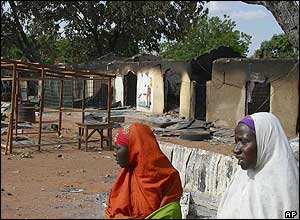
Between May 2nd and 4th, a large, well-armed militia force, primarily from the predominantly Christian Tarok ethnic group, surrounded and attacked the town of Yelwa in Plateau State. The attackers, some in uniforms and others stripped to the waist, were armed with sophisticated weapons, including machine guns, as well as machetes. They went house-to-house, killing residents, the vast majority of whom were Muslims from the Fulani and other groups. Approximately 700 people were killed, 60 injured, and 10,000 displaced. The attackers also abducted women and children; some of the women were reportedly raped. The town suffered massive destruction, with homes, a mosque, and other buildings burned and razed. The Nigerian police and military were notably absent during the two-day attack. Reinforcements were only deployed after hundreds of people had already been killed. A curfew was eventually imposed, and security forces were ordered to shoot trouble-makers on sight.
On June 1st, 2004, a violent internal attempt by detained members of the "Nigerian Taliban" (Al-Sunna Wal-Jamma) to escape the state prison. Four people died. Lethal force was used by prison authorities, followed by a “hardline” search for other cell members in the capital.
On September 23rd, a coordinated militia attack by Boko Haram splinter group on police stations in Gwoza and Bama towns, followed by tactical retreat to Mandara Mountains. A two-day military operation with aerial support was deployed, including ground troops and two gunship helicopters. Cross-border pursuit into Cameroon resulted in the arrest and deportation of five fleeing militants. Thirty-three people died.
On October 10th, a cell of the “Nigerian Taliban” ambushed a convoy of about 60 policemen near Kala-Balge town, Borno State, close to the border with Chad. The police had been sent to pursue the militants following earlier clashes along the Cameroonian border. During the patrol, a police vehicle carrying munitions became stuck in deep mud. As the officers tried to free it, the militants opened fire, causing the vehicle to explode. Three officers were killed instantly and several others wounded. Twelve policemen were captured and taken hostage. According to sources, the 12 captives were subsequently executed, though their bodies were never recovered. A joint team of police, army and air force units with helicopters was deployed, and the militants were driven from the Limankara hills into the swampy Lake Chad plain.
On September 20th, an irate mob of Muslim youths went on a rampage in Dutse, the capital of Jigawa State, looting and setting ablaze 10 worship centres (churches), approximately 20 shops, and several Christian homes. The violence was sparked by an alleged blasphemous comment about Prophet Muhammad by a Christian woman named Jummai. Six people were injured. The destruction specifically included St Peter's Anglican Cathedral, which was burned to the ground, along with the Bishop's office and car port. Reports indicated that only about three of approximately 15 churches in the town remained standing. Police used teargas to disperse demonstrators. A night-time curfew was imposed on Dutse. The Sultan of Sokoto decried the use of religion as a tool for violence.
The following year, April 13th, 2007, Sheikh Ja'afar Mahmud Adam, Nigeria's most influential Salafi scholar, was assassinated while leading the early morning prayers at the Indimi Mosque in Kano. Gunmen in Western attire entered the mosque and opened fire on the Sheikh at close range, killing him and a member of the congregation. The assassination triggered nationwide mourning and a massive security investigation. However, for years, the case remained unsolved, though internal insurgent documents later confirmed it was an ideological hit.
In Tudun Wada, Kano, a Muslim rampage in the Tudun Wada Dankadai area of Kano State on September 28th resulted in the deaths of multiple Christians, the destruction of church buildings, and the displacement of hundreds of residents. The violence began when Muslim high school students claimed that Christian students had drawn a cartoon of the Prophet Muhammad on the wall of the school's mosque. Nine Christians were killed, 72 injured, and over 500 displaced. Torched churches included St. Mary's Catholic Church, St. George's Anglican Church, Evangelical Church of West Africa (ECWA), Assemblies of God Church, First Baptist Church, Mountain of Fire and Miracles Church, and several others. The Tudun Wada chief of police sealed off the area, and local authorities transported Christians out of the area and removed all corpses, likely to obscure the true death toll. Nigerian Vice President Goodluck Jonathan later pledged that the new regime would convene a national religious conference to address the cycle of religious violence.
On November 28th-29th, 2008, violent clashes erupted in Jos, Plateau State, following local government elections. Disputes over alleged electoral irregularities and perceived manipulation of results triggered communal violence between Christian and Muslim groups. Approximately 500 people were killed, 300 injured, and over 10,000 displaced. The Nigerian army was deployed and a 24-hour curfew was imposed. President Umaru Yar'Adua ordered troops to enforce order. Governor Jonah Jang challenged the federal panel in court, questioning its constitutionality.
On December 27th, an ethnic crisis erupted in Takum following the alleged killing of a Jukun youth by Kuteb youths. The single incident sparked a violent communal clash between the two groups, resulting in significant casualties and mass displacement. At least 20 people died. Thousands of residents took refuge in the local military barracks. Governor Danbaba Suntai publicly reacted to the crisis, expressing pessimism that the killings among the communities would ever end.
On the evening of June 11th, 2009, a detachment of “Operation Flush II,” a controversial police and military task force, intercepted a group of Boko Haram members who were on a funeral procession in Maiduguri. An armed member of the unit opened fire after questioning why the mourners were riding motorcycles without wearing crash helmets. Seventeen members of the sect were wounded, with some sustaining fatal injuries. The Borno State Government did not condemn the incident. Within days, the sect's leader, Mohammed Yusuf, delivered a firebrand sermon vowing reprisal and directing his followers to arm themselves for self-defence and eventual jihad.
On July 26th, 2009, around 70 heavily armed members of the Boko Haram sect launched a pre-dawn assault on a police station in the Dutsen Tanshi area of Bauchi. The attack, which occurred in retaliation for the recent arrests of the sect's leaders, was quickly repelled. Security forces responded by raiding the group's hideouts. Fifty-five people died. President Umaru Yar'Adua ordered a nationwide security sweep. The Bauchi state governor imposed a night curfew on the city.
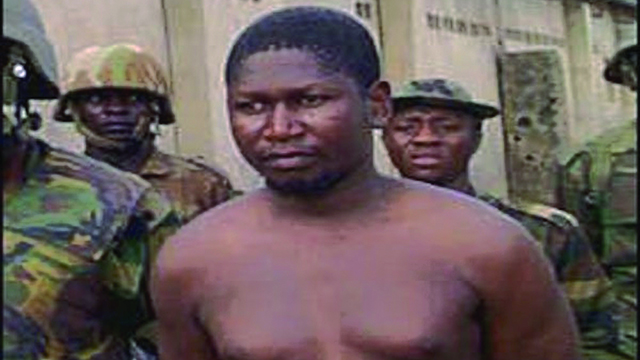
Four days later, following days of intense urban warfare during the first major Boko Haram uprising, the group's founder and spiritual leader, Mohammed Yusuf, was captured by the Nigerian Army. He was reportedly found hiding in a goat pen at his parents-in-law's house. Yusuf was transferred to the custody of the Nigeria Police Force, where he was interrogated. Shortly after the transfer, Yusuf was killed while in police custody. Although authorities initially claimed that he was shot while trying to escape, a video later emerged showing him under interrogation while in handcuffs before being executed. The execution drew international condemnation and led to the prosecution of several police officers, though most were later acquitted.
On December 6th, a herdsman led his cattle into a rice field, causing a confrontation with local farmers. During the ensuing clash, a farmer was killed. Police were deployed to the area to calm the situation.
On December 18th, armed pastoralists from neighbouring Kogi and Taraba states attacked the farming village of Udeni Gida in Nasarawa State. The attackers besieged the village, opened fire on unsuspecting villagers, and burned scores of houses and crops. The violence was a direct reprisal for the December 6th clash. Thirty-two people died. Police and troops were redeployed to the area. A tense calm was restored, but tension remained high as the invading herders were still hiding in the bush around the village.
The 2010s
8,710
Deaths
5,452
Injured
747
Kidnapped
On January 19th, 2010, around 10 a.m., large numbers of armed men surrounded the predominantly Muslim mining village of Kuru Karama, about 30 km south of Jos, Plateau State. They hunted down residents who had sought refuge in homes and a local mosque, killing many as they tried to flee, and burning others alive. Approximately 300 people were killed, and 18,000 displaced. The attackers also threw scores of corpses into wells and sewage pits. An imam wounded in the attack said a Christian pastor tried to stop the assault but was beaten by the mob. The military eventually provided escorts for Muslim officials to enter the destroyed town to retrieve bodies for mass burial.
On March 7th, in one of the most brutal episodes of ethno-religious violence in Nigeria's Middle Belt, hundreds of armed men launched a coordinated pre-dawn raid on the village of Dogon Nahawa and the neighbouring hamlets of Ratsat and Jeji. Attackers surrounded the villages and, using a classic “surround-and-strike” tactic, fired shots into the air to flush residents out of their homes. As people fled, they were intercepted at the village exits and hacked to death with machetes. Approximately 500 people were killed, and over 1,000 displaced. The victims were predominantly women, children, and the elderly. The attack lasted approximately three hours. Acting President Goodluck Jonathan put security forces on “red alert” and directed troops to hunt down the perpetrators. A dusk-to-dawn curfew was imposed. The National Security Adviser was sacked. Troops eventually arrived in the villages after the attackers had left, but survivors accused security forces of failing to respond for hours despite distress calls.
In Bauchi, on September 7th, suspected Boko Haram gunmen broke locks and set fire to the Bauchi Federal Prison, allowing inmates, including Muslim extremists, to escape. Five people died, six were injured. Security forces launched a manhunt, and the state government imposed a dusk-to-dawn ban on motorcycle movement. The police commissioner said 36 prisoners had returned on their own, while 20–30 suspects were arrested.
On October 6th, two motorcycle-riding gunmen shot and killed Sheikh Bashir Kashara, a prominent Wahhabi cleric, at his home in Maiduguri. One of his students was also killed in the attack. Kashara, who was well-known for his weekly Islamic programme on Borno State-run radio, was a vocal critic of Boko Haram's ideologies. The police increased surveillance around prominent mosques, but the hit-and-run nature of the attack in the densely populated Gamboru ward made immediate arrests impossible.
Five days later, Boko Haram militants attacked the Gamboru police station in Maiduguri, Borno State. They used homemade grenades and a petrol bomb to burn the station to the ground, injuring up to three police officers. The Borno State Government and the Police Command initially downplayed the severity of the arson, attributing it to hoodlums. However, the military responded by tightening security cordons around all police barracks and administrative buildings.
On Christmas Eve, multiple bomb blasts rocked the central Nigerian city of Jos, Plateau State. At least two explosions hit the Angwan Rukuba area, with three to six additional explosions occurring simultaneously in the nearby Kabong neighbourhood. The attacks targeted crowded civilian locations, including the Kabong Satellite Market where people were making last-minute Christmas purchases. Eighty people were killed, 169 injured. Security forces fired into the air to disperse angry crowds and imposed a curfew. This incident marked Boko Haram's formal expansion into North Central Nigeria.
On December 31st, a bomb explosion struck the Mogadishu Cantonment, often referred to as the Sani Abacha Barracks, in the Asokoro district of Abuja, Nigeria's capital. The blast went off around 7:30 p.m. in the cantonment's “Mammy market,” a popular open-air area of market stalls and beer parlours where civilians, soldiers, and foreigners gathered to celebrate New Year's Eve. According to the defence minister, a device hidden in hand luggage was left in the midst of the crowd. Four civilians died, including a pregnant woman, and 26 others were wounded, 11 seriously. Security forces cordoned off the area. The military began using armoured personnel carriers to patrol Abuja's streets. President Goodluck Jonathan gave a nationwide address, condemning the “evil” and “wicked” attack, blaming it on Boko Haram and ordering security agencies to hunt down those responsible.
On February 15th the following year, a teenage female suicide bomber detonated an improvised explosive device at the crowded Damaturu central motor park in Yobe State. The blast occurred as the perpetrator was examining her luggage at the security checkpoint. Seven people died, including the bomber, and 32 others were injured. An angry mob prevented rescue workers from retrieving the bomber's remains and set the body parts on fire. Police and rescue workers evacuated the injured to Damaturu Specialist Hospital.
On March 13th, a prominent Muslim cleric who advocated non-violence and regularly spoke out against Boko Haram's extremist ideology was assassinated in Maiduguri. Imam Ibrahim Ahmed Abdullahi was shot five times at close range by gunmen who jumped out of a sport-utility vehicle as he sat outside his home, adjacent to his mosque. Witnesses said the attackers were members of Boko Haram. Despite a heavy security presence, the gunmen escaped. The assassination intensified the atmosphere of fear in Maiduguri, leading residents to avoid public spaces and mosques.
On March 13th, armed Fulani militants carried out simultaneous evening raids on Kai Village in Barkin Ladi Local Government Area, Plateau State. The attackers, described as Muslim Fulani youth, targeted a single family, killing five members identified as Martha, Philip, Bitrus, Kasiah, and Amazie. Nothing was stolen or destroyed. The Plateau State Police Command increased patrols, but community leaders criticised the response as "too little, too late" to prevent recurring raids.
On the same day, armed militants, suspected to be Fulani herdsmen, raided Gohok Village in the Vom District of Jos South Local Government Area. The attackers, utilising the cover of darkness, infiltrated the settlement in what was described as a "precision strike," resulting in a single fatality.
On April 27th, in a pre-dawn coordinated assault, approximately 70 Boko Haram gunmen launched simultaneous attacks on three strategic locations in Damboa, Borno State. The insurgents used a combination of assault rifles and locally fabricated bombs to target the town's primary security infrastructure and its economic hub. The attackers struck the local police station, the police barracks, and a branch of First Bank. They set fire to parts of the police barracks, looted the bank, and engaged security personnel in a prolonged shootout before retreating toward the nearby Sambisa Forest. Eight people died.
On May 29th, hours after the inauguration of President Goodluck Jonathan, three coordinated bombs detonated at the Shadawanka Military Barracks in Bauchi. The explosions specifically targeted a "mammy market" and a beer garden where soldiers and civilians were socialising. Thirteen people died and 33 were injured. All roads leading to the barracks were cordoned off. The Chief of Army Staff condemned the attack. Bauchi State Governor Isa Yuguda visited the victims and ordered free medical treatment. The attack triggered the permanent closure of mammy markets and beer gardens to the general public.
On June 6th, Sheikh Ibrahim Birkuti, a prominent Wahhabi cleric known for his vocal and public criticism of Boko Haram's extremist ideology, was assassinated outside his residence in Biu, Borno State. Two gunmen arriving on a motorcycle opened fire at close range before fleeing. A neighbour told AFP: “A gunman riding a motorcycle stopped outside the house and brought out a gun from under his shirt and shot him twice at close range before fleeing.” Police confirmed the attack and blamed Boko Haram.
Less than 24 hours after the assassination of Sheikh Ibrahim Birkuti, Boko Haram launched a series of coordinated strikes across Maiduguri. The attackers targeted three distinct locations: a church and two separate police posts. Police spokesman Lawal Abdullahi confirmed seven explosions across the city. The attackers hit the Gwange and Dandal police stations. A seventh bomb went off next to St. Patrick's Catholic Church. A bomb hurled at the church missed its target and landed on the street, killing two passers-by. In a shootout at the Dandal station, three gunmen were killed. Eleven people died and 10 were injured.
Two days later, suspected Boko Haram gunmen targeted the Church of Christ in Nations (COCIN) in the Railway Quarters area of Maiduguri. The attackers killed the resident pastor, Rev. David Usman, and the church secretary, Mr. Hamman Andrew. A fellow pastor recounted that the victims were shot and killed near the Railway Quarters. This was the second attack on Pastor Usman's church premises, the first occurring in July 2009 when militants burned the building and killed several congregants.
On June 16th, in a watershed moment for the insurgency, a suicide bomber drove a Mercedes-Benz laden with explosives into the parking lot of the Force Headquarters (Louis Edet House) in Abuja. The bomber attempted to trail the convoy of the then-Inspector General of Police into the secure premises. When intercepted in the car park, the device was detonated. This was the first documented suicide car bombing in Nigeria's history. Two people died and seven were injured. Police reported 33 cars destroyed and 40 partially damaged.
Four days later, a group of about 10 heavily armed Boko Haram insurgents carried out a coordinated, simultaneous assault on a police station and a commercial bank in Kankara, Katsina State. The group targeting the divisional police station killed five policemen, set free suspects from cells, and stole weapons before setting off a bomb that reduced the station to rubble. Simultaneously, the second group used a bomb to blast through the electronic door of a bank, shot dead two policemen and a security guard, and made off with cash. Seven people died in total—five police officers and two civilian bystanders.
The following day, in one of the deadliest soft-target attacks of the early insurgency, two Boko Haram gunmen on motorcycles hurled three improvised explosive devices into a crowded outdoor beer garden in the Dala Kabompi ward of Maiduguri. As patrons fled, the assailants opened fire indiscriminately with automatic weapons before speeding away. Twenty-five people died and 30 were injured. The Joint Task Force assumed control of Maiduguri. The Borno State government immediately banned the operation of all beer parlours and "viewing centres" after 6 p.m.
On July 10th, an improvised explosive device was detonated at the All Christian Fellowship Mission church in Suleja, Niger State. The blast occurred at approximately 2:00 p.m., just as worshippers were leaving the Sunday service. A bomb was thrown into the church from a passing motorcycle. Three people died and at least seven were injured. The police Anti-Bomb Squad was deployed to sweep for secondary devices.
August 25th, a large gang of heavily armed gunmen, estimated at over 15, attacked two police stations and two banks in Gombi town, Adamawa State. The attackers, who arrived in vehicles and on motorbikes, used explosives and automatic rifles to overwhelm security, freeing suspects and carting away weapons before proceeding to the banks where they shot staff and customers before looting money. Sixteen people died and seven were injured. The Adamawa State police commissioner travelled to Gombi to assess the situation.
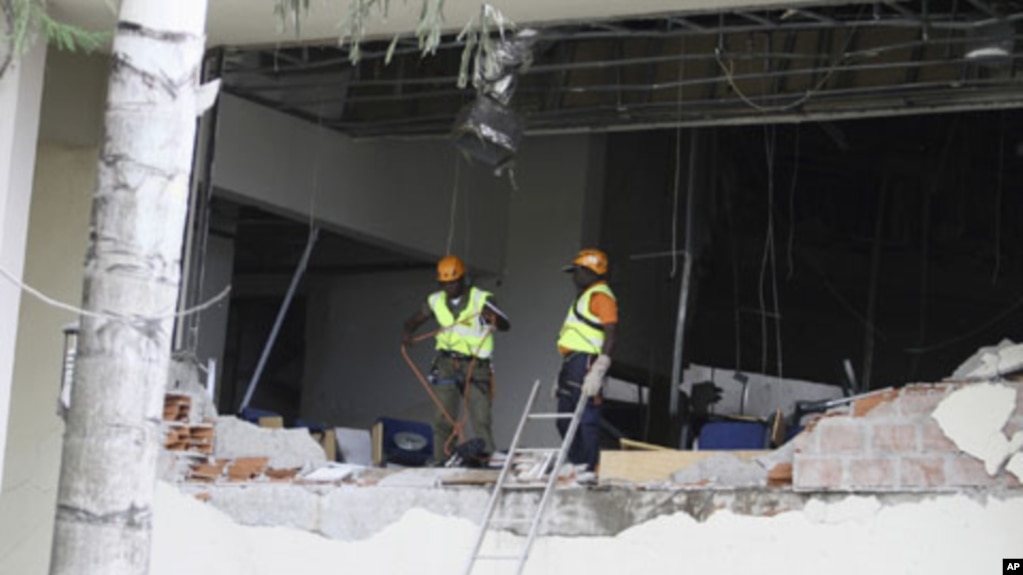
The following day, at approximately 11:00 a.m., a suicide bomber drove a Honda CR-V laden with explosives through two security barriers and rammed into the reception area of the United Nations House in Abuja's Garki district. The blast devastated the lower floors of the building, which served as the headquarters for 26 UN humanitarian and development agencies. Twenty-three people died and 80 were injured. President Goodluck Jonathan visited the scene and condemned the attack as "barbaric, senseless and cowardly." The UN Secretary-General described it as "an assault on those who devote their lives to helping others." FBI agents were deployed to assist Nigerian authorities.
On September 1st, in a brief but decisive urban confrontation, gunmen on a motorcycle suspected to be Boko Haram engaged a military patrol in a shootout in the town of Song, Adamawa State. The soldiers shot down the two motorcyclists. One suspect was killed instantly, while the other was injured and captured.
Three days later, two suspected Boko Haram militants shot a 55-year-old Muslim cleric, Malam Dala, dead at his residence in Zinnari near London-Ciki, Maiduguri. The killers parked their Peugeot 505 car at a nearby farm and walked to the cleric's house, one pulling out a rifle hidden under his gown. The cleric had received a written threat months earlier.
Eleven days later, a group of heavily armed Boko Haram gunmen launched a simultaneous assault on a police station and a commercial bank in Misau, Bauchi State. The attackers used a bomb and automatic rifles to storm the police station, killing five officers and freeing all detainees before setting the building ablaze. They then broke into a branch of Afribank, shooting a civilian guard, and stole cash. Seven people died. The Inspector General of Police ordered the Force Criminal Investigation Department in Abuja to conduct a full investigation.
On September 13th, four soldiers were shot and wounded in an ambush by members of Boko Haram in Maiduguri. The attack was a direct act of retaliation, occurring shortly after the arrest of 15 sect members during military raids on Boko Haram hideouts in the city.
Four days later, Babakura Fugu, the eldest son of the late Baba Fugu Mohammed and brother-in-law to the deceased Boko Haram founder Mohammed Yusuf, was assassinated outside his residence in the Railway Quarters of Maiduguri. The killing occurred just 48 hours after Fugu had hosted former President Olusegun Obasanjo for a highly publicised, private peace mediation meeting. A lone gunman, wearing a traditional brown kaftan, approached Fugu while he was sitting with friends and pulled an AK-47 from his robes, shooting him multiple times.
On the afternoon of Nigeria's 51st Independence Day, suspected Boko Haram gunmen targeted and shot dead an Igbo butcher at the popular Baga fish market in Maiduguri. The butcher's assistant was also killed in the same targeted attack. The gunmen used a Kalashnikov rifle hidden under their flowing robes.
In a coordinated strike on the same day, Boko Haram insurgents ambushed a military patrol vehicle tasked with delivering food supplies to soldiers. The attackers used an IED to disable the vehicle before opening fire. During the intense crossfire, several civilians were caught in the line of fire; three civilians were killed.
Two days later, suspected Boko Haram gunmen launched a second attack on the Baga Market in Maiduguri, killing three civilians. The victims were identified as a tea seller shot dead at his shop, a patent medicine owner shot at his shop, and a passer-by caught in the gunfire. The attack occurred just 48 hours after a similar targeted killing at the same market.
October 23rd, in a coordinated multi-target assault, Boko Haram insurgents attacked a divisional police station and two commercial banks in Saminaka, a key town on the road between Kaduna and Jos. The attackers used IEDs to breach security, engaging in a firefight while they looted the banks. Three people died and two were injured.
On the same day as the larger raid in Saminaka, Boko Haram gunmen conducted a drive-by shooting at a local market in Katari. Using motorcycles for high mobility, the assailants opened fire on traders and shoppers before fleeing into the surrounding forested terrain. Two people died.
The following day, two Boko Haram gunmen riding a motorcycle approached a residential compound in Damaturu. They knocked on the door of a police officer's home. The moment the officer answered, they shot him dead before fleeing on their motorcycle.
On October 29th, two Boko Haram gunmen on a motorcycle executed Sheikh Ali Jana'a, a prominent Muslim cleric, outside his residence in the Bulabulin Ngarnam ward of Maiduguri. Jana'a was an outspoken critic of the group's radical ideology and was widely known to have cooperated with the Joint Task Force by providing intelligence on insurgent hideouts.
Three days later, Boko Haram gunmen shot dead a soldier from a special military unit deployed in Maiduguri. The soldier was on duty outside the city's main Monday Market and was shot several times at close range around 11:00 p.m.
November 4th, as Governor Kashim Shettima was returning to Maiduguri from Abuja, his motorcade was targeted by an Improvised Explosive Device followed by gunfire. The blast occurred on Airport Road. According to police, the device was a "canister" that exploded near a patrol vehicle but did not hit its intended target. No one was killed or injured.
On the same day, in a coordinated, multi-hour assault, a large force of Boko Haram insurgents launched a siege on Damaturu, the capital of Yobe State. The attack began with a powerful car bomb that targeted the local anti-terrorism court building. Over the next several hours, the insurgents attacked at least three police stations, six churches, two banks, and several government buildings using a combination of car bombs, IEDs, small arms fire, and rockets. More than 150 people died and over 100 were injured. A total 24-hour curfew was imposed.
November 9th, a group of approximately 20 suspected Boko Haram gunmen launched a coordinated attack on Mainok village, along the Maiduguri-Damaturu-Kano road. The attackers targeted the police outpost, throwing explosives inside and setting the building ablaze. They then attacked the nearby Federal Road Safety Corps office, destroying the building and setting a patrol vehicle on fire. Two people died.
November 26th, a large contingent of Boko Haram militants launched a massive multi-target attack on Geidam, Yobe State. The insurgents first hurled explosives at the divisional police headquarters, freeing suspects and stealing arms before setting the building ablaze. They then rampaged through the town, attacking six churches, a high court, a shopping complex, the local government secretariat, and a bank. Four people were injured.
The following day, three suspected Boko Haram gunmen attacked the residence of Mallam Kala Boro, a senior protocol officer attached to the Borno State Government House, and shot him dead. The attackers then proceeded to the Gwange ward residence of a herbalist, Garba Abdullahi, where they fired several gunshots into his chest and head, killing him.
December 4th, a large convoy of suspected Boko Haram militants armed with heavy machine guns, rocket launchers, and homemade bombs launched a coordinated assault on the Police Area Command headquarters and two banks in Azare, Bauchi State. The assailants bombed the police buildings, setting them ablaze, then broke into the banks and emptied their safes. Three people died and two were injured.
On the same day, gunmen on motorcycles targeted a wedding ceremony in Maiduguri, opening fire on the guests. The attackers killed two people: the groom, Maduga Borikmen, and a wedding guest. Three others were wounded.
Three days later, a powerful explosion ripped through a densely populated area of shops and homes in the Oriyapata district of Kaduna city. The blast occurred at about 9:30 a.m. in a shop at No. 32 Ogbomosho Street, an area filled with spare-parts dealers and largely populated by Christian Igbos. The explosion demolished the building and damaged several neighbouring structures; body parts were scattered over the scene. Eight people died and 12 were injured. Security personnel recovered unexploded devices and bomb-making materials. The Kaduna State Police Command initially insisted the blast was accidental, but eyewitnesses confirmed it was a bomb.
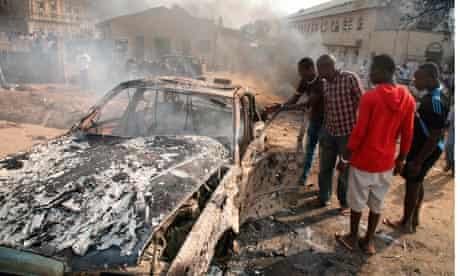
December 13th, two men in a sedan attempted to throw a bomb at soldiers stationed at a military post in the West-End area of Maiduguri. The device detonated prematurely, killing the would-be bomber. Immediately after the blast, soldiers exchanged fire with unidentified gunmen and stormed through the surrounding residential neighbourhood, allegedly shooting indiscriminately and setting homes on fire. Ten people died and 30 were injured.
Four days later, an intelligence-led raid by security forces on a suspected Boko Haram leader's house in the Darmanawa area of Kano escalated into a fierce gun battle. The shootout resulted in the deaths of three police officers and four Boko Haram members. Following the raid, police uncovered a mini bomb factory, seizing a vehicle loaded with explosives, seven rifles, 1,125 rounds of ammunition, 19 bags of ammonium nitrate, gas cylinders, detonators, and chemicals used for manufacturing IEDs.
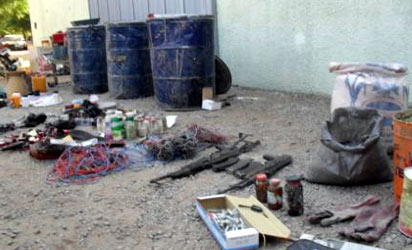
On the same day, a massive explosion rocked a house in the Shehuri II area on the outskirts of Maiduguri. The blast occurred while suspected Boko Haram members were assembling IEDs. Three unidentified sect members were killed instantly. The incident destroyed the building and damaged several neighbouring houses. Recovered items included three large drums of ready-to-detonate explosives, two AK-47 rifles with ammunition, remote-control detonators, and assorted bomb-making materials.
December 19th, in the second major "own-goal" within 48 hours, a Boko Haram bomb-making cell suffered a fatal accident in Damaturu. While attempting to prime a homemade explosive device in a residential hideout near the Emir's Palace, the device detonated prematurely. One insurgent died and two were seriously injured.
Three days later, a major confrontation erupted between Boko Haram insurgents and Nigerian security forces in the Pompomari district of Damaturu. The insurgents launched a coordinated assault using heavy weaponry and multiple IEDs. Unlike previous "hit-and-run" tactics, this was a sustained pitched battle that lasted over 30 hours. More than 30 people died, seven were injured, and 90,000 were displaced. The military deployed armoured vehicles and cordoned off Pompomari, giving residents 30 minutes to flee before a full-scale assault. A dusk-to-dawn curfew was imposed across Yobe State.
December 22nd, in a coordinated effort to maximise terror during the high-traffic pre-holiday period, Boko Haram operatives planted multiple IEDs in high-density public spaces across Maiduguri. The explosions targeted marketplaces and transit points, killing 20 people.
On the same day, Boko Haram militants carried out a combined gun and bomb attack on a police administrative building in Potiskum, Yobe State. The attack resulted in the deaths of four policemen and one civilian. Three police vans were burnt.
Three days later on Christmas Day, a suicide car bomb detonated outside St. Theresa Catholic Church in Madalla, a satellite town of Abuja, at approximately 8:00 a.m. as worshippers were exiting following the Christmas Mass. The blast was so powerful that it incinerated nearby vehicles and caused structural damage to surrounding buildings; body parts were scattered across the church grounds. Thirty-seven people died and 57 were injured. President Goodluck Jonathan declared a state of emergency in 15 local government areas. The mastermind, Kabiru Sokoto, was arrested in January 2012, escaped from police custody the next day, was re-arrested, and eventually sentenced to life imprisonment in 2013.
On the same day, a Boko Haram suicide bomber drove a vehicle laden with explosives into the main entrance of the Yobe State Command Headquarters of the State Security Service in Damaturu. The attack occurred simultaneously with the Madalla church bombing. Three SSS personnel were killed instantly. An Armoured Personnel Carrier stationed at the gate was destroyed.
Still on the same day, an explosion struck a church in Gadaka, Yobe State, during Christmas services. The blast injured multiple worshippers.
As part of the coordinated Christmas Day terror wave, assailants attacked an evangelical Christian church in Jos, Plateau State. The attackers threw IEDs at the church, damaging fencing. A shootout ensued, and a police officer was reportedly killed. Four suspects were arrested.
Two days later, in one of the earliest high-intensity urban confrontations in Kano, security forces raided a Boko Haram safe house in the Darmanawa residential area. The raid targeted a suspected sect leader, leading to a prolonged gun battle. Seven people died. The following day, a bombing and shooting attack by suspected Boko Haram militants on a beer parlour in the town of Mubi, Adamawa State. The attackers used IEDs and small arms to target civilians at the social venue. Fifteen people were injured.
December 30th, a coordinated bombing and shooting attack targeted a military checkpoint in the Guddum area of Maiduguri as worshippers were leaving a nearby mosque after Juma'at prayers. An improvised explosive device was detonated near the checkpoint, followed by gunfire from militants. The blast killed four worshippers and caused a stampede. A military spokesman initially confirmed an explosion near the Monday Market, but later claimed the incident was an armed robbery that killed three people, not a bomb blast. President Goodluck Jonathan ordered the creation of a special counter-terrorism unit within the armed forces. On December 31st, citing the Christmas Day bombings and the escalating violence, Jonathan declared a state of emergency in 15 local government areas across four states.
January 3rd, 2012, in a coordinated nighttime assault, an estimated 15–20 suspected Boko Haram insurgents attacked the Birniwa Divisional Police Headquarters in Jigawa State. The attackers threw an explosive device into the police station, which failed to detonate, and engaged officers in a heavy shootout. The assailants set the police building ablaze before fleeing. A teenage girl living nearby was killed by a stray bullet, and a police officer suffered a gunshot wound.
Two days later, at approximately 7:30 p.m., a group of armed men stormed the Deeper Life Bible Church in the Nasarawo area of Gombe city. The congregation was engaged in a prayer meeting when the attackers, who had emerged from a neighbouring mosque, opened fire on the worshippers. Six people died instantly, including the pastor's wife, Johnson Jauro. Ten others were wounded. Gombe State Governor Ibrahim Hassan Dankwambo visited the church, condemned the attack, and ordered security agents to hunt down the perpetrators. The government imposed a 24-hour curfew and deployed security forces to guard churches and mosques.
The following day, as part of a coordinated "Day of Terror" across Adamawa State, Boko Haram gunmen targeted the Apostolic Church in Yola. The attackers arrived during an evening service and opened fire on worshippers. Eight people died. The Adamawa State government imposed a dusk-to-dawn curfew in major towns and announced a ₦25 million reward for information.
The next day, a group of armed men attacked a Christian gathering in Mubi, Adamawa State. The victims had assembled in a private house to mourn Simeon Asor, an Igbo trader shot dead the previous night. Two gunmen on a motorcycle arrived at the compound, shot the security guard, and opened fire on the defenceless crowd. Seventeen people died and 15 were wounded. The attack was a direct enforcement of Boko Haram's three-day ultimatum issued on January 1st.
January 9th, Boko Haram gunmen shot dead a State Security Service operative and his civilian companion as they left a mosque after prayers in Biu, Borno State. The gunmen struck after the officer had performed his 2 p.m. "Azzhar" prayers. Security forces were placed on alert, but no immediate arrests were reported.
The next day, suspected Boko Haram militants attacked a beer garden in Damaturu's Pompomari area in a late-evening assault. The gunmen opened fire on patrons and security personnel. Eight people died. The Yobe State government expanded the existing curfew and banned the sale and consumption of alcohol in many parts of Damaturu.
January 11th, four Christians were shot dead by suspected Boko Haram gunmen in Potiskum, Yobe State, when gunmen opened fire on their car as they stopped for fuel at a gas station. The victims, from the Igbo ethnic group, had been fleeing the violence in Maiduguri. Yobe State Police Commander Tanko Lawal confirmed the deaths.
Two days later, two gunmen on a motorcycle stormed a beer parlour in Gombe city's BCJ district, spraying patrons with AK-47 fire. Two civilians were killed and a third wounded. The killers fled into the city's residential area. The Gombe State Police Command ordered the closure of all social hubs after 7 p.m.
January 13th, two Boko Haram gunmen arrived on a motorcycle and opened fire on patrons at an outdoor beer garden in the Dandu/Wuro-Hausa area of Yola around 9 p.m. Two civilians were killed instantly; a police officer in plain clothes was shot in the leg.
Four days later, Boko Haram insurgents launched a direct assault on a military checkpoint in the Ajilari-Railway Cross suburb of Maiduguri. Two soldiers were shot dead by gunmen who arrived on tricycles and opened fire with AK-47 rifles. The insurgents attempted to escape in a Volkswagen Golf but were pursued. The vehicle crashed, and four attackers were killed. A large quantity of arms and ammunition was recovered.
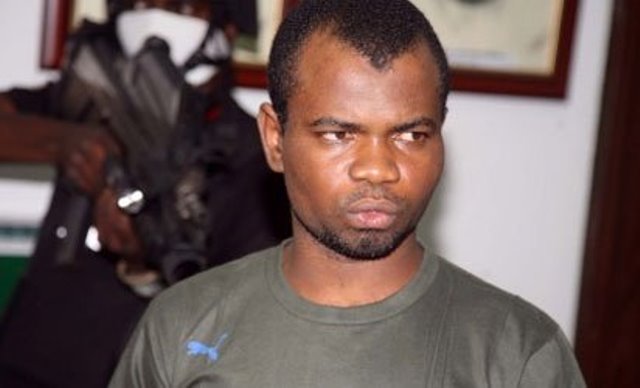
The following day, Kabiru Sokoto, the mastermind behind the 2011 Christmas Day bombing of St. Theresa's Catholic Church in Madalla, escaped from police custody. The suspect was being transported to a search operation when a mob attacked the police vehicle, allowing him to flee. The escape triggered the single biggest shake-up of the Nigeria Police Force since the return to democracy.
January 20th, in a massive, coordinated multi-pronged offensive that began around 5 p.m., Boko Haram launched simultaneous attacks on at least eight government and security installations across Kano. The assault began with a suicide car bomber driving into the Zone 1 Police Headquarters, killing three police officers and the bomber. A second suicide bomber drove towards the Bompai State Police Headquarters but was shot dead before he could detonate. Coordinated bombings and armed assaults hit police stations, the Immigration Service office, the State Security Service headquarters, and police barracks. Approximately 185 people died and 57 were injured. A 24-hour curfew was imposed. President Goodluck Jonathan forced the retirement of Inspector General of Police Hafiz Ringim and replaced the entire police management team.
Four days later, security operatives killed Uzairu Abba Abdullahi, a suspected Boko Haram leader, during a five-hour gunfight in the Hotoro area of Kano. Abdullahi's pregnant wife was also killed in the crossfire; his son was arrested. Abdullahi was described as one of the planners of the January 20 "Kano Blitz."
January 26th, Edgar Raupach, a German construction engineer, was abducted at approximately 8 a.m. while working at a construction site along Zaria Road. Three gunmen arrived in an Opel Vectra, handcuffed him, and drove away. Raupach was held for over four months. Al-Qaeda in the Islamic Maghreb claimed responsibility. He was later killed during a botched rescue operation.
The following day, just before 7 p.m., at the start of the nighttime curfew imposed after the "Kano Blitz," a group of gunmen suspected to be Boko Haram militants attacked the Rijiyar Zaki police station. The assailants arrived on motorcycles and in an all-terrain van, opened fire for several minutes, and shouted "Allahu Akbar." Two policemen were feared dead.
February 2nd, 2012, six people were killed in Maiduguri in what authorities described as an intra-Boko Haram "house-cleaning." Three days later, two gunmen suspected to be Boko Haram members shot and killed a State Security Service officer, Mamman Shettima, outside his home in Damaturu. The attack occurred around 7:30 p.m. in the Ajiri area. The victim was sitting with friends when the two men came through a back street and opened fire.
Four days later, insurgents launched a targeted raid on the Sharada Police Station in the industrial district of Kano. The attackers used IEDs to breach the perimeter before engaging in a firefight. One police officer was injured. Police repelled the attack.
On the same day, multiple IEDs were detonated at the Gamboru Market in Maiduguri. The blasts were strategically placed to maximise property damage, igniting fires that swept through the market stalls. The inferno destroyed dozens of shops and several vehicles. Three people died.
The following day, a suicide bomber in a Toyota Celica laden with explosives attempted to ram the gates of the 1st Mechanised Division Headquarters in Kaduna. Alert sentries engaged the vehicle before it could breach the inner perimeter, forcing a premature detonation at the gate. The bomber died.
On the same day, as part of a coordinated multi-site offensive, a suicide bomber drove a vehicle laden with explosives toward the Nigerian Air Force Base in the Kawo area. The bomber targeted the primary entrance but was intercepted. The resulting detonation caused significant structural damage. Three civilians died.
February 9th, gunmen operating on a motorcycle ambushed and shot dead a prominent local resident in Kano. The victim, 60-year-old Alhaji Muhammadu, was a well-known critic of Boko Haram in his community. The assailants struck as he was leaving a mosque after evening prayers.
The next day, a high-intensity attack was attempted against the Nigeria Customs Service zonal headquarters in Maiduguri. Two vehicles functioning as Vehicle-Borne IEDs attempted to breach the facility's perimeter. Alert soldiers engaged the vehicles, causing premature detonation outside the main gates. Four people died and two were injured.
On the same day, gunmen on a motorcycle intercepted and shot dead a prominent local resident in Potiskum, Yobe State. The victim was well-known for his vocal opposition to Boko Haram's ideology. Three people died.
Still on the same day, Nigerian security forces re-captured Kabiru Sokoto, the primary mastermind behind the 2011 Christmas Day bombing of St. Theresa's Catholic Church. Sokoto had escaped from police custody on January 15th. He was found hiding in a wardrobe at the residence of a local contact.
February 12th, acting on actionable intelligence, the Joint Task Force launched a "Cordon and Search" operation in a suburb of Maiduguri. A heavy gunbattle ensued when suspects opened fire. The military neutralised a significant cell, recovering a cache of arms. Twelve people died.
February 14th, a police anti-bomb squad officer was killed while attempting to defuse an IED in the Unguwan Sarki district of Kaduna. The device had been discovered hidden in a bag near a local residential area. As the officer initiated disposal, the device detonated prematurely.
The next day, Boko Haram gunmen targeted the Koton-Karfe Federal Medium Security Prison in Kogi State. The attackers used high-grade explosives to blast through prison gates and perimeter walls, overpowered guards, and systematically opened cells. This was one of the first major operations by the group in North Central Nigeria. One person died. Security forces managed to re-arrest approximately 25 of the escapees in the following weeks.
February 17th, in a coordinated push into Nigeria's "Middle Belt," gunmen launched two separate strikes against security personnel in Minna, Niger. The first attack targeted a police checkpoint, while the second struck a patrol vehicle. Three people died and one was injured.
Two days later, an IED was detonated near St. Theresa's Catholic Church in Suleja, a satellite town on the outskirts of Abuja. The blast occurred during Sunday morning services. While the device did not reach the interior of the sanctuary, the shockwave and shrapnel caused significant injuries to those outside. Five people were injured.
The following day, in one of the most lethal urban attacks of early 2012, Boko Haram insurgents launched a coordinated assault on the Maiduguri Monday Market. Gunmen arrived in several vehicles, hurling IEDs into crowded trading areas before opening fire indiscriminately. More than 30 people died.
February 22nd, Boko Haram militants launched an assault on a joint military-police checkpoint in Kano. The attackers approached the security post and hurled IEDs before opening fire. Security forces held their positions, forcing the insurgents to retreat. On the same day, insurgents targeted the Budum Primary School in Maiduguri, using improvised incendiary devices and petrol to set the classrooms ablaze. This incident is cited as the "starting gun" for the systematic campaign against secular education in Borno State. Still on the same day, under cover of darkness, suspected Boko Haram insurgents targeted the Abba Ganaram Primary School in Maiduguri. Using petrol bombs and incendiary devices, the attackers razed classrooms and administrative blocks in a coordinated city-wide "night-raid" strategy.
The following day, in a daring daylight operation, Boko Haram gunmen targeted the security detail guarding the private residence of the Kano State Commissioner of Police. The attackers opened fire on sentries stationed at the house. Four police officers died and one was injured.
Still on the same day, gunmen attacked a police outpost in Lapai, Niger. The attackers moved with "commando-style" precision, overwhelming the officers on duty. Two people died and one was injured.
The following day, dozens of Boko Haram gunmen launched a coordinated raid on the Gombe State Police Command Headquarters and a nearby divisional station. The attack began with the detonation of several IEDs to breach the perimeter, followed by a heavy firefight using assault rifles and RPGs. Twelve people died and five were injured.
February 26th, suspected Boko Haram militants launched a coordinated assault on Shuwa village in Madagali LGA, Adamawa State. The primary target was the Shuwa Divisional Police Station, attacked with IEDs and automatic weapons. Three police corporals were killed and four injured. The assailants looted the armoury. The next day, a large group of heavily armed Boko Haram gunmen launched a coordinated assault on the divisional police station in Jama'are, Bauchi State, and a nearby commercial bank. The attackers used high-caliber small arms, IEDs, and petrol bombs to breach defenses. Three people died and one was injured.
February 28th, insurgents used explosives and petrol bombs to raze a state-run primary school in the Gomari Costain area of Maiduguri. This attack marked the fourth school destroyed in the city within a single week. The raids were typically carried out under the cover of darkness.
March 2nd, two gunmen on a motorcycle shot dead a soldier on sentry duty outside the residence of a senior military officer in the Hotoro district of Kano. The attack occurred at approximately 6:30 p.m. The soldier was killed instantly, and the assailants stole his service rifle.
March 4th, a violent civilian protest erupted in Kano after a commercial motorcyclist was shot dead by soldiers at a military checkpoint. Around 100 protesters took over the Silver Jubilee Roundabout, burned tyres, and pelted soldiers with stones. The soldiers retreated to avoid further clashes.
The following day, troops of the Joint Task Force intercepted five suspected Boko Haram members attempting to burn down a public primary school in the Lamisula district. The soldiers engaged the suspects, killing three and arresting two. Homemade explosives were recovered.
In a coordinated nighttime attack on the same day, gunmen targeted the private residence of the Imo State Commissioner of Police in Kano City. Two gunmen arrived on a motorcycle, while a third approached on foot. They opened fire on the officers on guard duty, killing two and injuring two.
March 6th, a high-ranking Nigerian Customs officer was shot dead by suspected Boko Haram gunmen in Potiskum. Adamu Ahmadu, Comptroller of Customs for Yobe and Borno states, was killed along with his bodyguard when six gunmen stormed his house. The attack occurred just weeks after Ahmadu had tightened border controls.
On the same day, suspected Boko Haram Islamists launched coordinated attacks on a prison, a police station, and a local government office in Konduga town, Borno State. The assault involved gunfire and explosives. The police station was set ablaze. Three police officers were wounded. Up to 300 residents fled.
March 7th, a large convoy of Boko Haram insurgents stormed the Ashaka Cement factory in Gombe State, a subsidiary of the French group Lafarge. The gunmen overran the facility's security, specifically targeting the explosives magazine. They looted a massive quantity of dynamite and detonators before retreating.
March 8th, British and Nigerian special forces launched a joint rescue operation to free two European hostages held captive since May 2011. As commandos stormed the compound in the Mabera neighbourhood of Sokoto, the hostages were shot dead by their captors. The failed mission sparked a diplomatic row between London and Rome.
March 9th, a group of gunmen suspected to be Boko Haram members launched an attack on the Rijiyar Zaki Police Station. The assailants arrived on motorcycles and opened fire on the police station. A gun battle ensued for approximately 20 minutes. Three police officers sustained gunshot wounds.
On the same day, gunmen suspected to be members of Boko Haram shot dead ASP Mohammed Ali, the Commander of the Special Anti-Robbery Squad in Adamawa State. The assassination took place in broad daylight at a car dealership along Atiku Abubakar Road in the Jimeta area of Yola. Three assailants arrived on a motorcycle, confronted the officer at around 1 p.m., and opened fire at close range. Ali was rushed to the Federal Medical Centre but was confirmed dead on arrival. Eyewitnesses reported that the hit men accused Ali of "fighting Allah."
March 11th, a suicide bomber drove a car packed with explosives towards St. Finbarr's Catholic Church in the Rayfield suburb of Jos during Sunday morning Mass. Alert security personnel and Boy Scouts stopped the suspicious vehicle at the gate. As they challenged the driver, he detonated the device. Eleven people died instantly, and more than 20 were wounded. The attack sparked immediate reprisals, with Christian youths attacking Muslim neighbourhoods, burning homes and killing at least 10 people.
March 13th, in a late-night ambush, armed gunmen on motorcycles opened fire on a joint military and police patrol in Mubi, Adamawa State. The attack took place around 9 p.m. Five people died: a soldier, an off-duty policeman, and three civilians caught by stray bullets. Three soldiers also sustained serious injuries.
March 14th, acting on actionable intelligence, the Joint Task Force launched a large-scale cordon-and-search operation in the Bulabulin Ngarnam and Kukawa wards of Maiduguri, uncovering a sophisticated bomb-making factory hidden in a residential building. A fierce firefight ensued as insurgents attempted to defend the site. Three senior commanders were neutralised. The JTF recovered a substantial cache of primed IEDs, electronic detonators, and industrial chemicals.
Only 24 hours after the JTF dismantled a major IED factory, two unidentified gunmen assassinated Sheikh Ibrahim Gomari, a prominent Muslim cleric, in the Gomari area of Maiduguri. The gunmen shot the cleric multiple times at close range at his residence at about 7 p.m., shortly after he had returned from a preaching tour. Gomari had been a vocal critic of Boko Haram's ideology.
March 21st, acting on intelligence that a Boko Haram cell would attempt to flee to Kano city, the JTF laid an ambush at the main entry point to Tudun Wada town. The operation resulted in the deaths of nine suspected Boko Haram militants and the capture of two others. The military recovered a cache of stolen weapons, police uniforms and assorted ID cards.
March 25th, a large group of about 20 Boko Haram insurgents attacked a police station in the Lamisula and Abaganaram areas of Maiduguri using rifles, explosives and rocket launchers. After a fierce gunbattle, troops repelled the attack. The surviving sect members retreated and shot dead a retired police inspector and two friends in front of his house. Security forces neutralized three attackers. About 200 residents were forced to lie face down on the streets.
March 28th, suspected Boko Haram gunmen bombed a police station in Damagum, Yobe State, freeing more than a dozen prisoners. The attackers, numbering about 30, stormed the station shouting "Allahu Akbar," engaged police in a shootout, hurled explosives into the station and set it ablaze. A satellite prison facility was also attacked, where 14 inmates were freed. Other targets included a temporary military camp and a quarters housing Korean doctors. Four people died and one was injured.
March 30th, insurgents struck Askira Uba, Borno State. A large contingent of gunmen arrived in the town around 10 a.m., operating in two distinct groups. The first group attacked the police station, setting the building ablaze and killing a police officer. Simultaneously, a second team stormed a commercial bank, breaching the vault with explosives and carting away a substantial sum of money. Four people died. The military reinforcement from Biu was delayed, allowing the insurgents to retreat toward the Sambisa Forest.
April 1st, the JTF launched a pre-dawn raid on a suspected Boko Haram safehouse in Maiduguri. A prolonged gun battle ensued, involving grenades and high-caliber rifles. Eleven insurgents were killed. The military recovered a cache of arms, including AK-47 rifles, IEDs, and several hundred rounds of ammunition.
The next day, two gunmen on a motorcycle tracked an SSS operative to a barbershop in the Abbagaram ward of Maiduguri. The operative, Ibrahim Stanley Malgwi, was off duty and receiving a haircut when the assailants entered and shot him at point-blank range.
On the same day, in a heavy exchange of fire following intelligence-led raids, the JTF engaged Boko Haram insurgents in the Lawanti Ward of Maiduguri. The clash occurred when insurgents attempted to launch an ambush on a military patrol. Sixteen insurgents were killed.
Still on the same day, Boko Haram gunmen disguised as customers stormed the Monday Market in Maiduguri, opening fire on traders selling insecticides and mosquito nets. Seven traders were killed and three injured. Five of the victims were Igbo Christians.
April 8th, a massive car bomb was detonated in the heart of Kaduna City. The attacker, driving a Honda Accord, was prevented from reaching his primary target (the All Nations Christian Assembly Church) by security barriers. He instead detonated the device on a busy commercial road near the church. Thirty-eight people died and 50 were injured. Eight cars and scores of commercial motorcycles were burnt. Angry youths attempted to launch reprisal attacks, but these were contained by heavy military deployment.
On the same day, an explosive device detonated at a beer parlour near the Tundun Wada motor park in Jos, hours after the devastating Kaduna car bombing. The blast occurred around 8 p.m., forcing residents to cut short their Easter celebrations. Four people were injured.
April 10th, in a pre-dawn, multi-target raid, about 30 heavily armed Boko Haram insurgents attacked the Dikwa Divisional Police Station, a branch of Unity Bank, the Freedom Hotel, and attempted to set fire to the Local Government Council Secretariat. The attackers used explosives to breach the police station and engaged security forces in a sustained gun battle. Six people died: a Police Inspector, the former Chairman of Dikwa LGA, and Alhaji Babagana Ali Karim. Three insurgents were killed.
On the same day, dozens of heavily armed Boko Haram gunmen stormed the border town of Banki in Borno State, near the Cameroon border. The insurgents targeted Immigration and Customs posts, using IEDs and petrol bombs to set the facilities ablaze. Five people were killed, including one customs officer and one immigration officer. Police later confirmed five suspected Boko Haram members were killed during a shootout. The proximity to the international border allowed the attackers to retreat rapidly into Cameroon.
April 13th, gunmen on a motorcycle targeted a popular football viewing centre in Maiduguri, opening fire on individuals standing near the entrance. Two men were killed instantly. The attack was widely interpreted as enforcement of a reported Boko Haram fatwa against football viewing centres, which the group labelled "un-Islamic."
April 17th, acting on actionable intelligence, the JTF launched synchronised dawn raids on two separate Boko Haram hideouts in Maiduguri. During the first raid, a brief but intense firefight erupted, resulting in the death of one insurgent, identified as Alhaji Modu Bintube, a suspected Boko Haram commander. Fourteen suspects were apprehended, including a key wanted member. Security forces recovered weapons, ammunition, and IED fabrication equipment.
April 20th, Boko Haram gunmen targeted a bakery in the Polo area of Maiduguri, shooting dead five labourers. Additional attacks included the fatal shooting of a customs officer at Gamboru market and a water vendor in another district. Seven people died.
Three days later, troops of the JTF surrounded a bomb-making hideout in Maiduguri. As they closed in, suspects engaged in a shootout. During the confrontation, one insurgent threw a bomb at the soldiers. The explosion set off other bombs being assembled, causing a massive blast that killed all five occupants and razed the building.
April 24th, in a pre-dawn raid, the JTF stormed a residential building in the Haye area of Hotoro Arewa, Kano State. The two-bedroom block of flats had been converted into a sophisticated bomb-making factory. Two housewives and several children were rescued. Items recovered included assorted IEDs, a primed drum, liquid substances, charcoal, and a video titled "Osama bin Laden dead at last." The building was demolished.
April 26th, a bomb explosion rocked the administrative block of Gombe State University. The attackers forced their way through the main gate, detonated IEDs that ravaged the Senate building, burned down the Vice Chancellor's office and the Bursary, and blew open the roof. The assailants fired gunshots for about 30 minutes. No casualties were reported as staff had closed for the day.
On the same day, a suicide bomber drove an explosives-laden Toyota Sienna minibus through the gates of the ThisDay Newspaper office in the Jabi district of Abuja at about 11:30 a.m. The vehicle crashed into the building's loading bay and detonated, killing two people and injuring six.
Still on the same day, an attacker attempted to drive a car loaded with explosives into a compound housing ThisDay, The Sun, and The Moment newspapers in Ungwan Rimi, Kaduna. When staff surrounded the vehicle, the assailant detonated the device, killing at least three people and wounding others. An additional explosive device thrown from a motorcycle injured two more people.
April 27th, two gunmen suspected to be Boko Haram members fatally shot a police inspector outside his home in Damaturu. The victim, Ibrahim Mari, was killed as he tried to enter his house after returning from night duty.
April 29th, about 15 suspected Boko Haram gunmen launched a coordinated assault on a lecture theatre being used as a chapel at Bayero University Kano. The attackers struck at approximately 8:30 a.m., just minutes after church services had commenced. They first threw IEDs into the crowded worship spaces, causing a stampede. As terrified worshippers fled, the gunmen pursued them and opened fire indiscriminately. Sixteen people died and 22 were injured.
April 30th, a suicide bomber riding a motorcycle laden with explosives attacked the convoy of the Taraba State Commissioner of Police as it was passing the Taraba State Ministry of Finance. The blast destroyed the commissioner's official vehicle, killing a police dispatch rider, at least two passers-by, and the bomber. Eleven people died and 20 were injured.
May 1st, in a pre-dawn raid, the JTF stormed a Boko Haram bomb factory and hideout in the Bubugaje area of Sharada, Kumbotso LGA. A fierce gun battle erupted, killing one insurgent described as the suspected mastermind of the Bayero University church massacre. Three women and two children were arrested. A massive cache of explosives, ammunition and weapons was recovered.
May 3rd, a massive coordinated reprisal attack was launched on the Potiskum Cattle Market in Yobe State. A group of armed men armed with up to 20 IEDs and assault rifles opened fire, threw bombs, and set fire to the market's structures and vehicles. The attack resulted in at least 34 deaths and dozens of injuries, with hundreds of livestock perishing in the flames. The assault followed the lynching of a suspected robber at the market earlier that day.
May 4th, in a carefully coordinated two-stage operation, suspected Boko Haram militants first attacked the police station in Banki. About five hours later, they shifted focus to Kumshe, where they stormed the local prison lock-up. The assailants killed two prison warders and freed all inmates.
May 5th, a joint military task force engaged Boko Haram militants at a wedding ceremony in the Sabon Layi area of Gwange Ward, Maiduguri. Acting on intelligence that two wanted commanders were attending, JTF troops set up surveillance. The militants opened fire, and in the ensuing gun battle, three civilians were killed and four others wounded, including two soldiers. Two militants were arrested.
May 12th, gunmen suspected to be Boko Haram stormed the Mafa police station in Borno State. The attackers arrived in vehicles, fired sporadically, and used explosives to set the station ablaze. Two policemen and one civilian were killed.
May 13th, gunmen suspected to be Boko Haram opened fire on a group of people playing cards in the Tukuntawa area of Kano, killing three instantly and wounding four. The assailants escaped on a motorcycle. May 15th, a diplomatic visit by the Israeli Ambassador to Nigeria sparked a violent uprising in Gombe after rumours spread that the visit was a conspiracy against Islamic interests. Youth-led protests erupted and escalated into sectarian violence, with mobs attacking Christian neighbourhoods and government symbols. Four people died and 50 were injured.
May 23rd, a gunfight erupted between suspected Boko Haram gunmen and security personnel near the Yan Marina police station in Sokoto. A police inspector exiting a nearby mosque and a teenage tailor were struck and killed by stray bullets.
Three days later, gunmen forced their way into the home of a Muslim cleric, Sheikh Usman Muhammad, and shot him dead. The attackers then broke into the home next door and shot dead a retired prison guard. Two people died. The following day, two gunmen opened fire on a group of Shia Muslim worshippers gathered outside the residence of a prominent Shiite cleric in the NEPA Line area of Potiskum. Three people died and four were injured. The assailants appeared to target the cleric but mistook his brother for him.
May 28th, two gunmen on a motorcycle approached shops owned by Igbo traders and shot dead four men chatting outside their closed shops. The victims were Christian traders from the Igbo ethnic group. The attack occurred amid heightened tensions, as Igbo traders had refused to open their shops that day in protest over the killing of a bartender.
Two days later, a group of gunmen stormed a bread bakery in the Ndayah area and opened fire on workers. The attackers also robbed the victims, carting away money, mobile phones, and other valuables. Two workers died and three were injured. The following day, an elderly Italian construction engineer, Modesto di Girolamo, was kidnapped in Ilorin, the capital of Kwara State. The engineer was abducted at approximately 5:30 p.m. while inspecting a road drainage project along Bishop Smith Street. The assailants whisked him away in a waiting vehicle.
June 3rd, a suicide bomber drove a Honda Civic laden with explosives into the Living Faith Church in the Yelwa Tudun area of Bauchi. Security personnel tried to stop the vehicle at a checkpoint, but the bomber crashed through the gate and detonated. According to the Bauchi State Police Commissioner, nine worshippers died. However, the Christian Association of Nigeria later confirmed a higher toll, alleging that while 12 died from the blast, an additional 8 were shot dead by soldiers who arrived to secure the scene, raising the total to 20. Forty-five people were injured. An unexploded IED was later found hidden under a bridge.
June 8th, at approximately 11:26 a.m., a suicide bomber drove a Toyota Camry packed with explosives toward the main gate of the Borno State Police Headquarters. When security personnel prevented entry, the bomber detonated, killing himself, two policemen, and four civilians. Seven people died and 24 were injured. Two days later, a suicide bomber drove a saloon car packed with explosives toward the Christ Chosen Church of God on Rukuba Road in Jos. The attacker first tried to target two other churches but was prevented by Boys Brigade members. He then drove to the Christ Chosen Church, where there was no security, and detonated at the entrance. Seven people died and 52 were injured. Boko Haram claimed responsibility. Angry Christian youths launched reprisal attacks against Muslims, leading to additional deaths.
On the same day, a group of gunmen suspected to be Boko Haram attacked the Church of the Brethren in Nigeria in the Tabra ward of Biu, Borno State. The assailants arrived on foot, fired sporadically at the congregation, and fled. Two worshippers died and several were injured. Boko Haram claimed responsibility.
June 16th, four gunmen on two motorcycles opened fire on a group of men playing the board game ludo outside a house in the Zango neighbourhood of Bauchi around 7 p.m. Six people died and nine were injured. The following day, a suicide bomber driving a blue Honda Civic crashed through a barricade at the ECWA Goodnews Church in the Wusasa district of Zaria during a Sunday school session. Ten worshippers died, mostly children and the Sunday school teacher, and more than 100 were injured.
On the same day, a suicide bomber driving a vehicle packed with explosives detonated at St. Theresa's Catholic Church in the Wusasa area of Zaria. The attack occurred almost simultaneously with the strike on the ECWA Goodnews Church. Eleven people died and more than 40 were injured. Still on the same day, a third suicide bomber drove a vehicle laden with explosives into the Shalom Church in the Trikania area of Kaduna South. This blast was the final trigger in a coordinated "triple-strike" across the state. The attack acted as the immediate catalyst for mass sectarian riots that consumed Kaduna city for the following 48 hours. Three people died and 17 were injured.
June 19th, a gunfight broke out at the Sani Abacha Specialist Hospital in Damaturu when militants attacked after military personnel brought in a wounded Boko Haram suspect. The battle quickly spread to other parts of the city, including the governor's residence. For several hours, insurgents engaged the JTF in a fierce, citywide confrontation. Forty-three people died and four were injured. The Yobe State Government imposed a 24-hour curfew.
June 22nd, at approximately 11 p.m., an improvised explosive device detonated outside the popular Kryxtal Lounge nightclub in Abuja's Wuse II district. The device, suspected to have been planted on a tree opposite the lounge or thrown from a passing vehicle, shattered windows in nearby buildings and damaged six luxury vehicles. No casualties were reported. The explosion occurred just hours after President Goodluck Jonathan sacked his National Security Adviser and Defence Minister, appointing retired Colonel Sambo Dasuki as the new NSA.
The following day, a teenage suicide bomber drove an Opel Vectra packed with explosives towards St. John's Catholic Cathedral in the Wunti area of Bauchi during Sunday Mass. Church security personnel prevented the vehicle from entering the premises. The bomber then detonated in the parking lot, targeting worshippers as they were leaving. Three people died and 48 others were injured.
June 24th, suspected Boko Haram gunmen attacked a prison along Gashua Road in Damaturu, freeing about 40 inmates, many of them insurgents. The raid involved sporadic gunfire and small explosions. Four prison guards were reported killed, while one inmate was shot attempting to escape.
Two days later, suspected Boko Haram gunmen launched coordinated attacks on multiple police formations in Kano, including Jakara Police Barracks, Dala Police Division, the 52 Squadron of the Mobile Police Force, and a junior secondary school in Sabuwar Doka. One police officer was confirmed killed, while 17 insurgents were killed and three arrested. The attackers had reportedly intended to assault Goron Dutse prison to free prisoners, but the plan was thwarted.
On the same day, a large group of about 30 heavily armed gunmen attacked the Divisional Police Headquarters and three commercial banks in Wukari, Taraba State. The attackers used explosives to breach the banks' strong rooms and targeted police facilities. Three people (a police inspector and two civilians) were killed.
July 2nd, suspected Boko Haram gunmen stormed a lodge housing construction workers in the Bolori area of Maiduguri. The attackers slit the throats of nine workers, all engaged in the construction of the Shehu of Borno's Central Mosque project. The victims were reportedly killed while sleeping. The nine victims comprised eight men and one woman.
The following day, at approximately 9 p.m., an IED was detonated under a tree outside the Park & Shop mall, adjacent to Banex Plaza, in Wuse II District, Abuja. A private security guard sustained injuries from shattered glass. Anti-bomb squad operatives subsequently discovered and detonated a second unexploded IED.
Ten days later, a suicide bomber detonated explosives outside the central mosque near the palace of the Shehu of Borno in Maiduguri. The attack occurred just after Friday prayers attended by the Shehu and the Borno State Deputy Governor. Both men escaped unharmed. Five people died, including the bomber, and six were injured.
July 16th, suspected Boko Haram gunmen attacked three police formations in Damaturu: the Area Command, 'A' Division, and the State Criminal Investigation Department. A similar attempt was made on the state's police headquarters. The attackers broke into the fortified headquarters building but were repelled after a fierce 35-minute gun battle. A police recruit constable was killed.
July 19th, gunmen riding on two motorcycles opened fire in Kano city, killing three people, including a police constable. The attack occurred in the Sharada industrial area at an abandoned factory around 5:40 p.m. The attack came just hours before the start of Ramadan fasting.
On the same day, gunmen attacked the Monday Market in Maiduguri, opening fire on traders during peak pre-Ramadan shopping. At least four traders were shot dead while two others were seriously injured. The attack occurred barely 24 hours after President Jonathan lifted the state of emergency in parts of Borno and relaxed the curfew. Still on the same day, men of the JTF clashed with gunmen suspected to be Boko Haram in Gamboru ward, Maiduguri. The clash occurred when suspected gunmen attacked a military patrol vehicle near Kofa Biyu. Two civilians were killed.
July 22nd, a bomb planted inside a wheelbarrow exploded in the Bayan Garin area of Bauchi city, a neighbourhood known for clusters of bars and entertainment spots. The blast killed a 10-year-old boy and wounded 10 others.
Three days later, gunmen suspected to be Boko Haram attacked a gum arabic factory in the Zajeri Industrial Area of Maiduguri. The assailants stormed the premises around 1 p.m., demanded money from Indian expatriate workers, and then opened fire. Two Indian nationals were killed and three others injured.
July 29th, a gun battle near a mosque in Kano city and two other shootings left at least eight people dead. The deadliest incident occurred when gunmen opened fire around a mosque during Ramadan prayers, where a police team had been deployed to protect worshippers. Among the victims were two Nigerian Air Force personnel. The following day, two suicide bombers attacked police stations in Sokoto city, the historic seat of Islam in Nigeria. The first bomber rammed a car packed with explosives into the Yan Marina police station, killing a police officer. The second bomber struck the Unguwar Rogo police station. Two people were killed and around 30 wounded.
August 3rd, a suicide bomber attempted to assassinate Muhammad Abali Ibn Idrissa, the Emir of Fika, outside the Central Mosque in Potiskum. The bomber, disguised in a caftan, tried to embrace the Emir but was pushed back. The bomb detonated, killing the bomber and the Emir's police orderly. Several others were injured. The Emir escaped unharmed.
Three days later, gunmen suspected to be Boko Haram stormed the Deeper Life Bible Church in Otite, near Okene, Kogi State, during an evening service. The attackers opened fire with assault rifles on worshippers, killing at least 19 people, including the pastor. Hours after the massacre at the Deeper Life Bible Church, gunmen suspected to be Boko Haram opened fire on a military patrol van in Okene. The ambush killed two soldiers instantly.
August 19th, gunmen suspected to be Boko Haram carried out coordinated attacks in Damagun town, Yobe State. An explosion destroyed part of Damagun Primary School late Sunday night. Hours later, attackers attempted to storm a Catholic church and the police station. Police repelled the assaults. No casualties were officially reported. On the same day, two gunmen riding motorcycles opened fire on troops manning a military checkpoint in Kano city. The ambush injured one soldier.
August 26th, gunmen suspected to be Boko Haram shot and killed a policeman in Damaturu. The officer was ambushed while walking home from work in the evening.
September 16th, gunmen suspected to be Boko Haram opened fire on a group of men playing ludo in the Zango area of Bauchi around 7 p.m. The attackers, riding on two motorcycles, sprayed bullets into the crowd. Six people were killed and nine injured.
In the northern city of Azare on the evening of September 17th, 2012, Alhaji Ibrahim Jarma Katagun, the former Comptroller-General of the Nigerian Prisons Service, was leaving a mosque near his home after evening prayers when gunmen struck. They shot him along with his two security details. Jarma succumbed to his wounds that night, becoming one of the first high-profile targets in what would become an increasingly systematic campaign of assassinations and terror.
In the northern city of Azare on the evening of September 17th, 2012, Alhaji Ibrahim Jarma Katagun, the former Comptroller-General of the Nigerian Prisons Service, was leaving a mosque near his home after evening prayers when gunmen struck. They shot him along with his two security details. Jarma succumbed to his wounds that night, becoming one of the first high-profile targets in what would become an increasingly systematic campaign of assassinations and terror.
Three days later, on the Maiduguri-Kano Road, a combined Joint Task Force team intercepted two senior Boko Haram commanders traveling in a Honda Accord. The encounter turned into a gunfight, and both suspects were killed. Security forces recovered the vehicle, five mobile phones, and weapons. For a moment, it seemed the tide might be turning.
That moment proved brief. On September 23rd, as worshippers gathered for Sunday Mass at St. John's Catholic Church in Bauchi, a suicide bomber drove an explosives-laden car toward the entrance. Security forces stopped him at the outer perimeter, but he rammed his vehicle into the queue of people waiting outside, detonating the device. The blast claimed the lives of the bomber himself, a woman, and a child. At least forty-six others were wounded, their injuries a harbinger of the carnage to come.
By late September, intelligence reports suggested Boko Haram was planning something far more ambitious. Acting on a tip that a major suicide operation targeting Zaria, Kaduna, and Suleja was being planned for Independence Day, a joint military and State Security Service operation raided a residential building in Gaskiya Layout, Zaria. What they discovered was a bomb factory. The ensuing gun battle was fierce, and when Army engineers conducted a controlled detonation of the recovered explosives, the blast was so powerful it destroyed approximately seven houses and damaged twenty others. Two people died, and three were injured.
In the first week of October, the violence assumed a new and horrifying dimension. In Mubi, gunmen stormed a student residential area and went methodically from house to house, calling out victims by name from a pre-prepared list. Those identified were either shot or had their throats cut. The surgical precision of the attack—victims summoned by their names—indicated inside knowledge and suggested that Boko Haram had infiltrated the community or collaborated with locals who harbored its sympathies. Twenty-six people died that night, and fifteen others were wounded.
October brought a relentless escalation. On the 14th, gunmen suspected to be Boko Haram shot dead a Christian couple and their child as they left a church in Gwange, Maiduguri. That same day, in the Fezzan area of the same city, gunmen killed a local traditional chief, Mala Kaka, in his home, shooting and wounding his friend who survived.
In Potiskum on October 18th, Boko Haram militants carried out coordinated bomb and gun attacks, killing at least twenty-three people. Several government buildings and schools were set ablaze, turning the city into a landscape of smoke and ash.
The next day, unidentified armed gunmen stormed a bridge construction site in Maiduguri and opened fire on workers, fatally shooting a Chinese construction employee. The killing of foreign nationals signaled that Boko Haram was casting its net beyond religious and ethnic targets.
In Yindiski Ward, Potiskum, suspected Boko Haram gunmen hurled a bomb at a military patrol vehicle, killing six soldiers and wounding two others. The military, hitherto the backbone of security operations, was proving vulnerable to the insurgents' tactics.
By the end of October, religious violence reached fever pitch. On October 28th, a suicide bomber drove an SUV loaded with explosives into St. Rita's Catholic Church in Kaduna during Sunday Mass, ramming through the church gate and detonating the device. Ten people died instantly, and one hundred forty-five were injured. In the aftermath, Christian youths poured into the streets, seeking retribution against Muslim-owned shops and homes in what would escalate into tit-for-tat communal violence.
In November, violence claimed figures of prominence. In Gwange, Maiduguri, four gunmen entered the home of retired Major General Mamman Shuwa, opening fire on the General and his guests, killing two people—a guest immediately and General Shuwa as he was being rushed to hospital.
That same day, a group of gunmen arrived at the Damboa Local Government Secretariat in four unmarked vehicles, using improvised explosive devices and petrol bombs to set the complex ablaze along with a fire station and approximately twenty housing units. As firefighters mobilized to respond, the gunmen opened fire on them. Three people died in the coordinated attack.
On November 3rd, gunmen suspected to be Boko Haram attacked Fika town, targeting the police station and other public facilities with explosives. The police station, a primary school, and telecommunication masts were damaged. Two policemen were killed.
On November 7th, four Chinese engineers from the Chinese Civil Engineering Construction Corporation arrived at their company yard in Benisheik when unknown gunmen trailed them, opened fire, and killed two engineers on the spot. The attackers fled with one of the company's vehicles.
Two days later, in a coordinated assault in Buni Yadi, gunmen attacked the police station, killing three policemen and seizing weapons. Simultaneously, the attackers set ablaze three churches and a school.
On November 21st, in Sulimanti Ward, Maiduguri, assailants stormed the residence of an SSS personnel while he was away, breaking through the main gate and slaughtering three children—ages five, seven, and twelve—in the presence of their mother. There are few depths to which terror cannot plumb.
Four days later, on November 25th, two suicide bombers attacked St. Andrew's Military Protestant Church in the Jaji military cantonment near Kaduna. The first drove a bus into the side of the church. Approximately ten minutes later, a second suicide bomber detonated a Toyota Camry parked nearby. Fifteen people died, and thirty were wounded.
As December arrived, the violence showed no signs of abating. On the night of December 1st, assailants attacked Kwaple Village in Chibok in a brutal assault, going from house to house in a predominantly Christian neighbourhood, setting homes on fire, and slitting the throats of their victims. Ten people were killed—nine Christians and one Muslim—and at least twenty houses and a church were burned.
On December 12th, in Rukudawa, Zamfara, unidentified gunmen on motorcycles attacked members of a local vigilante group on routine patrol, killing all ten vigilante members on duty. The attackers removed the private parts of some victims and burned all the motorcycles used by the group, indicating this was a targeted strike against community security efforts.
On December 19th, approximately thirty heavily armed gunmen stormed a residential compound in Rimi, Katsina, housing expatriate workers for a French renewable energy company. They killed a security guard and a neighbour, then kidnapped a French engineer. As they fled, they threw an explosive device at a nearby police station to distract pursuing forces.
Three days later, two suicide car bombers launched coordinated attacks on telecom facilities in Kano. The first rammed his vehicle into the Airtel office gate; the second targeted the MTN switch station. Security forces shot the second bomber before he could fully penetrate the MTN facility. Two people died.
On Christmas Eve, gunmen attacked the Church of Christ in Nations in Piri, Potiskum, around midnight during services. They entered through the back door and opened fire on worshippers, killing at least six people, including the pastor. After the shooting, they set the church on fire and attacked Christian homes in the surrounding area, burning approximately twenty-one houses. The holiday meant nothing to those bent on terror.
On December 28th, assailants invaded the Musari community during the night and silently entered homes whose residents were Christians, slitting their throats while they slept. The attackers appeared to have selected homes based on the residents' Christian faith. The victims included a traffic police officer and fourteen civilians. Fifteen people died.
That same night, heavily armed gunmen—estimated at forty—arrived at Maiha in vehicles and on motorcycles, attacking government buildings and opening fire with explosives. They burned the police station, a satellite prison, a court, a local education authority building, the Government Lodge, and partially torched the traditional chief's palace. Inmates were freed. Seven people died.
On December 29th, a violent clash erupted in Potiskum between suspected Boko Haram gunmen and Nigerian security forces, claiming multiple lives among both civilians and suspected insurgents.
And as 2012 drew to a close, on December 30th, Boko Haram gunmen attacked the Bunkure police station in Kano State, killing two policemen and wounding others before fleeing after setting parts of the station ablaze.
The new year brought no respite. On New Year's Day 2013, in the Bulabulin and Bayan Quarters of Maiduguri, soldiers of the Joint Task Force engaged Boko Haram gunmen in a fierce shootout. At least thirteen Boko Haram fighters were killed, though the JTF lost one soldier and had two others wounded.
The following day, Boko Haram gunmen attacked a police station in Song town, Adamawa State, opening fire and killing two policemen and two civilians before fleeing after setting parts of the station ablaze.
On January 4th, Boko Haram gunmen attacked a military checkpoint in Marte town near the Cameroon border, resulting in the deaths of five Boko Haram fighters, one soldier, and one policeman. The attackers attempted to overrun the checkpoint but were repelled.
By mid-January, the security forces scored a significant success. The JTF arrested a high-profile Boko Haram commander, Mohammed Zangina, in Maiduguri's Government Reserved Area. Zangina was a member of the sect's Shura Committee and had a twenty-five million naira bounty placed on him.
On January 17th, Boko Haram gunmen attacked a JTF military checkpoint at Mariri Quarters in Kano, resulting in a fierce shootout that killed four people—two Boko Haram gunmen and two civilians caught in the crossfire. Security forces arrested five suspected Boko Haram members during the operation.
That same day, Nigerian authorities announced a breakthrough in an earlier attack. Two suspected Boko Haram masterminds behind the November 2012 twin car bombings at St. Andrew's Protestant Church inside Jaji Military Cantonment in Kaduna State were arrested. That attack had killed at least eleven worshippers and injured dozens more.
On January 19th, the insurgency made a stunning statement of audacity. Gunmen attacked the convoy of the Emir of Kano, Alhaji Ado Bayero, as he returned from a religious event on Zoo Road, with militants driving SUVs and motorcycles throwing an improvised explosive device and opening fire on his vehicle. The Emir survived with minor injuries, but five people were killed, including his driver and three royal guards.
That same day, in Kogi State, a convoy of Mali-bound Nigerian soldiers was ambushed near Okene at Itakpe Junction. Militants planted an improvised explosive device on the highway, which detonated as the buses carrying troops passed. After the blast, gunmen opened fire on the convoy. At least two soldiers were killed and five seriously injured.
On January 21st, in Damboa, gunmen believed to be Boko Haram attacked the bush meat section of the local market, opening fire on hunters selling their catch. At least eighteen hunters were killed on the spot. Some believed the Islamists were angered by hunters selling pork; others thought it was revenge against hunters who had formed vigilante groups.
On January 22nd, in the Dakata District of Kano, gunmen on motorcycles attacked a relaxation spot where men were playing draughts, opening fire and killing five people instantly, with two others seriously injured. The attack occurred despite the Kano State Government's ban on commercial motorcycles imposed just days earlier.
On January 23rd, in the Gwange area of Maiduguri, assailants suspected to be Boko Haram carried out a gruesome attack, beheading five residents in their homes and on the streets.
In mid-February, the violence took on a new and calculated character. On February 8th, gunmen on motorcycles and motorized tricycles attacked health centres in Kano where polio immunization workers had gathered. In the Hotoro district health centre, gunmen opened fire on the workers, killing at least seven. The victims were all female polio vaccinators. That same morning, two gunmen on a motorized tricycle attacked a community health centre in Filin Kashu, opening fire on female health workers and killing two while critically injuring four. The combined death toll for the coordinated strikes was nine. The deliberate targeting of health workers—often women, always unarmed—revealed a campaign designed to terrorize and disrupt essential services.
On February 10th, in Sabon Gari, Potiskum, a group of unidentified assailants broke into the rented quarters of three North Korean doctors using machetes to kill the men inside. Two of the victims had their throats slit, while the third was beheaded. The victims were identified as Kim In-chol, Kim Yong-su, and Kim Mun-chol.
On February 15th, in London Ciki, Maiduguri, two suspected Boko Haram suicide bombers on a motorcycle attempted to attack a military patrol vehicle but detonated their explosives prematurely, killing themselves instantly. At least one soldier was injured, and the explosion caused significant collateral damage, burning several homes, shops, and vehicles.
On February 16th, in a highly sophisticated operation, gunmen attacked a fortified residential compound belonging to the Lebanese construction firm Setraco in Jama'are. The insurgents first attacked a local prison and a police station to create a diversion before storming the staff quarters. After a fierce gunbattle with security, they abducted seven foreign employees. One guard was killed and one person injured.
On February 20th, in the Gomari Airport area of Maiduguri, a powerful explosion targeted a military patrol vehicle, caused by an improvised explosive device and killing two civilians and a suspected bomber, while at least one soldier was injured. The blast damaged nearby property, with several homes, shops, and vehicles burned.
On February 23rd, sectarian violence erupted in Wukari, Taraba State. A dispute over the ownership of a football pitch escalated when Muslim and Christian teams argued over which group had the right to use it. The violence rapidly metastasized into large-scale communal warfare: mobs attacked neighbourhoods, hundreds of homes and businesses were burned, mosques and churches were targeted, and mass displacement occurred. By February 27th, the death toll had risen to thirty-one, with scores more injured.
That same day, in Bagadaza, Gombe, gunmen suspected to be Boko Haram attacked a group of men playing cards, with assailants riding on a motorcycle and opening fire, killing five people and injuring seven others.
On February 27th, in Tella village, Taraba State, gunmen stormed a residence housing foreign construction workers employed by Triacta Engineering Firm. The attackers opened fire, killing two police guards assigned to protect the expatriates before escaping and stealing the policemen's rifles.
March brought assaults on education. On March 12th, gunmen stormed Danmaliki Primary School in the Kumbotso Local Government Area of Kano, entering just as classes were about to begin. Two armed men ordered teachers to lie down, then opened fire, injuring at least four teachers, including the headmaster.
On March 14th, armed gunmen suspected to be Boko Haram stormed the prison facility in Gwoza, Borno State, overpowering guards and freeing about one hundred seventy inmates. One civilian was killed during the raid.
On March 15th, in Hotoro, Kano, gunmen attacked and killed Usamatu Badawi, a Registrar of the Kano State High Court and former national president of the Judiciary Staff Union of Nigeria. He was ambushed while driving home. The assailants pulled him from his car, shot him in the eyes, and stole his vehicle.
On March 18th, a suicide car bombing struck the Sabon Gari bus station in Kano city, with a Volkswagen Golf packed with explosives and driven by three suicide bombers ramming into buses filled with passengers, mostly Christian civilians traveling south. The blast and subsequent fires destroyed five buses, killing at least forty-one people and injuring sixty-five or more.
On March 22nd, violence reached a crescendo in Ganye, Adamawa State. A large group of heavily armed gunmen launched a coordinated assault on multiple targets, arriving on motorcycles and in vehicles and using bombs, machine guns, and rocket-propelled grenades in simultaneous attacks on the divisional police station, the prison, the residence of the divisional police officer, a branch of First Bank, a library, courts, and two beer parlours. Twenty-five people were killed, including a former commissioner for health and a deputy prison comptroller. The attackers blasted open the prison gates and cells, freeing one hundred twenty-seven inmates.
On March 31st, acting on intelligence that Boko Haram insurgents were planning a major Easter attack, security forces launched a pre-emptive raid on a Boko Haram hideout in Mariri District, Kano. In the ensuing gun battle, fourteen Boko Haram gunmen were killed along with one soldier. The raid prevented what could have been a mass-casualty attack during Easter celebrations.
On April 16th, following a Boko Haram attack on a military patrol that killed one soldier, reinforcements from the Multinational Joint Task Force entered Baga. Witnesses reported that soldiers doused houses with gasoline and set them ablaze, shooting residents who tried to flee, with many drowning in Lake Chad while attempting to escape. At least thirty-seven people died. President Goodluck Jonathan ordered a full-scale investigation into the military's conduct.
On May 3rd, violent clashes erupted once again in Wukari when the funeral procession of a traditional chief from the predominantly Christian Jukun ethnic group marched through a Muslim neighbourhood chanting slogans, which was perceived as provocation. The violence between Christian and Muslim mobs left thirty-nine people dead and thirty injured. Scores of houses were destroyed.
That same day, in Mafoni, Maiduguri, gunmen suspected to be Boko Haram kidnapped Shettima Ali Monguno, Nigeria's former oil minister, as he left Mafoni mosque after Friday prayers. They stormed his vehicle and took him amid shots fired.
On May 5th, a group of gunmen stormed Njilang village in Adamawa State, attacking both a church and a market. At least ten residents were killed in the assault, with nine others injured.
On May 17th, Boko Haram gunmen carried out coordinated attacks in Daura town, Katsina State, targeting banks and police stations. In the ensuing shootouts, four gunmen, three soldiers, and two policemen were killed. The attackers attempted to loot banks and overrun police facilities but were repelled.
By June, the violence had taken on an even more brazen character. On June 7th, in Hausari, Maiduguri, about ten Boko Haram gunmen arrived in a pickup truck carrying a coffin visible in the flat-bed rear, pretending to be mourners. They drove through military checkpoints unchallenged and stormed the neighbourhood, where they pulled assault rifles from the coffin and opened fire on a youth vigilante group. At least eleven residents were killed, including a child.
On June 13th, in the Gwoza Hills, Boko Haram gunmen attacked four hill communities of Hwa'a, Kunde, Gathahure, and Gjigga, setting four churches ablaze. In Hwa'a community, gunmen targeted a retired clergyman, Rev. Jacob Kwiza, while he was picking mangoes. They forced him to renounce Christianity; upon his refusal, they slit his throat. He was killed alongside two other worshippers.
On June 16th, Boko Haram members stormed a Government Secondary School in the New Jerusalem area of Damaturu. The gunmen opened fire on students writing exams and teachers in their offices. Eleven people died and nine were injured.
On June 18th, gunmen invaded the Ansarudeen Private School in Maiduguri's Jajeri ward. They opened fire on students who were writing their final year examinations, killing nine students.
That same day, in a brutal daylight raid, Boko Haram insurgents targeted a group of local fishermen at the Alau Dam. The victims were rounded up while working and executed. Survivors reported that many victims had their throats slit to conserve ammunition. Twenty-two people died.
On July 6th, in what would become one of the year's most notorious massacres, around thirty suspected Boko Haram gunmen attacked Government Secondary School in Mamudo at approximately three in the morning. They doused a dormitory in petrol and lit it ablaze while students slept. They threw explosives, opened fire, and shot fleeing students, then torched the administrative block. At least forty-two students died and six were injured. Governor Ibrahim Gaidam ordered all secondary schools in Yobe State to close until September.
On July 26th, Boko Haram gunmen ambushed a group of Civilian JTF youth vigilantes near Mainok town. The vigilantes were returning after arresting suspected Boko Haram members. In the ambush, twenty-three vigilantes were killed. Soldiers engaged the attackers, killing two Boko Haram gunmen.
On July 27th, Boko Haram gunmen carried out a reprisal attack in Dawashe village, near Baga town. The assault targeted civilians, mostly fishermen and traders, killing more than twenty people. The attack was in retaliation for an earlier confrontation with a vigilante group.
On July 29th, four near-simultaneous bomb blasts ripped through the Sabon Gari district of Kano around nine in the evening, specifically targeting two open-air beer gardens crowded with people socializing, playing snooker, and eating. One of the devices was hidden in a Mercedes Benz parked next to a kiosk. At least twenty-four people died.
On August 4th, in a well-coordinated surprise attack during the early morning hours, heavily armed Boko Haram militants surrounded and assaulted the Multi-National Joint Task Force base in Malam Fatori. The insurgents used sophisticated weapons, gunfire, and explosives, initially overwhelming the soldiers. At least seventeen people died.
On August 11th, suspected Boko Haram insurgents dressed in Nigerian Army fatigues entered the Central Mosque in Konduga town during early morning prayers. Worshippers did not flee, believing the armed men were soldiers. Once inside, the militants opened fire with assault rifles and used explosives. As survivors attempted to flee, they were cut down by a second group stationed outside. The attackers also petrol-bombed and destroyed around fifty homes. Forty-seven people died and thirty-six were injured.
On August 15th, in Damboa, gunmen launched a two-pronged evening assault, with one group targeting the Divisional Police Station and a second group moving through residential quarters. The station was overwhelmed by heavy gunfire and explosives, while residents were shot down in their homes. Eleven people died.
On August 19th, suspected Boko Haram gunmen dressed in Nigerian Army uniforms attacked worshippers leaving the central mosque in Dumba village after early morning prayers. The attackers positioned themselves at a crossroads outside the mosque and opened fire indiscriminately. Thirty-five civilians were killed and fourteen wounded. Defence spokesman Brigadier General Chris Olukolade described the massacre as a reprisal: 'Boko Haram people attacked the village on the ground that they have refused to cooperate with them, that they refused their message.'
On August 21st, suspected Boko Haram gunmen dressed in military fatigues attacked the Fulatari ward of Gamboru Ngala town. Around fifty insurgents on motorcycles called residents to come out of their homes under the guise that they had arrested Boko Haram members, but opened fire indiscriminately once victims emerged. Four civilians were killed and eight seriously injured. The attack was a reprisal for the arrest of one of the group's members by youth vigilantes.
On August 30th, a tragedy born of deception unfolded. A large group of over one hundred Civilian JTF members were conducting a clearing operation in the dense Monguno Forest. Based on intelligence that a major Boko Haram camp was located there, they encountered men wearing Nigerian Army camouflage driving captured security patrol vehicles. Believing these were friendly troops, the vigilantes lowered their guard. The disguised insurgents opened fire at point-blank range. At least twenty-four vigilante members were confirmed dead, with thirty-six others missing and feared dead.
On August 31st, Boko Haram gunmen killed twelve nomads in Dumba village, Damboa District. The nomads had stormed a Boko Haram hideout to avenge the killing of two herders during a previous insurgent attack. The confrontation escalated into a firefight, leaving the nomads dead.
On September 5th, more than forty gunmen pretended to be ordinary traders and infiltrated the weekly market in Gajiram, headquarters of Nganzai LGA. Once inside, they opened fire indiscriminately on shoppers and sellers, killing fifteen people. The attackers also set fire to the local government secretariat, a primary school, a police station, and a clinic.
That same day, suspected Boko Haram gunmen dressed in military camouflage attacked Bulabulin Ngaura village in Konduga LGA. The insurgents mounted a roadblock on the Maiduguri-Biu Road and ambushed residents on their way to the mosque for morning prayers. Governor Kashim Shettima's aide was among the dead. Five civilians were killed and eight injured.
On September 8th, at about twelve-thirty in the morning, dozens of Boko Haram insurgents ambushed Civilian JTF members who had been keeping vigil throughout the night. The insurgents shot from concealed positions—including from atop trees. The battle resulted in seventeen deaths and eighteen injured.
On September 11th, approximately twenty Boko Haram gunmen armed with improvised explosive devices and rocket-propelled grenades attacked the police station in Ga'anda village at about nine in the evening. The attackers arrived in cars and on motorcycles, chanting 'Allahu Akbar.' They surrounded the station, fired rockets, threw homemade bombs and grenades, setting the building and a police patrol vehicle ablaze. Two police officers were killed.
On September 13th, more than one hundred Nigerian Army troops advanced on Boko Haram camps in the Kafiya Forest area. Due to a communication breakdown—exacerbated by the telecommunications blackout—the troops ran into an ambush without knowing that air support had been cancelled. The soldiers were trapped under heavy fire. Sixteen soldiers were killed.
On September 14th, vigilantes from Biu town pursued Boko Haram members who had fled into Michika, Adamawa State. In the confrontation, vigilantes killed four Boko Haram fighters and arrested seven others.
On September 18th, one of the most audacious operations yet took place. Hundreds of Boko Haram insurgents drove into Benisheik town in a convoy of over twenty vehicles, including two light armoured tanks painted in military colours. Dressed in stolen Nigerian Army uniforms, the insurgents forced the local military outpost to retreat, burning hundreds of homes and shops. They barricaded the Maiduguri-Damaturu highway and systematically executed travellers, singling out people from Borno State. One hundred sixty-one people died and one hundred were injured. It was a declaration: Boko Haram was no longer merely an insurgency. It was becoming something that resembled a state.
On September 20th, far from the chaos of the northeast, in Abuja itself, violence struck. A combined team of DSS operatives and Nigerian Army soldiers raided an uncompleted building in the Apo Legislative Quarters. While security sources claimed they came under fire, survivors insisted the occupants were unarmed civilians. Eight people died and eleven were injured. The National Human Rights Commission later indicted the security agencies for the 'unlawful killing' of the victims. That same day, Boko Haram gunmen attacked Bulabulin Ngaura village, killing fourteen people.
On September 26th, eight suspected Boko Haram gunmen on two motorcycles attacked Dorawa village in Nangere LGA, Yobe State. The insurgents stormed a local church and opened fire, killing the pastor and his two children.
On September 29th, dozens of gunmen wearing Nigerian military uniforms stormed the College of Agriculture in Gujba. They surrounded the male dormitories while students were asleep and opened fire, moving from room to room. Fifty students died and eighteen were injured.
On October 20th, nine gunmen dressed in Nigerian Army uniforms set up a fake checkpoint on the highway near Logumani. They ordered motorists to get out of their vehicles, shot five people dead, and slaughtered fourteen others with machetes. They then set fire to three trucks before fleeing. Nineteen people died.
On November 2nd, suspected Boko Haram insurgents ambushed a wedding convoy on the Bama-Banki-Firgi highway. The wedding party was returning after the Fatiha ceremony in Michika town when they ran into the ambush. More than thirty people, including the groom, were killed. Thirty-four people died.
On November 21st, suspected Boko Haram insurgents launched a coordinated attack on the Kasuwar Gwari market in Jimeta-Yola. The attackers singled out their victims and shot them at close range. Three Civilian JTF members were killed.
That same day, unknown gunmen ambushed a police patrol vehicle along the Bauchi-Gombe road, killing four policemen who were on night duty and injuring two others.
Also on November 21st, approximately thirty heavily armed Boko Haram gunmen stormed Sandiya village in Damboa LGA, chanting 'Allahu Akbar' before opening fire on residents. Twelve people were killed. They burned scores of houses and stole several vehicles and motorcycles.
On November 28th, suspected Boko Haram insurgents launched a devastating raid on Sabon Gari village in Damboa. The attackers, arriving in pick-up trucks and chanting 'Allahu Akbar,' opened fire on residents and set buildings ablaze in an assault that lasted from approximately eleven thirty-five in the evening until four in the morning. Seventeen residents were killed, over one hundred shops were burned, and numerous houses and vehicles were destroyed.
On November 29th, Boko Haram insurgents ambushed and killed seven fishermen in Baga, injuring fifteen others. The attackers burned local boats and fishing nets.
On December 2nd, Boko Haram struck at the very heart of state power. Hundreds of Boko Haram insurgents, numbering between two hundred and five hundred fighters and dressed in military uniforms, launched a coordinated assault on multiple military installations in Maiduguri. The attackers targeted the Nigerian Air Force base, the 33 Battalion army barracks, military checkpoints, and the Maiduguri International Airport. A twenty-four-hour curfew was imposed across Maiduguri. The message was unmistakable: the state was losing control.
On December 28th, as the year drew to a close, two gunmen on a motorcycle stormed a wedding reception in the predominantly Christian village of Tashan Alade. They arrived at the open-air venue around two in the afternoon, pretended to be guests, and opened fire on the crowd. The initial shooting killed seven people and injured five others; five more died from their wounds. Twelve people died.
On a mid-January morning in 2014, Maiduguri's sprawling GSM Market was alive with the noise of trade and commerce. A suicide bomber concealed his device inside a vehicle disguised as a firewood seller's cart and drove it into the heart of the crowd before detonating the explosives. The blast was massive.Forty-three people died and 53 were left wounded. Less than two weeks later, on the Sunday of January 26th, horror descended on two communities simultaneously. In Kawuri village, Konduga LGA, a force of approximately 50 to 80 insurgents arrived in pickup trucks and on motorcycles. Armed with AK-47s and explosives, they encircled the busy Sunday market and opened fire on traders and shoppers. After reducing the market to rubble, they went house to house, executing civilians in their homes and setting more than 300 residential buildings and shops ablaze.Fifty-two people died and 35 were injured.
That same Sunday, in Waga Chakawa village, Adamawa State, gunmen dressed in military uniforms approached St. Mary's Catholic Church as the congregation gathered for morning service. They first killed the two police officers stationed at the gate, then locked the doors of the church from the outside, trapping the worshippers inside. Bombs were detonated, and those who attempted to flee through windows or breaks in the walls were shot or had their throats slit.Twenty-two people died. Five days later, on the final night of January, worshippers at the EYN Church in Sabo Gari Gemadai Ward, Gulak, were gathered for a night vigil, a common practice of extended overnight prayer. Suspected Boko Haram gunmen stormed the church and opened fire without warning, killing the pastor and ten members of his congregation before vanishing into the night.Eleven people died.
February arrived without respite. On the first day of the month, in Gwagwaje, Zaria, Sheikh Muhammad Auwal Adam (known widely as Albani Zaria) was returning home when gunmen who had been trailing his vehicle forced it to a stop and opened fire. His wife and son were killed instantly. The gunmen then dragged the Sheikh from the car and shot him multiple times at close range. He was one of the most respected Salafi scholars in the world.Three people died.
By mid-February, Boko Haram had shifted its focus to Izghe, a predominantly Christian village in Gwoza LGA. Approximately 100 militants surrounded the community and rounded up the men in the central square, where they were executed by shooting or throat-slitting. Fighters then went door to door, hunting down anyone hiding inside homes, and threw improvised explosive devices onto house rooftops.One hundred and eleven people died and over 15,000 were displaced. Ten days later came one of the most deliberate and calculated attacks on education the insurgency had yet produced. Insurgents arrived at the Federal Government College in Buni Yadi in a convoy of trucks and motorcycles, moving through military checkpoints undetected. They locked male students inside their dormitories before dousing the buildings in gasoline and setting them alight with explosives. Those who scrambled out through windows were shot or had their throats cut. The female students were spared but told to abandon school and get married.Fifty-nine students died and 11 were injured.
On the night of March 30th, when most residents of four villages in Agatu LGA were already asleep, a large group of suspected Fulani herdsmen launched a coordinated assault, storming the communities under cover of darkness. They razed homes and fired indiscriminately. The Benue State Government later alleged that "poisonous gas" or chemical weapons may have been deployed.Nineteen people were killed and 17 others were abducted.
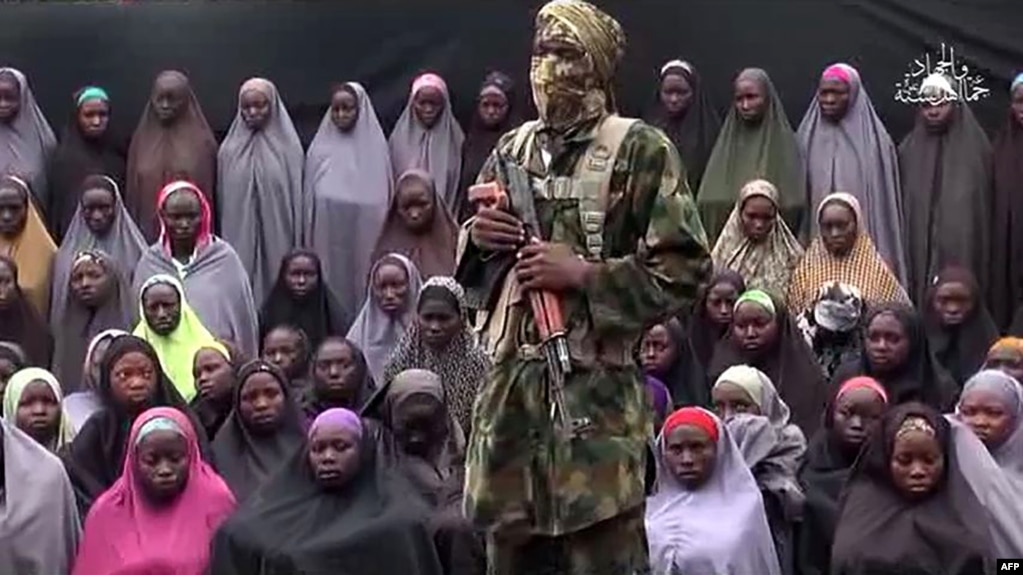
April 14th, 2014 would prove to be one of the most catastrophic days in Nigeria's recent history. In Abuja, a car bomb exploded at the Nyanya bus station during the morning rush hour, tearing through a dense crowd of commuters waiting for buses to work. The blast was powerful enough to leave a deep crater in the earth and reduce dozens of vehicles to charred wreckage.Eighty-eight people died and over 200 were wounded. That same night, in Chibok, Borno State, Boko Haram militants descended on the Government Secondary School and abducted 276 schoolgirls who had gathered to sit their final examinations. The mass kidnapping ignited a global firestorm of outrage, sparking the #BringBackOurGirls campaign and drawing international offers of assistance, but for many of the girls, freedom would not come for years, and for some, not at all.The story of the Chibok abduction is documented here. .
The following day, in Wukari, Taraba State, a dispute over grazing land between Jukun farmers and Fulani herders erupted into full-scale violence in the pre-dawn hours. The initial raid left at least 50 people dead, overwhelmingly civilians, and immediately triggered reprisal attacks by Jukun youth against Hausa-Fulani settlements in the outskirts.At least 50 people died.
Nyanya was struck again on May 1st. This time, a bomb was concealed in a vehicle driven up to a police checkpoint. A man was observed exiting the car and fleeing on foot before the vehicle detonated.Nineteen people died and 66 were injured.
A week later, gunmen on motorcycles attacked the Fadan Karshi police outpost in Kaduna State, killing two officers and two women who happened to be at the station. Two civilians also died. Members of the community pursued the fleeing gunmen and killed two of them.Eight people died in all.
On May 18th, in the Sabon Gari district of Kano (the predominantly Christian quarter of the city), a Volkswagen Golf packed with explosives detonated on Middle Road before reaching its intended target. The device appears to have gone off prematurely.Five people died. Two days later, Jos endured a coordinated double strike. The first vehicle-borne IED exploded in the crowded Terminus Market in the heart of the city. Approximately thirty minutes later, as emergency responders and bystanders rushed to the scene, a second bomb concealed in a parked minibus detonated among them.One hundred and eighteen people died and 56 were injured.
A week later, Boko Haram turned to Gwoza LGA again. On May 27th, insurgents, several dressed in military camouflage, attacked the border villages of Chinene and Amuda, shooting sporadically, burning homes, shops, and churches, and hoisting their flags in Ashigashiya ward as a declaration of territorial claim.Nine people died and over 1,000 were displaced.
On May 30th, along the Tashan Alade road, Boko Haram fighters positioned themselves in the hills and ambushed a convoy of traditional rulers traveling to Gombe State for a funeral. Among those killed in the fusillade was the Emir of Gwoza, Alhaji Idrissa Timta. A police escort was wounded but survived. The deliberate targeting of a traditional ruler marked a significant escalation in the symbolic violence of the insurgency.The attack is reported here. The following day, hundreds of insurgents descended on Kala Balge in a convoy of armed vehicles and motorcycles, intent on revenge. Community members managed to defend the town center, but the fighters slaughtered 40 people on the outskirts and in the surrounding farmsteads before withdrawing.Forty people died.
On June 1st, in the Kabang area of Mubi, a powerful IED was detonated at a crowded football field just as a match ended and spectators began to mill about after the final whistle. The timing ensured maximum casualties among the celebrating crowd.Forty people died and 19 were injured. Five days later, a large convoy of Boko Haram fighters entered Bargari posing as Islamic preachers. They summoned the villagers under the pretense of delivering a religious sermon. Once a crowd had gathered around them, they opened fire and used IEDs to destroy homes throughout the village.Forty-five people died.
On June 14th, a vehicle-borne IED detonated in the middle of Maiduguri's crowded Monday Market. The bomb had been concealed in a charcoal-carrying pickup truck, allowing the driver to blend in with the commercial traffic of the market before detonating the device.Twenty-five people died and 50 were injured.
In the late hours of June 23rd, Ankpon village in Kaduna State's Fadan Kashi district was overrun by armed attackers who moved methodically through the community using firearms and machetes. They killed residents and set several houses ablaze before disappearing.Twenty-one people died and some 2,400 residents were displaced. Simultaneously, gunmen struck the neighbouring community of Kabamu, catching residents off guard in their homes during the same late-night hours.Seventeen more people died. Also on that same day, a powerful IED detonated at the School of Hygiene in Kano city, near the administrative block where new students had gathered for registration.Eight people died and 12 were injured.
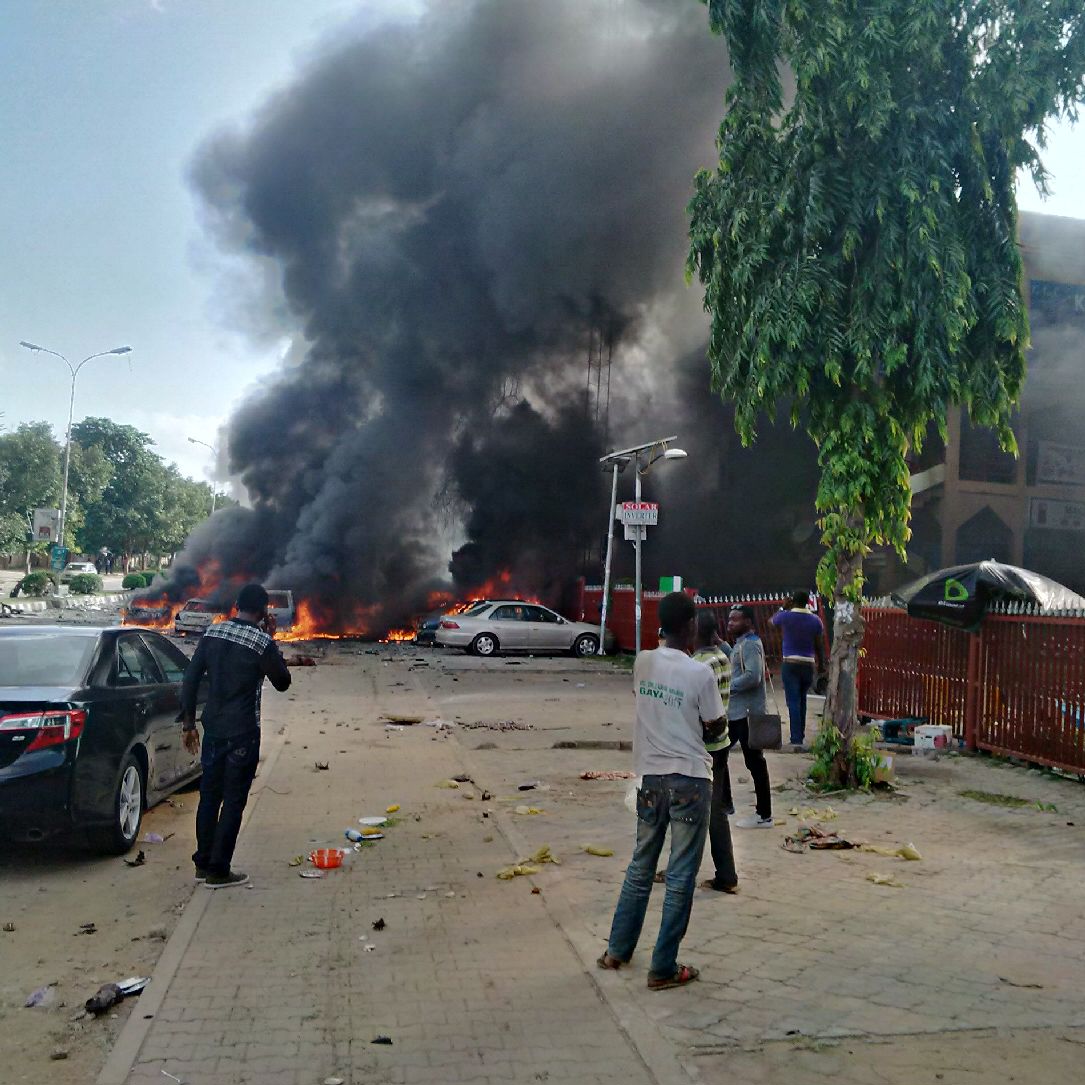
Two days after the triple attacks of June 23rd, Abuja itself was targeted once more. On June 25th, a vehicle-borne IED detonated at the entrance of Emab Plaza during peak business hours, as Nigerians were preparing to watch the Super Eagles face Argentina in the World Cup. The explosion shattered windows in adjacent buildings, incinerated approximately 40 vehicles, and left the mall entrance strewn with scorched wreckage. Security forces shot and killed one fleeing suspect carrying a bag of explosives; a second was arrested. President Goodluck Jonathan cut short his attendance at an African Union summit to visit the scene.Twenty-one people died and 17 were injured.11.jpg?w=800&ssl=1
Three days later, on the Friday of June 28th, Kano's Central Mosque was targeted during Juma'at prayers in one of the most high-profile attacks of the entire insurgency. At least three coordinated bomb blasts ripped through the congregation, followed immediately by gunmen opening fire on worshippers attempting to flee the carnage.More than 120 people died and 270 were injured.
In the early hours of September 25th, heavily armed gunmen stormed Karshin Daji village in Kaduna State, targeting residential homes and church-affiliated buildings with high-caliber firearms and arson. Among those killed were two prominent local religious leaders and their families.Forty-six people died. By late October, Boko Haram moved to seize entire towns rather than simply terrorise them. On October 29th, insurgents launched a massive assault on Mubi, a major town in Adamawa State that housed significant military installations. Despite its strategic importance, Mubi fell within hours. The conquerors renamed it "Madinatul Islam" — the City of Islam — establishing a Sharia court and performing public amputations and executions to consolidate their authority.Twenty-four people died and 200,000 were displaced.
November opened with overlapping incidents. On the 3rd, a suicide bomber detonated himself in the middle of a large Shiite procession in Potiskum, marking the holy observance of Ashura. When soldiers arrived at the scene shortly afterward, witnesses and the Shiite community's leadership reported that troops broke into a nearby seminary where survivors had taken shelter and opened fire, killing several more.Thirty-two people died and 119 were injured. A week later, at Government Science Technical College in Potiskum, a Boko Haram suicide bomber disguised in a school uniform mingled with students before detonating his device in a crowd. Governor Ibrahim Gaidam responded by ordering the immediate indefinite closure of all public schools across Yobe State.Forty-eight students died and 79 were injured.
The year drew to a close with one final mass atrocity. On December 13th, a large convoy of Boko Haram militants hit Gumsuri from two directions. Male residents and older boys were shot first, often in front of their families. The attackers then rounded up the women, children, and younger men, loading them onto trucks before burning approximately half the village.Thirty-five people died and 185 were abducted.
Between January 3rd and 7th 2015, insurgents launched a massive, multi-directional assault on the Multi-National Joint Task Force headquarters outside Baga, on Lake Chad. After overrunning the base in fierce fighting, they turned on the town of Baga and the neighbouring fishing village of Doron Baga, conducting a methodical house-by-house purge over four days. They murdered residents, looted homes, and burned both towns almost entirely to the ground, over 3,700 structures destroyed.More than 150 people died and over 20,000 fled.
On January 23rd, Boko Haram fighters struck Kambari village in the early morning hours, killing fifteen people including the village head and setting the entire settlement ablaze. The attack came as the insurgents probed routes toward Maiduguri through Konduga.Fifteen people died. Five days later, hundreds of insurgents on motorcycles and vehicles stormed six villages in Adamawa State (Mbororo, Shahu, Liddle, Garta, Kamale, and Ghumci) going house to house and slaughtering residents, many of whom were still asleep. After looting, they burned almost all the houses. Numerous women and young people were abducted.Forty people died and 10,000 were displaced.
On February 2nd, a female suicide bomber detonated explosives near the car park of Abubakar Umar Memorial Stadium in Gombe, just minutes after President Goodluck Jonathan had concluded an election campaign rally and the crowd was dispersing. The bomber was killed in the blast, as was a female bystander passing nearby.Two people died and 18 were injured.
At the Central Motor Park in Damaturu on February 15th, a teenage female suicide bomber passed through security checks at the entrance of a crowded bus station before detonating her device in a crowd. Most of the victims were children who had been selling peanuts or begging at the terminal.Sixteen people died and 30 were injured.
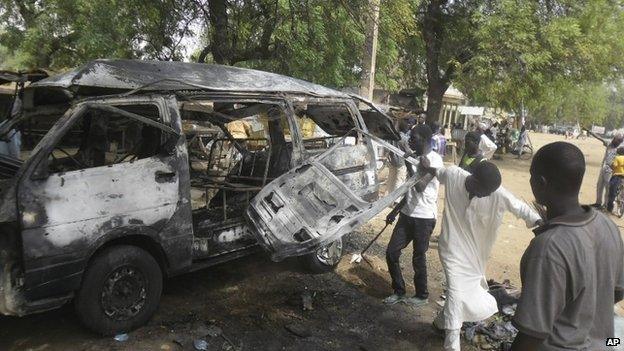
A week later, at the GSM market in Potiskum, a girl estimated by witnesses to be between seven and ten years old approached the market entrance. Security guards, suspicious of her, turned her away four times. On her fifth attempt, she tried to bypass the checkpoint entirely. When guards intervened, she detonated the explosives strapped to her body.Seven people died and 19 were injured. Two days later, on February 24th, a male suicide bomber disguised as a passenger boarded a bus at the Tashan Dan-Borno Motor Park in Potiskum that was preparing to depart for Kano. He triggered a metal detector at the security checkpoint and was told to step aside, but forced his way onto the bus and detonated his device among the passengers.Seventeen people died and 27 were injured. .webp
The following day, two male suicide bombers arrived at the Kano Line bus station in Kano after taking a bus from the town of Wuddil. Shortly after disembarking, they detonated explosives hidden under their clothes in the midst of the crowd.Ten people died.
On February 28th, two women in hijabs attempted to board a commercial vehicle at a roadside bus stop in Ngamdu village. The driver refused them, and after the bus pulled away, one of the women detonated her explosives.Four people died.
March 7th, 2015 marked a pivotal ideological moment. From the Sambisa Forest, Boko Haram released a video pledging allegiance to the Islamic State in Iraq and Syria. ISIS accepted the pledge, formally designating the group as the Islamic State West Africa Province, ISWAP. The merger gave the insurgency a new global brand and deepened its ideological alignment with the world's most feared jihadist organization. That same day, a series of coordinated suicide bomb blasts struck Maiduguri across several hours, targeting the Baga Road fish market, the Monday Market, a used car lot, and the Post Office shopping area in swift succession.Fifty-eight people died and 139 were injured.
On March 16th, the Nigerian military launched a major offensive to recapture Bama. The operation involved heavy aerial bombardment followed by a ground assault. When troops entered, they found a town in a state of near-total ruin, nearly 90% of structures had been razed or booby-trapped with IEDs by the retreating insurgents.On March 28th — election day — insurgents attacked voters queuing at polling stations in Dukku, Gombe State, killing six people, among them Alhaji Umar Aminu, the APC candidate for Dukku South Constituency. Simultaneously, coordinated attacks in Nafada LGA struck the towns of Shole, Birin Bolewa, and Birin Fulani, killing three people including a policeman. The message from the insurgents was unambiguous: democracy itself was a target.Details of the election-day attacks are here.
Approximately two dozen Boko Haram militants arrived in cars at Kwajafa village late on the Sunday evening of April 5th, presenting themselves as Islamic preachers. They gathered residents near the mosque and, once the crowd was assembled, opened fire and set fire to homes.Twenty-four people died.
On April 9th, hundreds of suspected Boko Haram militants, believed to be retreating from advancing Nigerian troops, stormed Dile village, burning houses and shooting anyone in their path.Twenty people died. On April 15th, as Nigerian troops attempted to evacuate civilians sheltering in the hills around Gwoza, Boko Haram militants intercepted one group of civilians and slit their throats.Twelve people died. On April 21st, Boko Haram fighters fired a rocket-propelled grenade at a military van in an ambush in Baga, killing two soldiers and destroying the vehicle. On the same day, a military vehicle struck a mine planted by Boko Haram in Kauyen Kuros village, critically injuring six soldiers and a civilian vigilante.Details of the ambushes are here.
In the Yantaya district of Jos, on May 5th, bomb blasts ripped through a crowded mosque and a nearby restaurant.Forty-four people died and 67 were injured.
On the morning of May 29th, near Tashan Alade in Borno, two bombs exploded at a wedding ceremony just after 6 a.m.Seven people died and 30 were injured.
On June 22nd, two teenage female suicide bombers detonated explosives near a crowded mosque in the Baga Road area of Maiduguri. The first girl exploded as she approached the mosque entrance. As people rushed to help the wounded, the second bomber detonated at a distance. Thirty people died.
The carnage barely paused across the turn of the month. On June 30th, militants invaded twin villages near Monguno, assembled residents after evening prayers, and then separated the men from the women before opening fire on the men and boys. They set both villages ablaze as they withdrew. Forty-eight people died and 17 were injured. The following evening, as Ramadan approached its end, gunmen entered multiple mosques in Kukawa town and shot men as they knelt in prayer before breaking the fast, specifically targeting congregations they deemed too moderate in their practice of Islam. They then fanned out into the surrounding streets and attacked women in their homes as they prepared the evening meal. Ninety-seven people died.
On July 5th, in the Jigawa area of Potiskum, a male suicide bomber disguised as a worshipper slipped inside an uncompleted church building and detonated his explosives among those gathered inside.Six people died. Twelve days later, Damaturu was struck during one of the holiest moments in the Islamic calendar. On July 17th, a girl described as approximately ten years old detonated explosives at screening areas where worshippers were gathering for Eid prayers. A second bomber, described as an elderly woman, struck a separate location shortly after.Fifty people died.
On July 21st, armed men wearing military camouflage descended on the communities of Sho, Jol, Kwi, Gana-Ropp, and Kakuruk in Barki Ladi, Plateau State, using sophisticated weapons to systematically attack each settlement.Seventy people died, 100 were injured, and 20,000 were displaced.
August brought no relief. On the 11th, at peak trading hours in the weekly Sabon Gari Market in Maiduguri, a bomb concealed inside a knapsack detonated in the middle of the crowd, carried there by a female suicide bomber.Forty-seven people died and 50 were injured.
Months passed before the next major recorded strike, but November 17th reminded the country that the insurgency had not tired. A suicide bomber walked into a crowded fruit and vegetable market in the Jimeta area of Yola during the evening rush of commerce.Thirty-two people died and 80 were injured.
2016 opened with the weaponisation of children. On January 29th, at a grain market in Gombi, Adamawa State, a boy estimated to be approximately twelve years old detonated an explosive vest in the middle of the crowd.Eight people died and 27 were injured. The following day, Boko Haram fighters descended on the village of Dalori and its adjacent IDP camp. They arrived in two Volkswagen Golf cars and on motorcycles, dressed in military camouflage, and immediately opened fire on residents while using firebombs to ignite the thatched-roof huts. As survivors fled in every direction, three female suicide bombers positioned among the crowd detonated themselves.Sixty-five people died and 136 were injured.
On February 6th, two female suicide bombers infiltrated the Dikwa IDP camp, disguising themselves as among the hundreds of displaced persons sheltering there. They detonated their devices in the midst of a crowd that had gathered to collect food rations.Fifty-eight people died and 80 were injured. In the days that followed, gunmen on motorcycles and in vans carried out back-to-back raids on neighbouring villages in Borno. On February 12th, they struck Kachifa, killing eight residents and looting grain barns and cattle.The following morning they hit Yakshari, killing 22 people, many by throat-slitting, before emptying food stores, taking all the cattle, and abducting an unspecified number of women and children.
Then came what would stand as one of the deadliest single events in Nigeria's history outside of the northeast. On February 24th, heavily armed militias launched a coordinated, rolling invasion of more than ten communities in Agatu LGA, Benue State, moving village to village, burning homes and killing residents in each. The attackers reportedly occupied the deserted communities for several days afterward, destroying food barns and infrastructure. A subsequent government investigation would attribute1,269 deaths to the assault, with 7,000 people displaced.
On March 16th, at the Molai-Umarari mosque in Maiduguri, two female suicide bombers struck during dawn prayers. The first, disguised as a man, positioned herself in the first row of worshippers before detonating. As survivors fled the burning building, the second bomber rushed in from outside and detonated her device among them.Twenty-four people died and 18 were injured.
On April 24th, Boko Haram militants raided Alau village, targeting a group of ethnic Fulani herdsmen. The insurgents kidnapped women and children and seized livestock during the attack.Thirty people died.
On the morning of May 12th, a male suicide bomber disguised as a madman shuffled toward the main gate of the Musa Usman Secretariat in Maiduguri, one of the state's busiest government buildings. When a combined team of police officers intercepted and began to question him, he detonated the IED strapped beneath his disguise.Seven people died and 20 were injured.
Three incidents in quick succession at the end of May illustrated the breadth of violence now consuming Nigeria. On May 28th, along the Bauchi-Jos Road near Panshanu, soldiers opened fire on a commercial bus at a checkpoint, killing a plainclothes police officer and wounding three others. The following day brought two separate tragedies: in Biu, a tricycle taxi drove over an IED buried at the roadside, killing five people and injuring two; and in Pandogari, Niger State, a 24-year-old Christian trader named Methodus Chimaije Emmanuel was lynched by a mob over allegations of a blasphemous social media post.Four people died in that incident.
On June 2nd, in Kano's Kofar Wambai Market, Bridget Patience Agbahime, a 74-year-old Christian woman, was beaten to death by a Muslim mob after a dispute that began over ablution space escalated into an accusation of blasphemy. Her killing was not the act of an armed group but of a crowd, and it underscored how sectarian violence had seeped into the fabric of daily life far beyond the northeast.Her death is reported here.
On June 10th, fourteen Boko Haram gunmen arrived on seven motorcycles in the remote village of Mairari. They did not attack indiscriminately — they went to four specific homes, dragged the women inside out, and slit their throats. Local vigilantes later confirmed the killings appeared targeted, suggesting the gunmen had come specifically for the women's husbands and, failing to find them, killed the wives instead. The victims were aged between 27 and 45.Four women died. Four days later, at dawn on June 14th, Boko Haram fighters on six motorcycles encircled Kutuva village, set houses on fire, and shot at residents as they fled the flames. Four residents were killed and four women abducted. Local vigilantes pursued the attackers, engaged them in combat, destroyed their camp, and recovered weapons and flags and rescued an eleven-year-old girl.The attack is reported here.
Two days later, on June 16th, more than 100 Boko Haram insurgents on motorcycles descended on Kuda village in Adamawa State while the community was holding a wake for a local leader. They opened fire indiscriminately on the mourners. At least 24 people died and ten were wounded. The attack is reported here.
On June 18th, gunmen arrived on ten motorcycles at Wumbi village in the early morning, firing indiscriminately into homes and startling residents from sleep, then setting houses ablaze while looting food supplies. Two civilians died and hundreds fled across the river into neighbouring Cameroon. The attack is reported here. By late June, the fissures within Boko Haram's own leadership were becoming impossible to contain. US intelligence officials reported a deepening divide over Shekau's repeated use of children and women as suicide bombers against mosques, markets, and IDP camps. ISIS leadership, now watching from Raqqa, viewed the tactic as both un-Islamic and strategically counterproductive to their goal of building a sustainable proto-state in West Africa. The ideological split is examined here.
On July 4th, three female suicide bombers attempted to attack displaced persons fetching water at a borehole in Monguno. Alert troops detected the first two and shot them; their explosives detonated on impact, injuring two nearby civilians. The third bomber retreated further away before detonating, causing no additional casualties.Three people died.
In the evening of July 7th, suspected Boko Haram fighters attacked Gaskeri village, killing three members of the Civilian Joint Task Force and looting food supplies before withdrawing.Three people died. The following morning, two Boko Haram suicide bombers launched coordinated attacks on mosques in Damboa during Friday dawn prayers. The first was intercepted before entering the Central Mosque and detonated outside, killing himself. The second slipped inside a smaller nearby mosque and detonated among the congregation.Eight people died and one was injured.
On July 30th, thirteen inmates escaped from the Koton-Karfe Medium Security Prison in Kogi State, exploiting structural weaknesses in the facility's infrastructure. No fatalities were recorded, but the jailbreak added to mounting evidence of a corrections system under serious strain. The incident is reported here.
August began with coordinated attacks in southern Kaduna. In the pre-dawn hours of August 1st, a group estimated at more than 100 armed men stormed Gada Biyu, shooting residents, stabbing individuals, and torching homes. Nine bodies were found there. The same force then struck Akwa'a, killing two men, before appearing at Anguwan Anjo, where residents had already fled. After police briefly withdrew, the attackers returned and systematically destroyed approximately 1,000 houses across all three villages.Eleven people died. The following day, a power struggle within ISWAP was made public. In the 41st issue of its Al-Naba magazine, ISIS announced that Abu Musab al-Barnawi had been installed as the new leader of the Islamic State West Africa Province. Shekau immediately released an audio message denouncing the announcement as an illegitimate "coup" and declaring al-Barnawi an "infidel." The split that had been building for months was now open.The split is examined here.
On August 13th, six young farmers from Godogodo set out to their fields together and were attacked by armed Fulani men who shot them and hacked at them with machetes. Search parties later found all six dead, their bodies, in the words of one report, riddled with bullets and machete cuts.Six people died. A week later, before dawn on August 20th, eight Boko Haram insurgents on four motorcycles entered Kuburubu village while residents slept. They moved from home to home, killing six people and abducting seven women, five teenage boys, and one teenage girl.Six people died and 13 were abducted.
Suspected Boko Haram insurgents attacked Kwashebe village on October 10th, killing five residents before troops from the 7th Division were deployed to confront them. Five people died. Two days later, on October 12th, a bomb blast tore through a convoy of vehicles transporting goods and passengers toward Gamboru Ngala at Muna Garage.Eighteen people died and 15 were injured.
On October 29th, two female suicide bombers riding in motorised rickshaws launched coordinated attacks at opposite ends of Maiduguri. The first targeted the Bakassi IDP camp, detonating at the entrance. The second approached the NNPC fuel station but was prevented from entering; she detonated at the gate.Nine people died and 24 were injured.
On November 1st, near the military checkpoint on the road to Gubio, a pickup truck carrying nine people emerged suddenly from a bush path and exploded, killing everyone on board. A separate military account described eight suicide bombers in a Bedford truck attempting to breach the checkpoint, detonating when troops insisted on searching the vehicle.Eight people died. Three days later, on November 4th, Boko Haram attacked the military base at Mallam Fatori. Troops repelled the assault and killed 14 insurgents, but the battle cost the Nigerian Army dearly: Lt.-Col. Muhammad Abu Ali, Commanding Officer of the 272 Task Force Tank Battalion, was killed alongside four soldiers, with four others wounded.Nineteen people died in total.
On November 7th, Zamfara State offered a glimpse of the banditry epidemic that was quietly growing alongside the insurgency. Over 70 armed men on motorcycles stormed a gold mining site in Bindin District, opened fire indiscriminately on miners and traders, and carted away mineral finds before fleeing.Thirty-six people died.
On November 11th, a patrol team spotted three female suicide bombers with IEDs strapped to their bodies in Umulari village. The troops opened fire; two devices detonated immediately, killing all three women. The third IED was later safely neutralized. The incident is reported here. On November 15th, along the Bita-Piridang road, a troop patrol detonated an IED and was immediately ambushed by Boko Haram fighters. Lt.-Col. B.U. Umar, Commanding Officer of the 114 Task Force Battalion, survived the initial blast but was shot when he stepped out of his vehicle to assess the damage. He died at the scene.Two people died and eight were injured.
November 18th brought a cascading series of suicide attacks across Maiduguri. Police challenged two women and a man running toward a checkpoint; one female bomber detonated, killing herself and the male accomplice. The second woman was arrested. Around 8 a.m., two more bombers detonated at a bus and taxi station, killing themselves and two members of the Civilian JTF.Six people died. Five days later, a suicide bomber detonated an IED at the busy Muna Garage transport hub, killing himself and one bystander in an attack that was brief but lethal. Two people died.
On December 9th, two female suicide bombers disguised as customers detonated their vests simultaneously at opposite ends of the market in Madagali town, a synchronised strike designed to eliminate any possibility of escape for those caught in the middle.Fifty-six people died and 57 were injured. Two days later, near the Monday Market in Maiduguri, two young girls, estimated to be between seven and eight years old, arrived in a rickshaw. One walked toward the poultry stalls and detonated her explosives belt. As onlookers rushed to help the fallen, the second detonated nearby.Three people died and 18 were injured. 2016 closed with one final attempted atrocity. On December 26th, two female suicide bombers approached the Kasuwan Shanu Cattle Market in Maiduguri. One detonated her explosives. The second was stopped, and, according to police, lynched by the crowd.One person died.
In Bakin Dutse on the 4th of January, 2017, self-defense fighters on patrol sighted three suspected female suicide bombers approaching. The vigilantes shot the lead bomber, activating her explosives and killing her and a companion. The third bomber tried to flee and was shot dead. Three people lost their lives in the encounter. A large group of Boko Haram insurgents attacked the military base at Buni Yadi on the 7th of January, 2017, triggering an intense gun battle. Though the attack was repelled, it resulted in casualties on both sides: five soldiers killed, two wounded, and fifteen insurgents eliminated. Twenty people died and two were injured in the confrontation.
In Kalari on the 8th of January, 2017, two female suicide bombers disguised as visitors knocked on separate homes. The first bomber detonated when a young girl opened the door, killing the girl and herself. The second bomber detonated when a resident opened the door, killing both. Five people perished.
On market day in Madagali, the 13th of January, 2017, four female suicide bombers approached a checkpoint on the outskirts of town. Local vigilantes challenged them, and the bombers then detonated their explosive vests. Two of the bombers had babies strapped to their backs who also died. Six people died and fifteen were injured.
Boko Haram insurgents launched a major attack on troops from the shores of Lake Chad in Kangarwa on the same day. The attack was repelled with air support, the battle lasting from evening until later in the night. Ten insurgents were killed, and three soldiers died, with thirteen people dead and twenty-seven wounded. Three suicide bombers, aged seven and twelve, attempted a coordinated attack on the University of Maiduguri on the 16th of January, 2017. The first attacker was shot before she could detonate. A seven-year-old male bomber infiltrated the junior staff quarters mosque and detonated, killing at least four worshippers. The third attacker was intercepted and shot dead. Four people died and fifteen were injured.
A Nigerian Air Force fighter jet dropped two bombs on a densely populated IDP camp in Rann on the 17th of January. At the time, humanitarian aid workers were distributing food and supplies. The military later admitted the pilot was acting on "faulty intelligence." One hundred twelve people died and ninety-seven were injured.
Suspected Boko Haram insurgents invaded Dzaku village on the 23rd of January, arriving in two Hilux Toyota vehicles. The attackers killed residents, abducted women and children, and carted away foodstuffs before fleeing. Eight people died. On the same day, the 23rd of January, 2017, suspected Boko Haram insurgents attacked Ndagu village, setting the entire village ablaze. They killed three residents, abducted seven women, and looted vehicles. Three people died and seven were abducted. In the Kaleri Area of Mafa on the 25th of January, 2017, a female suicide bomber arrived at the home of the chairman of the Civilian JTF and knocked on his door. When the commander refused to open the door, the bomber detonated her explosive vest. Three people died and two were injured.
Boko Haram gunmen ambushed a convoy of vehicles traveling under military escort along the Maiduguri-Damboa highway in Korowaso Forest on the 28th of January, 2017. Attackers emerged from the bushes and opened fire. Twenty-four people died and nine were injured. On the 7th of February, 2017, in the Molai Area of Maiduguri, two female suicide bombers attempted to infiltrate the city. They were spotted and ordered to halt. One bomber was shot dead; the second surrendered and was arrested alive. One person died.
Boko Haram insurgents ambushed troops conducting a routine rotation along the Ajiri-Dikwa road on the 9th of February, 2017. The attack resulted in the deaths of seven soldiers and injuries to nineteen others. Ten people died and nineteen were injured. Suspected Boko Haram fighters invaded Mussa village at about 9:30 p.m. on the 10th of February, 2017. They looted foodstuff and livestock before setting ablaze dozens of residential houses. One person was burnt beyond recognition, a single fatality. Approximately thirty Boko Haram insurgents invaded Mifa on the 11th of February, 2017, killing an Islamic scholar and injuring a teenage boy. The insurgents looted food and livestock, then set the village ablaze. One person died and one was injured. On the 16th of February, 2017, Boko Haram carried out its most intense attack on Maiduguri in months. Three female suicide bombers detonated explosives at Muna Garage. In the second phase, soldiers opened fire on gunmen riding motorcycles who were escorting other suicide bombers. Eleven people died and seven were injured.
Boko Haram released a propaganda video on the 14th of March, 2017, showing the execution of three men accused of being spies. One man was beheaded, while the other two were shot. Three people died. On the 30th of March, 2017, Boko Haram fighters seized fourteen young girls aged seventeen and below in Pulka Village while residents fled. They later picked up four other girls who were fleeing. The attackers did not harm anyone during the raid. Eighteen people were abducted. In Dumba Village on the 30th of March, 2017, insurgents killed a herdsman who had tried to escape after refusing to pay protection money. They slaughtered him, shot dead fifty of his cattle, and took four women from his family along with the remaining herd. Four people were abducted and one died. Three suicide bombers attempted to gain entry into the University of Maiduguri on the 13th of May, 2017. University security spotted them and stopped them for interrogation. Two bombers detonated, killing one security guard and injuring a soldier. A third bomber detonated near a church, causing structural damage. Four people died and one was injured.
Nine Boko Haram insurgents arrived on motorcycles in Amarwa Village on the 13th of May, 2017, and attacked farmers working in their fields with machetes. Following the attack, a local militia pursued the insurgents and killed four of them. Eleven people died. Three female suicide bombers arrived in Shuwari Buri Village on the 15th of May, 2017, claiming to be travelers. Two bombers rushed into a thatched hut and detonated, killing two brothers. The third bomber detonated among residents who had gathered, injuring seven. Two people died and seven were injured. Three male suicide bombers gained entry to the University of Maiduguri premises on the 18th of May, 2017. Their objective was to attack the female hostel. Security operatives spotted them and moved to intercept. Three bombers died and three security personnel were injured.
On the 6th of June, 2017, Boko Haram launched its deadliest attack in months on Maiduguri in a coordinated combined assault. Four suicide bombers struck multiple locations. Simultaneously, dozens of insurgents attempted to invade Maiduguri through the Jiddari Polo suburb. Thirteen people died and twenty-four were injured.
In Fadaman Rake Village on the 8th of June, 2017, a driver in a Toyota Starlet approached children playing by the roadside and handed one of them a polythene bag, claiming it contained money and valuables meant for their father. As the children carried the bag home, they became curious and attempted to open it. The bag exploded, killing two boys instantly and injuring several others, including a passerby. Two people died and five were injured. Five female suicide bombers staged a coordinated attack on Kofa Village on the 18th of June, 2017. The first bomber detonated near a mosque where worshippers were gathered for night prayers, killing seven people. The second bomber detonated in a house, killing five people. The remaining three bombers detonated within the same vicinity, killing only themselves. Seventeen people died and eleven were injured.
A large convoy of over two hundred vehicles, including a police contingent and civilian travelers, was ambushed by suspected Boko Haram militants on the Maiduguri-Damboa highway on the 20th of June, 2017. The attackers targeted the rear of the convoy after the military escort had passed. A police sergeant and a civilian truck driver were killed. Two people died and six were injured.
A male suicide bomber detonated at the entrance to the University of Maiduguri's Rapid Response Services Office on the 25th of June, 2017, killing a female security guard and injuring two other security personnel. Two people died and two were injured. Four female suicide bombers entered the Zannari community in Jere on the 25th of June, 2017. Two detonated inside residential buildings, killing eight people and wounding eleven. A third detonated without causing further casualties. The fourth was injured while trying to detonate and later died from her wound. Nine people died and eleven were injured.
Two female suicide bombers detonated at the University's Center for Entrepreneurship and Enterprise Development and the Students Industrial Work Experience Scheme on the 26th of June, 2017, killing only themselves. Two people died. Boko Haram released a graphic propaganda video on the 10th of July, 2017, showing the public execution of eight villagers accused of defying the group's "Sharia police." The eight victims were blindfolded and lying face down when four masked gunmen shot them at close range. Eight people died.
In the Molai Area of Maiduguri on the 11th of July, 2017, a teenage female suicide bomber crept to a sandbag post where CJTF members were on guard. Before they could react, she detonated her explosives, killing three CJTF members. Four people died and five were injured. Also in Molai on the 11th of July, 2017, a bomber targeted a tea vendor's joint where CJTF members had taken a break to eat dinner. The explosion killed seven CJTF members, with seven dead and six injured.
A teenage bomber was intercepted by a CJTF member near a checkpoint in Molai on the same day. She detonated her explosives, killing herself and the CJTF member. Two people died and seven were injured. In Judumeri and Polo-Sabongari on the 11th of July, 2017, a bomber attacked a group of mourners who had gathered to sympathize with families of those killed in the earlier attacks. The explosion killed the bomber and seven civilians. Seven people died and five were injured.
In the London Ciki Area of Maiduguri on the 17th of July, 2017, a female suicide bomber approached a mosque where worshippers were gathering for early morning prayers. When civilian JTF members demanded she stop for a search, she bolted into the mosque and detonated. The blast killed the bomber and eight worshippers, wounding eighteen others. Three other female suicide bombers were active in Maiduguri that day: two were shot and killed in the Mammanti area, and a third detonated in the Simari suburb without causing other casualties. Eight people died and eighteen were injured. Four suicide bombers were involved in coordinated attacks on Dalori 1 and 2 IDP Camps on the 23rd of July, 2017. At Dalori 2, a female bomber attempted to scale the perimeter fence and detonated, killing only herself. At Dalori 1, a male and female bomber entered the camp, killing three IDPs while wounding seventeen others. A fourth female bomber was intercepted and killed elsewhere. Eight people died and fifteen were injured.
On the 25th of July, 2017, a Nigerian Army and Civilian JTF contingent was escorting a team of geologists and surveyors from the University of Maiduguri on an oil exploration mission when the convoy was ambushed by a large contingent of Boko Haram fighters in the Barno Yasu Area. The attack began with insurgents using heavy weapons and setting vehicles on fire. Sixty-nine people died and ten were abducted.
A female suicide bomber infiltrated a housing estate in Dikwa that housed returnees who had come back to the town after it was recaptured from Boko Haram in 2015. On the 28th of July, 2017, the bomber sneaked into a building and detonated. Fourteen people died and twenty-four were injured.
Three suicide bombers attempted to infiltrate the Usmanti Community on the 4th of August, 2017. They were sighted by vigilant CJTF members and as they were chased, the three bombers hurriedly detonated their IEDs. Three people died and two were injured. Boko Haram jihadists attacked two fishing islands in Lake Chad on the 5th of August, 2017, in a coordinated operation. The attackers first struck Duguri island, killing twelve fishermen and wounding two others who later died. The attackers then went to nearby Dabar Wanzam island, killing seventeen fishermen there. Thirty-one people died. Armed Boko Haram insurgents stormed Amarwa Village on the 12th of August, 2017, in a nighttime raid. The attackers shot indiscriminately at villagers and set fire to homes. Two residents were shot dead, and two others died from smoke inhalation or burns after being trapped in burning houses. The attackers also looted food stocks before fleeing. Four people died. On the 12th of August, 2017, Boko Haram insurgents attacked two tractor drivers while they were working on a farm in Jere LGA. Two people died. Three suicide bombers, reportedly disguised as buyers, carried out coordinated attacks on the Mandarari Village market and a nearby IDP camp on the 15th of August, 2017. The first bomber detonated inside the market. Almost simultaneously, two other bombers detonated at the gates of the IDP camp. Nineteen people died and eighty-two were injured.
A group of travelers, identified as livestock traders returning from a weekly Sunday market in Buni Yadi, were ambushed by suspected Boko Haram insurgents on the Damaturu-Biu Road on the 20th of August, 2017. The attackers opened fire indiscriminately. As the victims attempted to flee, they triggered IEDs buried along the road. Two people died and three were injured. A male suicide bomber with an IED strapped to his body approached a patrol team of the Federal Special Anti-Robbery Squad at Muna Garage on the 23rd of August, 2017. Security forces attempted to gun him down, but he detonated. The blast killed the bomber, a police officer, and a civilian. Four SARS personnel and seven other civilians were injured. A second would-be suicide bomber was killed before he could detonate. Two people died and eleven were injured. On the 23rd of August, 2017, Boko Haram militants swept through four interconnected villages—Abachari, Kote, Uda Lawanti, and Wokilli. The attackers moved silently, utilizing knives and close-quarters gunfire. Many victims were pulled from their beds and executed via throat-slitting. Fifteen people died and two were injured. Boko Haram fighters launched a lethal raid on Mallam Moduri and Kijimatari in Guzamala LGA on the 23rd of August, 2017. Utilizing the cover of midnight, the insurgents infiltrated the villages and used knives and machetes to slit the throats of twelve residents while they slept. Twelve people died and four were injured. On the 29th of August, 2017, Boko Haram militants attacked a group of farmers near Konduga. The victims were among farmers who went to their farms "against military advice." The attackers kidnapped four people, killed one person, and injured two others. Four people were abducted, one died, and two were injured.
On the same day, the 29th of August, 2017, five members of a family—a woman, her three young daughters, and her sister—were traveling to Maiduguri under a military escort along the Maiduguri-Gubio Highway when their vehicle broke down. While the driver attempted to repair the car, Boko Haram fighters emerged from the bush and seized the five family members. Five people were abducted.
In Banki on the 1st of September, 2017, suspected Boko Haram fighters infiltrated the IDP camp from the rear towards the Cameroon border by breaking through the camp's barricade. The attackers used knives and sharp weapons to kill victims silently, avoiding gunfire to prevent alerting soldiers at a nearby military base. Eleven people died, two were injured, and four were abducted.
Boko Haram gunmen on motorcycles opened fire on farmers working in their fields in Ngawo Fato Bulabulin Village on the 4th of September, 2017, in a drive-by shooting. Four farmers were killed instantly. Four people died.
Operating from pick-up trucks and motorcycles, heavily armed Boko Haram fighters executed a sustained, two-day sweep across three farming communities (Mallan, Kesa Kura, and Manjita) beginning on the 6th of September, 2017. The attackers specifically hunted young men, executing eight farmers under the accusation that they were secretly members of the Civilian JTF. After the executions, the insurgents razed all three villages to the ground and looted the freshly gathered harvest. Eight people died. Two female suicide bombers targeted a commercial taxi on the feeder road off the Maiduguri-Mafa highway on the 8th of September, 2017. The bombers detonated their IEDs against the vehicle. Only the bombers died, while eight others sustained injuries. Two people died and eight were injured. Boko Haram fighters armed with AK-47 rifles, knives, and machetes invaded Kurmiri Village on the 9th of September, 2017. To avoid alerting residents with gunfire, the attackers used knives and machetes to slaughter their victims. They killed the village Chief Imam and four other persons. Five people died. A female suicide bomber stormed a mosque in Dikwa during early morning prayers on the 26th of September, 2017. She detonated explosives strapped to her body among worshippers. The blast killed five people and wounded three others. Following the attack, soldiers intercepted another female bomber who blew herself up when asked to stop; no one was harmed in that second blast. Five people died and three were injured.
Multiple suicide bomb attacks occurred in the Muna Area of Maiduguri on the 22nd of October, 2017. A male suicide bomber detonated at Muna Garage, killing himself and thirteen others and injuring five people. Two female suicide bombers detonated at Muna Dalti, killing themselves and injuring thirteen others. Sixteen people died and eighteen were injured. A male suicide bomber disguised as a worshipper entered a mosque in Ajiri Yala Village on the 30th of October, 2017, while people were gathering for morning prayers. He detonated, killing five people. Five people died.
A convoy of civilians traveling under military escort from Banki to Maiduguri was ambushed by Boko Haram insurgents on the Banki-Bula Yobe Road on the 30th of October, 2017. As the attackers opened fire, one civilian vehicle ran over a buried IED. The blast killed four people, including a mother and her two children. Four people died and twelve were injured. Four suicide bombers—two male, two female—infiltrated Muna Gari on the 15th of November, 2017, and detonated IEDs at different locations. The first explosion occurred at a prayer ground. A total of eighteen people, including the four bombers, died. Twenty-nine others sustained injuries; two later died, bringing the total death toll to twenty. Eighteen people died and twenty-nine were injured.
Boko Haram insurgents on motorbikes attacked farmers working at the Dimge plantation on the 19th of November, 2017. They abducted seven farmers, took them to a nearby bush, and beheaded six of them. The attackers forced an elderly farmer among the abductees to witness the brutal killings, then released him and ordered him to convey the message to the families of the victims. Six people died. A teenage suicide bomber detonated explosives inside the Medina mosque in Mubi during morning prayers on the 21st of November, 2017. The blast killed at least fifty people, the majority men and boys. Fifty people died and thirty were injured. Two female suicide bombers staged a coordinated attack on the crowded market in Biu on the 2nd of December, 2017. The first bomber detonated inside the market. As survivors rushed to assist the wounded, the second bomber detonated outside the market square. The attack occurred while aid workers were distributing food. Thirteen people died and fifty-three were injured.
Boko Haram insurgents engaged a security detachment in Damboa on the 9th of December, 2017, resulting in the deaths of two Nigerian soldiers. Two people died. Boko Haram insurgents launched a coordinated heavy-arms assault on a military formation in Damboa on the 10th of December, 2017. Moving in a swarm formation from the nearby Sambisa and Alagarno forest fringes, the attackers overwhelmed a security detachment. Ten Nigerian soldiers were killed. A military vehicle transporting troops along the Damboa-Maiduguri Road struck a buried IED on the 11th of December, 2017. The blast destroyed the vehicle and killed two Nigerian soldiers instantly. Two people died.
Boko Haram jihadists, arriving in several pickup trucks, launched an attack on a military checkpoint in Molai on the 25th of December, 2017. They used the cover of a civilian convoy returning from Damboa to approach the checkpoint. Troops repelled the assault. Four civilians were killed in the crossfire, and five CJTF members were injured. A woman was also reportedly abducted. Four people died, five were injured, and one was abducted. A male suicide bomber disguised as a grain merchant infiltrated Amarwa Village on the 28th of December, 2017. He first approached a provisions shop and offered sorghum for sale; when the shopkeeper declined, he walked to a shade where villagers had gathered and detonated. The blast killed the bomber and initially three others, injuring thirteen others. Two of the injured later died. Six people died and thirteen were injured. Boko Haram fighters on motorcycles attacked a group of loggers collecting firewood in Maiwa on the 30th of December, 2017. The assailants opened fire on the loggers without warning, killing at least twenty loggers. The gunmen also set fire to three vehicles laden with firewood destined for Maiduguri. Twenty people died. In a series of coordinated pre-dawn raids on Guma and Logo in Benue on the 1st of January, 2018, armed Fulani militants attacked at least six villages. The attackers were heavily armed with assault rifles and machetes. They shot men, women, and children indiscriminately, slit throats, and set homes ablaze. In many cases, they removed the private organs of victims. Seventy-three people died, one hundred were injured, and over fifty thousand were displaced. Gunmen abducted Yohanna Sidi Kukah, the Agwom Akulu II (paramount ruler of Ikulu chiefdom), at his private residence in Anchuna Village, Zangon Kataf LGA, Kaduna State, on the 2nd of January, 2018. Two people were abducted. A teenage male suicide bomber detonated an IED strapped to his body inside a mosque in Gamboru on the 3rd of January, 2018. The attack occurred around 5:00 a.m., shortly before the scheduled morning prayers. The blast completely destroyed the mosque. Fourteen bodies were pulled from the rubble, and only the muezzin survived. The teenage bomber killed his biological father in the attack. Fourteen people died and six were injured.
Boko Haram gunmen on motorbikes opened fire on a group of loggers collecting firewood at Kaje Village on the 8th of January, 2018. Twenty people were killed and fifteen others are missing and presumed kidnapped. Boko Haram jihadists on motorcycles attacked a group of loggers collecting firewood in Jinene Village on the 15th of January, 2018. The gunmen shot six people dead. They also abducted five girls who had joined the loggers to collect firewood. In a related attack nearby, the gunmen shot and injured two shepherds and made off with some five hundred goats belonging to IDPs. Six people died, two were injured, and five were abducted.
Boko Haram insurgents riding motorcycles and bicycles attacked Pallam Village late Monday night on the 15th of January, 2018. They shot sporadically, burned houses and shops, looted food, and abducted residents. The attackers also looted a medical clinic and killed a security guard there. As the insurgents were leaving, they encountered vigilantes in neighbouring Kuda village. A shoot-out ensued, and the vigilantes killed two attackers. The attack lasted approximately five hours. Five people died and two were injured. Two suspected Boko Haram suicide bombers detonated explosives at a crowded market near Muna Garage on the outskirts of Maiduguri on the 17th of January, 2018, killing twelve people and injuring dozens of others. Ten people died and sixty-five were injured. A group of ten Boko Haram militants on motorcycles stormed Kaya Village on the 18th of January, 2018. They broke into two homes, killing four people. A fifth resident was shot dead when he rushed to rescue the victims. The gunmen looted medical supplies at the village clinic before fleeing. Five people died. Boko Haram jihadists attacked Hyambula Village on the 26th of January, 2018. The attackers first shot dead a man resting under a tree. When residents gathered, a suicide bomber who had been hiding in the tree jumped down and detonated among the crowd. The blast killed two additional people and left five others injured. Three people died, three were abducted, and five were injured. Suspected Fulani herders attacked Jebu-Bassa, a farming village of Irigwe tribesmen, on the 26th of January, 2018, in renewed hostilities. The assailants killed three people and injured eight others. Three people died and eight were injured. A male suicide bomber scaled the rear fence of the Dalori IDP camp on the 31st of January, 2018, and detonated among displaced persons, killing four civilians and injuring forty-four others. Shortly after, a female suicide bomber detonated outside the camp, killing only herself. Four people died and forty-four were injured. Two female suicide bombers were intercepted by soldiers and civilian militia in Mandarari on the 31st of January, 2018. When they realized they had been uncovered, they detonated their explosives, killing themselves. Two people died.
Boko Haram fighters stormed Alau-Kofa on the 4th of February, 2018, firing guns and rocket-propelled grenades. They burnt the entire village to the ground along with food supplies. Two civilians were burnt alive. The attackers specifically came to steal cattle but were forced to abandon the herds when soldiers arrived. Two people died and one was injured. Boko Haram insurgents attacked Kala on the 4th of February, 2018. They set one person ablaze, killing him, and injured another man. The attackers also burned down some houses. One person died and one was injured.
The Nigerian Army announced a ₦3 million cash reward for "credible information" leading to the arrest of Abubakar Shekau on the 15th of February, 2018. This came just forty-eight hours after the military claimed Shekau was "on the run" following the bombardment of his hideouts in the Sambisa Forest. Shortly after, the Chief of Army Staff ordered troops to capture Shekau "dead or alive," a development widely reported. Boko Haram militants stormed Dapchi on the 19th of February, 2018, in a convoy of vehicles. They initially abducted local boys to guide them to the school. After a brief exchange of gunfire, the insurgents entered the school premises, rounded up the girls, and loaded them into vehicles. One hundred ten girls were abducted. The abduction occurred despite advance warnings from residents who had called security forces hours before. A large number of Boko Haram insurgents launched a coordinated attack on the military barracks in Rann on the 1st of March, 2018. The terrorists stormed the 3 Battalion, 7 Division unit at about 6:00 p.m. and engaged soldiers in a firefight that lasted for five hours. The attackers initially overpowered the troops and reportedly made away with an Armoured Personnel Carrier and a military truck. The attack occurred near a camp housing tens of thousands of displaced persons, and humanitarian workers were caught in the crossfire. Eleven people died, three were injured, and one was abducted. A teenage female suicide bomber attempted to enter the Fulatari mosque during morning prayers on the 2nd of March, 2018. A worshipper blocked her entry. As he tried to stop her, she detonated her explosives. A second female bomber was reportedly seen fleeing the scene. Seven people died and twenty-eight were injured. Boko Haram insurgents attacked two farmers working on their farm in Gudda on the 5th of March, 2018. The attackers slit the throats of both victims and left them in a pool of blood. Two people died. A male suicide bomber riding a bicycle detonated an IED at a security checkpoint in the Muna Dalti area on the 5th of March, 2018. The explosion killed the bomber and three CJTF members instantly, and injured seventeen other people. Four people died and seventeen were injured. A group of loggers traveling under security escort to collect firewood was ambushed by Boko Haram insurgents near Dikwa on the 5th of March, 2018. The attackers opened fire, killing three loggers. Three people died. A team of loggers returned to the site near Dikwa on the 6th of March, 2018, where a Boko Haram ambush had occurred the previous day to retrieve a pickup van abandoned during the attack. While doing so, they stepped on a landmine planted by Boko Haram. The explosion killed four loggers instantly. Four people died. Four female teenage suicide bombers infiltrated Muna Zawuya on the 30th of March, 2018. The bombers detonated their explosives, killing themselves and one other person, while injuring thirteen others. One person died and thirteen were injured. Eighteen insurgents on foot attacked the military base in the Cashew Plantation area of Jere on the 1st of April, 2018, using mortars and guns, resulting in a prolonged battle. Additionally, seven suicide bombers targeted civilians in nearby villages. In a separate attempt at infiltration, attackers tried to climb over the defensive trench dug around Maiduguri. Thirty-four people died and ninety were injured.
Boko Haram jihadists shot dead eighteen forest workers who had been collecting firewood in Borno State on the 22nd of April, 2018, near the town of Gamboru on the border with Cameroon. Eighteen people died. A vehicle carrying civilians traveling as part of a convoy escorted by the Nigerian military struck a landmine planted by Boko Haram insurgents in Wumbi on the 22nd of April, 2018. The explosion killed three people, including the driver, and wounded eleven passengers. Three people died and eleven were injured.
A large group of heavily armed Boko Haram insurgents launched a rare urban incursion into Maiduguri on the 26th of April, 2018, attempting to reach Giwa Barracks. The attackers used rocket-propelled grenades and artillery, engaging security forces in a two-hour gun battle in the Jiddari Polo area. Troops repelled the attack. After the main assault, a suicide bomber hiding in a tree attacked an armoured van, injuring two police officers. Five people died and two were injured.
A coordinated suicide bombing by two young male attackers targeted the Kasuwan Gonjo mosque and the adjoining second-hand clothes market in Mubi on the 1st of May, 2018. The first bomber infiltrated the mosque and detonated just minutes before the Zuhr prayer. A second bomber detonated approximately two hundred metres away near the butchery section of the market, striking the fleeing crowd. Eighty-six people died and fifty-eight were injured.
Boko Haram insurgents attempted to attack a military location in Auno on the 2nd of May, 2018. Security forces promptly repelled the attack, preventing casualties. The attackers managed to burn a vehicle before fleeing, with no casualties reported.
Four suicide bombers carried out coordinated attacks on two neighbouring villages on the 4th of May, 2018. In the first phase, a female suicide bomber entered a residential home and detonated, killing three persons and injuring nine. A second bomber detonated near another residence, killing one person. In the second phase, two additional bombers struck the adjacent village but caused no further casualties beyond themselves. Eight people died and nine were injured. A male suicide bomber disguised as a worshipper infiltrated an open-air mosque at the 1,000 IDP camp in Dikwa on the 17th of May, 2018. As displaced persons gathered for early morning prayers, the bomber detonated. Four people died and fifteen were injured.
Two female suicide bombers carried out coordinated attacks in the Mashamari community on the 27th of May, 2018. The first attacker detonated near a mosque as residents prepared for evening prayers. Moments later, the second bomber detonated inside a nearby residential house. Three people died and seven were injured.
Boko Haram terrorists attacked herders at a remote location in Pumbum bush, Askira and Uba LGA, on the 28th of May, 2018. The attackers killed at least one person and made off with an unconfirmed number of cattle. One person died. Troops of 271 Task Force Battalion were on a clearance operation along the Pridang-Bitta road on the 31st of May, 2018, when they encountered an IED buried by Boko Haram. The explosion was followed by an ambush. In the ensuing firefight, troops fought through the ambush, neutralizing several militants. Five soldiers lost their lives.
A male suicide bomber was heading towards the crowded Monday Market in Maiduguri on the 9th of June, 2018, but encountered a massive deployment of security personnel. Upon sighting the security forces, he panicked and detonated prematurely. The blast killed him instantly but caused no other casualties. One person died. A male suicide bomber detonated an IED at the Barka Da Zuwa junction on Baga Road in Maiduguri on the 11th of June, 2018. The blast killed the bomber and two civilians instantly, while four others sustained injuries. Three people died and four were injured. Six female suicide bombers carried out a coordinated attack on Damboa on the 16th of June, 2018. Two separate bomb blasts occurred around 8:30 p.m. After the initial suicide bombings, the perpetrators fired rocket-propelled grenades into the crowds that had gathered at the scene. Forty-three people died and eighty-four were injured.
Heavily armed Boko Haram terrorists attacked Gajiram in eleven gun trucks on the 18th of June, 2018. Police and troops engaged the terrorists and repelled the attack. Nine people died and two were injured.
Two female suicide bombers on a tricycle attempted to infiltrate the Mammy Market at the 333 Artillery Barracks in Maiduguri on the 20th of June, 2018. The first bomber went to the gate to buy a ticket for entry. A soldier shot her, causing her explosives to detonate. The second bomber detonated inside the tricycle. Two bombers died while fifteen persons sustained injuries. Boko Haram jihadists launched a raid on the IDP camp in Banki on the 29th of June, 2018. The attackers entered on bicycles and on foot, using ladders to scale a protective ditch. They opened fire, killing four IDPs and injuring four others. Soldiers engaged the militants in an hour-long gun battle. Two terrorists were killed. Hours later, two soldiers were wounded when their patrol vehicle struck a landmine at Freetown village. Four people died and four were injured.
Boko Haram fighters, dressed in military uniforms and driving vehicles painted in army colors, approached the Jilli military base on the 14th of July, 2018. The soldiers mistook the attackers for friendly troops and opened the gates. Once inside, the insurgents launched a fierce attack. The soldiers were overwhelmed by superior firepower. Sixty-three people died and twenty-five were injured.
A large contingent of ISWAP fighters launched a coordinated assault on the military base and the town of Gudumbali on the 8th of September, 2018. After hours of fighting, troops were forced to withdraw. The town fell to the insurgents, who declared control. Eight people died.
Dr. Maiwada Raphael Galadima, the paramount ruler of the Adara Chiefdom in Kaduna State, was abducted by gunmen along the Kaduna-Kachia road on the 19th of October, 2018. His police orderly and three palace guards were killed at the scene. Three people died and five were abducted.
A communal clash erupted in Kasuwan Magani, Kajuru LGA, on the 20th of October, 2018. The violence started as a disagreement among Hausa Muslim and Adara Christian youths over where traders should offload their wares. The conflict quickly escalated, leading to widespread violence, arson, and loss of life. Thirty-eight people died.
The communal crisis that began at Kasuwan Magani spread to the Kaduna metropolis on the 21st of October, 2018. Violence erupted in Mararaban Rido, Sabon Tasha, Tudun Wada, Central Market, and Ahmadu Bello Way. The violence involved the burning of tyres, looting of shops, gunshots, arson, and attacks across communal lines. Twenty-three people died and seventeen were injured.
Fighters first attacked Kofa on the 31st of October, 2018, opening fire on fleeing residents. They then moved to Bulaburin, where they gunned down residents, stole food supplies, and burned the village. Simultaneously, they attacked Dalori 2 IDP camp, engaging troops and civilian militia before overrunning the facility and burning half the camp. Fifteen people died.
A large contingent of ISWAP fighters arrived in approximately twenty gun trucks and launched a coordinated assault on the military base in Metele on the 18th of November, 2018. Troops were initially dislodged before the base was reclaimed with aerial support. The attackers used rocket-propelled grenades, machine guns, and AK-47 rifles. ISWAP claimed to have carted away four tanks and other vehicles. Twenty-three people died and thirty-one were injured.
ISWAP fighters launched a multi-pronged assault on the Multinational Joint Task Force HQ and the Naval Base at Mile 3 and Mile 4 in Baga on the 26th of December, 2018. After a battle, the military withdrew. ISWAP fighters entered Baga and Doron Baga, hoisting their flags and reassuring civilians they were only there to fight the "infidel" government. Twenty people died.
At approximately 9:00 a.m. on the 28th of January, 2019, a large group of Boko Haram fighters arrived on motorcycles and entered Rann unopposed, setting houses ablaze and systematically slaughtering those who remained following the withdrawal of Nigerian and MNJTF troops. Sixty people died.
During a final campaign push for the 2019 General Elections on the 12th of February, 2019, Governor Kashim Shettima's massive motorcade was ambushed between Dikwa and Gamboru Ngala. Insurgents allowed the front of the convoy to pass before opening fire on the rear section under the cover of a thick dust storm. Three people died.
Alhaji Musa Umar, the Magajin Garin Daura, was abducted from his home on the 1st of May, 2019, by six gunmen who fired into the air, dispersed bystanders, and forced him into a vehicle. After two months of intelligence gathering, a rescue operation was launched on July 2nd in the Panshekara and Kumbotso area of Kano City, and the victim was rescued unhurt. One person was abducted.
Three suicide bombers detonated explosives in Mandarari, Konduga, on the 16th of June, 2019. The primary target was a football viewing center. The first bomber attempted to enter the hall but was blocked; a heated argument followed, leading the bomber to detonate outside. Moments later, the two other bombers detonated among a crowd at a nearby tea stall. Thirty people died and forty-two were injured.
Nigerian soldiers on a mission to clear a Boko Haram camp near Damboa on the 4th of July, 2019, were ambushed by insurgents. The attack killed five soldiers, wounded fourteen soldiers and two civilians, and left several soldiers missing. Five people died and fourteen were injured. Heavily armed ISWAP fighters ambushed a Nigerian military patrol vehicle near Jakana on the 18th of July, 2019. All six soldiers on board were killed. Following the ambush, the jihadists attacked a military base just outside Jakana in seven trucks, but the attack was repelled. Six people died. A convoy of aid workers from Action Against Hunger was ambushed by ISWAP militants near Damasak on the 18th of July, 2019. The attackers stopped the vehicles, shot dead the driver, and abducted six aid workers. Six people were abducted and one died.
A squad of Boko Haram terrorists riding on motorcycles and in vans opened fire on a large group of people returning to Badu Kuluwu on the 27th of July, 2019, after attending a funeral in Goni Abachari. After the initial attack, angry mourners attempted to chase the attackers but were fired upon by the fleeing convoy, resulting in additional casualties. The attack was a reprisal for villagers killing eleven Boko Haram fighters two weeks earlier. Sixty-five people died and ten were injured. ISWAP insurgents launched an attack on a military location in Monguno on the 5th of August, 2019, resulting in an exchange of gunfire with security forces. The attackers were repelled after an overnight battle. During the clash, stray bullets killed five civilians and injured many others. Five people died.
Two female suicide bombers infiltrated Mafa on the 6th of August, 2019, by blending in with a group of local women who had gone to fetch firewood. The assailants waited until the evening to launch their attack, detonating explosives among the crowd. The twin blasts killed three civilians and wounded eight others. Three people died and eight were injured.
ISWAP fighters launched an attack on a military base in the Polo community of Maiduguri on the 14th of August, 2019. The terrorists engaged soldiers in a gun duel and initially overpowered the troops, forcing them to withdraw until fighter planes arrived and cleared the insurgents. Three people died.
ISWAP fighters ambushed a Nigerian military patrol in Mogula on the 18th of August, 2019. The militants opened fire, killing four soldiers and seizing two machine guns. Four people died. Boko Haram insurgents attacked Gajiram on the 24th of August, 2019, in the evening, firing heavy artillery and arriving in several four-wheel vehicles. They looted houses and shops, carted away foodstuffs and livestock, and set some vehicles ablaze. Four people were killed and twelve women were abducted, though nine escaped, leaving three missing. Four people died and twelve were abducted.
ISWAP fighters opened fire on a group of construction workers who were laying telecom fiber optic cables in Wajirko on the 27th of August, 2019. The militants had previously visited the worksite on three separate occasions and warned the workers to stop. The workers ignored the warnings because they needed income. Eleven people died.
ISWAP insurgents ambushed a military convoy traveling from Monguno to Maiduguri on the 30th of August, 2019. The attackers used rocket-propelled grenades and heavy guns to engage the troops. The firefight resulted in the deaths of eight soldiers, with five others missing. Eight people died. Boko Haram fighters arrived on foot late Friday evening on the 30th of August, 2019, having left their vehicles at a distance to avoid detection. They stormed Balumri, slit the throats of four male residents, abducted two others, and looted food supplies. Four people died and two were abducted. Boko Haram insurgents attacked farmers working in their fields in the Gidan Waya suburb of Maiduguri on the 31st of August, 2019. The militants seized four farmers and beheaded them. Their bodies were later recovered with their severed heads lying beside them. Four people died.
ISWAP fighters ambushed a Nigerian military convoy traveling to Gudumbali on the 9th of September, 2019, to reinforce coalition forces for a major offensive to liberate the town. The attackers used heavy machine guns and rocket-propelled grenades. Nine people died.
They executed one of six aid workers abducted in July 2019 on the 25th of September, 2019. The victim was a male staff member of Action Against Hunger. The group released a video showing the execution. One person died. ISWAP fighters attacked a Nigerian military convoy with heavy guns and rocket-propelled grenades outside Gubio on the 25th of September, 2019. The attack triggered a fierce battle. Seven people died.
ISWAP fighters in several pickup trucks fitted with machine guns attacked Nigerian and Chadian troops stationed in Gajiram on the 27th of September, 2019. Local hunters assisted in repelling the attack. During the battle, a rocket-propelled grenade struck one of the insurgent vehicles, destroying it and killing all fighters on board. A policeman, a local hunter, and six residents lost their lives. Eight people died. Boko Haram fighters attacked a military post in Banki on the 27th of September, 2019. The attack killed one soldier and destroyed a military vehicle. One person died.
Gunmen suspected to be kidnappers stormed the residence of Alhaji Mohammed Ibrahim Pada, the traditional ruler of Rubochi in Kuje Area Council, on the 27th of November, 2019, and abducted him. The gunmen, numbering over forty and wearing army camouflage, forced their way into the monarch's bedroom and whisked him away. Two of the traditional ruler's sons sustained machete cut injuries. The monarch was released unhurt on November 30 after four days in captivity, following the payment of a N6.5 million ransom. One person was abducted and two were injured.
ISWAP fighters in more than a dozen pickup trucks fitted with machine guns stormed a security post manned by a civilian militia group in Mamuri on the 12th of December, 2019. The attack killed fourteen militiamen and a mobile police officer. Fifteen people died.
ISWAP executed the four remaining male aid workers abducted in July 2019 on the 13th of December, 2019. The group released a video showing the executions. Four people died. Boko Haram fighters invaded Fuhe on the 14th of December, 2019, to steal livestock. The Fulani herders repelled the attack, killing one militant. Believing they had the upper hand, the herders pursued the fleeing insurgents. The jihadists regrouped and overwhelmed the herders with superior firepower, killing nineteen of them. After the fight, the insurgents returned to Fuhe village, burning homes and food supplies. Twenty people died.
Approximately thirty ISWAP fighters in pickup trucks blocked the highway at Gasarwa on the 22nd of December, 2019, stopped motorists, and demanded identification cards. They specifically targeted individuals based on their IDs, singling out security personnel, aid workers, vigilantes, Fulani herders, and Christians. Those identified were separated from other passengers and killed or abducted. Six people died and five were abducted. Dozens of Boko Haram fighters in trucks and motorcycles stormed Kwarangulum on Christmas Eve, the 24th of December, 2019. The insurgents shot at fleeing residents, looted food supplies, burned homes, and set a church ablaze. Six people died, three were injured, and two were abducted.
ISWAP released a propaganda video on the 26th of December, 2019, showing the execution of eleven Christian men. The footage depicted masked militants standing behind blindfolded captives dressed in orange jumpsuits. One captive was shot dead, while the other ten were beheaded. Eleven people died.
The 2020s
4,288
Deaths
1,699
Injured
3,681
Kidnapped
Boko Haram insurgents attacked the town of Michika, the headquarters of Michika LGA in Adamawa State, on the 2nd of January, 2020. During the attack, they abducted Reverend Lawan Andimi, the Chairman of the Christian Association of Nigeria for Michika LGA. One person was abducted.
ISWAP militants entered Monguno on the 7th of January, 2020, posing as a convoy of soldiers. Once inside, they attacked troops stationed in the town, detonating a car bomb, destroying at least 750 homes, and engaging in a firefight. Twenty-three people died.
Reverend Lawan Andimi was beheaded by his captors on the 20th of January, 2020, after a ransom demand of €2 million was not met.
Suspected Boko Haram fighters attacked the village of Auno on the Maiduguri-Damaturu road on the 9th of February, 2020. The victims were travellers who had been forced to sleep in their vehicles because they arrived after the 5 PM road closure. The insurgents stormed the village, opening fire on the stranded vehicles and setting them ablaze while passengers were still inside. Thirty people died. https://image.api.sportal365.com/process/smp-images-production/pulse.ng/16082024/5973d5cb-eac9-4604-8651-594adfce1069?operations=autocrop(700:467)&format=webp
Boko Haram fighters in trucks fitted with machine guns launched a dawn raid on the army base at Damboa on the 4th of March, 2020. The insurgents attempted to infiltrate the base from three different fronts. Troops responded with support from the Air Task Force, engaging in a fierce battle that lasted over an hour. The attack was repelled. Twenty-eight people died and fifty were injured.
During a major clearance operation on the 23rd of March, 2020, a Nigerian military convoy was ambushed while traveling near Goneri on the fringes of the Sambisa Forest. Insurgents utilized rocket-propelled grenades to target the rear of the convoy, specifically hitting a multi-barrel rocket launcher system and a tipper truck converted for troop transport. The resulting explosions were catastrophic, incinerating dozens of soldiers instantly. Forty-seven people died and fifteen were injured.
Elements of Boko Haram and ISWAP terrorists attempted to attack Geidam at about 11:30 AM on the 4th of April, 2020. Troops intercepted the terrorists and engaged them in a fierce exchange of fire. No casualties were reported. A communal clash erupted between Shomo and Jole communities in Lau LGA, Taraba, on the 15th of April, 2020, over the ownership and control of ancestral fishing ponds. The violence resulted in the deaths of at least twenty-five people and the razing of over one hundred houses. Twenty-five people died.
Bandits launched a massive, coordinated attack on Kurechin Atai and surrounding villages on the 18th of April, 2020. The assault began in the early morning hours following an earlier skirmish where villagers had tried to defend themselves. Armed with AK-47s, the bandits overwhelmed the local defense. Fourteen people died. Armed bandits attacked Kurechin Giye village in Dutsinma LGA on the 18th of April, 2020, killing four residents. The attack was part of a larger coordinated assault on multiple villages across Danmusa, Dutsinma, and Safana LGAs. Four people died.
During the coordinated early-morning raids on the 18th of April, 2020, Kurechin Dutse was hit as part of a "synchronized carnage." Bandits invaded the community around 03:00 hrs. Six people died.
Armed bandits attacked Makauwachi village in Safana LGA on the 18th of April, 2020, killing nineteen residents. The attack was part of a larger coordinated assault. Nineteen people died. Armed bandits attacked Daule village in Safana LGA on the 18th of April, 2020, killing four residents. The attack was part of the larger coordinated assault. Four people died. Gunmen stormed the palace of Alhaji Shehu Sulaiman, the Pankwal Bogghom of Bogghon District in Kanam LGA, Plateau, on the 20th of April, 2020, and abducted him. A palace staff member was seriously injured. One person was abducted and one was injured.
Boko Haram insurgents launched a deadly attack on Geidam on the 20th of April, 2020. A significant part of the operation involved a direct assault on a hotel. The insurgents set the Government Science and Technical School ablaze and killed at least ten people. Twelve people died.
A group of ISWAP fighters on motorcycles and other vehicles stormed the herding village of Goni Usmanti (Felo) on the 9th of June, 2020. They shot fleeing residents, ran others over with their vehicles, and set homes ablaze with civilians still inside. They killed at least eighty-one people, injured thirteen others, abducted seven people, and stole over 1,200 cattle. Eighty-one people died, thirteen were injured, and seven were abducted.
ISWAP fighters first attacked Goni Usmanti on the 13th of June, 2020, shooting residents and setting a truck of traders ablaze—only two survived. They then attacked Mainmari village, killing thirteen, and burned Mariram village while retreating. Forty-two people died. ISWAP fighters entered Monguno through two entry points on the 13th of June, 2020. They attacked military checkpoints, overran troops after a fierce shootout, roamed the town for three hours, burned a UN humanitarian hub, set fire to the police station, and distributed pamphlets warning residents not to cooperate with the military or Western NGOs. Thirty-six people died and thirty-seven were injured.
Boko Haram militants ambushed a civilian convoy of more than one hundred vehicles traveling under military escort from Maiduguri to Damboa on the 27th of June, 2020. The attackers opened fire with heavy guns and rocket-propelled grenades. Eleven people died. ISWAP militants attacked Damasak on the 2nd of July, 2020, resulting in a gun battle with troops. During the attack, two civilians were killed, including a five-year-old child. A UN Humanitarian Air Service helicopter was hit by bullets during its approach, sustaining serious damage. Two people died.
ISWAP fighters ambushed a Nigerian military convoy returning from patrol and clearance operations in Bulabulin on the 7th of July, 2020. Attackers concealed themselves in heaps of foliage gathered along the road and opened fire at close range. Thirty-five people died and eighteen were injured. ISWAP fighters stormed Baga on the 10th of July, 2020, in several vehicles, engaging Nigerian troops in intense fighting. The attackers killed approximately twenty soldiers. Twenty people died. ISWAP fighters opened fire with heavy guns and rocket-propelled grenades on a military convoy of more than one hundred vehicles near Gada Biu on the 10th of July, 2020, killing approximately fifteen soldiers. Fifteen people died.
Approximately twelve Boko Haram insurgents on motorcycles attacked farmers working in their fields in Boftari on the 18th of July, 2020. The attackers opened fire sporadically, killing farmers and injuring others. Two people died and ten were injured.
Governor Babagana Zulum's convoy was ambushed by gunmen on the 29th of July, 2020, while he was on a trip to Baga to distribute relief materials. As the convoy approached the town, insurgents opened fire from concealed positions. The Governor was unharmed, but fifteen people were injured.
Suspected Boko Haram insurgents fired at least four mortar bombs into Maiduguri from the Kaleri area on the city's outskirts on the 30th of July, 2020. The explosives landed in densely populated neighbourhoods, causing panic among residents preparing for the Eid-el-Kabir festival. Six people died and twenty-seven were injured.
A large group of armed men believed to be bandits invaded Damba-Kasaya village on the 24th of August, 2020, and stormed Prince Academy, a private secondary school. The gunmen rounded up students and a female teacher. They also abducted a farmer and ransacked a church. Eight people were abducted and one died.
Colonel D.C. Bako, Commander of the 25 Task Force Brigade, led a patrol on the 20th of September, 2020, to clear Boko Haram terrorists when his team entered an ambush in Sabon Gari-Wajiroko. The troops engaged the insurgents in a fierce battle. Bako was wounded in action and evacuated, but died the following morning. Four people died.
A security convoy acting as a backup for Governor Babagana Zulum and a committee on Baga reconstruction was decimated in a sophisticated ambush in Korochara on the 25th of September, 2020. While the Governor had flown to Baga by helicopter, the convoy was hit near Korochara, between Monguno and Cross Kauwa. The attackers utilized multiple IEDs to disable the lead vehicles before opening fire with heavy machine guns from the surrounding tall grass. Thirty people died and fifteen were injured.
While the Governor traveled by military helicopter to Baga on the 27th of September, 2020, to oversee IDP returns, his ground security detail and state officials moved by road along the Baga-Kukawa Axis. They were hit by a massive, coordinated ambush involving pre-planted IEDs and heavy machine-gun fire from the tall grass. The ambush forced the Nigerian military to adopt the "Road Clearance" protocol, requiring daily armored sweeps, according to subsequent reports.
ISWAP fighters ambushed a Nigerian military convoy on a logistics supply mission near Marte on the 29th of September, 2020. The convoy was en route to deliver food and other supplies to troops when the militants opened fire, killing ten soldiers, including two officers. Eight soldiers were also injured. The insurgents looted the supplies and set two trucks ablaze. Ten people died and eight were injured.
A large contingent of Boko Haram insurgents on motorcycles attacked rice farmers working in the Koshebe area of Zabarmari village on the 28th of November, 2020. The victims, who had traveled from nearby communities and as far as Sokoto State to find seasonal work, were harvesting rice when the insurgents surrounded them. The attackers tied up the agricultural workers and systematically slit their throats; approximately thirty of the men were beheaded. Rice crops worth millions of Naira were also destroyed. Forty-three people died, six were injured, and ten were abducted.
At approximately 10:00 p.m. on the 11th of December, 2020, more than one hundred bandits in military uniforms on motorcycles stormed the all-boys Government Science Secondary School in Kankara, Katsina State. The gunmen tricked students by calling out in Hausa "Gather here. We are soldiers," leading them to believe they were security personnel. The captives were forced to march for two days without rest through Rugu Forest into neighbouring Zamfara State. Three hundred forty-four students were abducted and one was injured.
Insurgents dressed in military camouflage mounted a roadblock in Garin Kuturu on the 18th of December, 2020, with five Hilux vans fitted with heavy weapons. They set a Dangote truck ablaze as a trap; approaching travelers initially mistook the fire for a bush fire. The attackers then stormed towards the convoy, preventing vehicles from turning back. Thirty-five people were abducted, one died, and four were injured.
On Christmas Eve, the 24th of December, 2020, Boko Haram insurgents launched a brutal raid on Pemi, a predominantly Christian village located roughly twenty kilometers from Chibok. The attackers arrived in trucks and on motorcycles, shooting indiscriminately as residents prepared for holiday celebrations. They specifically targeted religious and humanitarian infrastructure, looting food meant for Christmas distributions and medical supplies before setting buildings ablaze. Eleven people died and seven were abducted.
At approximately 7 p.m. on Christmas Eve, the 24th of December, 2020, two groups of ISWAP fighters invaded Garkida in Gombi LGA. They asked Christians to convert "or face their wrath," selectively targeted Christian properties, looted medical supplies and food meant for holiday distributions, and set buildings ablaze. Muslim houses and properties were deliberately bypassed. At least six civilians were killed on the night of the attack. At least eleven residents were abducted; some were later executed, with ISWAP releasing a video showing the killing of five of the abducted residents. Six people died, three were injured, and eleven were abducted.
A group of more than forty loggers left Shehuri on the 24th of December, 2020, to collect firewood in the Wulgo forest. They failed to return by evening. The following day, a search party recovered three bodies identified as among the loggers. All three were shot from behind, indicating they were killed while attempting to escape. The remaining loggers were presumed kidnapped. Three people died and forty were abducted.
Boko Haram fighters in six trucks attacked the villages of Shafa, Azare, Sabon-Kasuwa, Debro, and Tashan Alade in Hawul LGA on the 27th of December, 2020, going from one village to the next. They burnt down at least five churches, a police station, schools, shops, and hundreds of houses. The insurgents looted thousands of bags of farm produce, emptied market stalls, and stole vehicles. Ten people died and ten were injured.
Local hunters were on patrol on the 29th of December, 2020, after receiving an alert that Boko Haram insurgents had rustled cattle from communities in Jere LGA. Their vehicle hit a landmine planted by the insurgents in Kayamla. As they called for backup, a second vehicle carrying about twenty hunters hit another landmine while pursuing the fleeing insurgents. The explosions killed seven hunters and injured nineteen others. Seven people died and nineteen were injured.
Armed insurgents launched a coordinated attack on Geidam on the 6th of January, 2021, abandoning their vehicles at the outskirts before infiltrating on foot. The gunmen positioned themselves across key locations, including the busy main market, before striking. The town's district head was abducted, two civilians were killed, and a young girl was injured. Two people died, one was injured, and one was abducted.
ISWAP fighters ambushed a Nigerian military convoy with heavy gunfire and rocket-propelled grenades in Gazagana on the 9th of January, 2021. The convoy was en route to a military base at Buni Yadi. The attack resulted in the deaths of thirteen soldiers and several injuries. Thirteen people died.
At approximately 5:30 p.m. on the 15th of January, 2021, dozens of ISWAP fighters in trucks fitted with machine guns attacked the military base in Marte and a nearby checkpoint, overrunning the facility after a fierce battle. The attack came just two months after the government had resettled some 2,870 people in the town, which had been abandoned for six years. Residents said the gunmen torched buildings, looted food stores and military equipment, and hoisted their flag over the captured barracks. Seven people died and one was abducted.
ISWAP fighters activated seven Improvised Explosive Devices against a Nigerian Army convoy of Armoured Personnel Carriers and other vehicles escorted by a foot patrol in Gorgi on the 17th of January, 2021. The ambush killed over thirty soldiers, destroyed three vehicles, and resulted in the seizure of an armored vehicle, weapons, and ammunition. Thirty people died.
Boko Haram terrorists invaded Chabal and other communities in Magumeri LGA on the 31st of January, 2021. They killed two policemen and abducted two others. The insurgents also seized two operational patrol vehicles and set another vehicle ablaze. Two people died and two were abducted.
Boko Haram insurgents attacked Dikwa on foot on the 31st of January, 2021. They engaged soldiers in a gun battle lasting over four hours. The attackers killed two soldiers, abducted two female police officers, injured six IDPs, seized a police van, and damaged a Civilian JTF vehicle. Two people died, six were injured, and two were abducted.
Bandits on motorcycles invaded Kutemeshi on the 7th of February, 2021, opening fire on residents, looting shops, and carting away valuable items. Fourteen people were killed in this attack. The attackers operated for over two hours before fleeing. Fourteen people died. Bandits stormed Kujeni on the same day, burning houses, storehouses with foodstuff, warehouses loaded with building materials, and a church. Five people were killed and two were injured. Five people died and two were injured.
Dozens of Boko Haram insurgents attacked Geidam on the 9th of February, 2021. The attackers broke into shops and drug stores, looting foodstuffs and large quantities of drugs, and burnt down an ambulance belonging to the general hospital. The insurgents specifically targeted a checkpoint, where they abducted three officers of the Nigerian Customs Service. Three people were abducted.
Boko Haram and ISWAP terrorists, fleeing the military's clearance operations in the Sambisa Forest, launched a surprise attack on the agrarian community of Bayamari on the 16th of February, 2021. The assailants killed seven villagers and four policemen who were trying to protect the people. Eleven people died.
A large group of armed gunmen dressed in military camouflage breached the perimeter of the Government Science College in Kagara on the 17th of February, 2021. The attackers held the staff and students for several hours before forcing them out and into a nearby forest. One student was shot in the head and killed when he tried to escape. Forty-two students were abducted and one died.
Eight IDPs from a camp in Damboa left on the 21st of February, 2021, to search for firewood outside the town. When they did not return, vigilantes launched a search-and-rescue mission. They found five of the IDPs beheaded two kilometres away. Five people died and three were abducted.
Boko Haram militants fired a series of rocket-propelled grenades into densely populated residential areas of Maiduguri on the 23rd of February, 2021. The attack lasted for about an hour and a half. Ten people died and sixty were injured.
A series of coordinated attacks was carried out by armed bandits on motorcycles in Kaduna State on the 25th of February, 2021. Over a forty-eight-hour period, the gunmen raided multiple villages in Igabi and Chikun LGAs, shooting residents, setting fire to homes, stealing livestock, and abducting villagers. Eighteen people died.
At approximately 2 a.m. on the 26th of February, 2021, dozens of gunmen on motorcycles and in Hilux vehicles stormed the Government Girls Secondary School in Jangebe, Zamfara State. They broke into the dormitories and ordered students to come out, shooting sporadically. A police officer was killed during the operation. Two hundred seventy-nine girls were abducted and one died.
ISWAP fighters launched a coordinated assault on Dikwa on the 1st of March, 2021. They overran the town, forcing government troops to temporarily withdraw. The militants attacked the Nigerian Army base, killing six soldiers and setting fire to the base and six military vehicles. After withdrawing, they returned the following day and killed an additional two soldiers. Eight people died.
ISWAP fighters attacked a Nigerian Army convoy in Bukarti on the 9th of March, 2021, using two vehicle-borne improvised explosive devices. The attackers rammed the explosives-laden vehicles into the convoy, killing dozens of soldiers. Thirty people died.
ISWAP fighters launched a heavy attack on a military convoy traveling near Gudumbali on the 11th of March, 2021. The insurgents ambushed the convoy, resulting in a fierce gun battle. The attack killed fifteen soldiers and four CJTF members. Nineteen people died and thirteen were injured.
At about 11:30 PM on the same day, a large gang of heavily armed bandits breached the perimeter fence of the Federal College of Forestry Mechanization in Afaka, Kaduna State, directly opposite the Nigerian Defence Academy, using explosives or heavy tools to bypass security, before storming the hostels and abducting students. Thirty-nine students were abducted.
Boko Haram terrorists attacked a military checkpoint in Tasmukawu on the 12th of March, 2021, killing six soldiers. Six people died.
Suspected Boko Haram and ISWAP insurgents attacked Nigerian soldiers stationed outside Wulgo on the 20th of March, 2021. Cameroonian soldiers deployed from across the border to assist. The ensuing gunfight lasted about forty minutes. Two Cameroonian soldiers died and four were injured. Two people died and four were injured.
Militants from ISWAP attacked Goniri on the 21st of March, 2021. The attack lasted for about three hours. During the operation, they burnt several houses and cars. The militants also claimed to have captured two operational vehicles and ammunition from the local vigilante group. Two people died.
Boko Haram insurgents attacked Kwapre on the 9th of April, 2021. The militants came armed with sophisticated weapons and explosives, setting fire to residential houses, places of worship, schools, and the local market. They also abducted a significant number of residents, including women and children. Seven people died, twenty were injured, and an unspecified number were abducted.
Dozens of ISWAP fighters in multiple gun trucks launched a coordinated assault on Damasak on the 10th of April, 2021. The insurgents split into two groups: one attacked the military 'super camp,' while the second group stormed the town, setting fire to a UN hub, gutting an office of the Norwegian Refugee Council, and destroying a police station. The attackers also looted a warehouse of the World Food Programme, carted away drugs from a general hospital, and torched an ambulance. Nine people died and twenty were injured.
Boko Haram terrorists invaded the Molai area of Maiduguri on the 11th of April, 2021, on Saturday evening. They opened fire on a military formation, sparking a fierce shootout with troops. Three soldiers died.
ISWAP terrorists attacked a military base in Kumuya on the 16th of April, 2021, a village on the border of Borno and Yobe states and the hometown of former Army Chief Lt.-Gen. Tukur Buratai. The insurgents stormed the base using heavy weapons, destroying equipment. They patrolled the area to prevent reinforcement, overwhelming the troops left behind. Five soldiers died and four were injured.
At approximately 8:30 p.m. on the 20th of April, 2021, a large group of armed bandits stormed Greenfield University, a private institution located at Kasarami village along the Kaduna-Abuja Highway. The attackers shot sporadically, killing a staff member, and abducted at least twenty-two people: fourteen female students, six male students, and two female staff. Six people died and twenty-two were abducted.
ISWAP fighters launched a large-scale assault on Geidam on the 23rd of April, 2021, as residents were preparing to break their Ramadan fast. The militants arrived in a convoy of eight to ten trucks fitted with machine guns and quickly captured the town after a fierce gun battle. During the fighting, a projectile struck two adjoining homes, killing all eleven occupants. The militants destroyed telecommunications masts, looted provision stores, seized a military armoured vehicle, and destroyed three trucks. After taking control, ISWAP hoisted its flag and began enforcing its own laws. Eleven people died.
A large, multi-pronged ISWAP force staged an attack on a Nigerian Army convoy and base in Mainok on the 25th of April, 2021. First, the militants ambushed a military convoy transporting newly acquired weapons, seizing weapons and two MRAPs. They then divided into three groups: one group stormed and overran the 156 Task Force Battalion base, destroying a T-55 battle tank and a BTR-4EN; a second group set up an ambush on the Damaturu road; a third group did the same on the Jakana-Mainok road. When the military called in air support, a NAF fighter jet mistakenly bombed a gun truck carrying troops on a reinforcement mission, killing twenty soldiers. Fifty-three people died and fourteen were injured.
A primary school teacher, Mallam Baba Tazira, was slaughtered by Boko Haram insurgents in his official staff quarters behind Kawuri Primary School in Geidam on the 26th of April, 2021. One person died.
Dozens of gunmen believed to be armed Fulani herdsmen stormed the Abagena Internally Displaced Persons camp in Benue on the 27th of April, 2021. The attackers shot sporadically, hacking and butchering anyone they caught. They set fires, ransacked shelters, and looted belongings. Seven people died and nine were injured.
Dozens of ISWAP fighters in gun trucks and on motorcycles attacked the military base in Ajiri on the 2nd of May, 2021. Troops fought a two-hour gun battle, but the insurgents eventually breached the base, forcing troops to withdraw. The commanding officer of the base was killed; at least six civilians caught up in the fighting were also killed. Eight people died. In a follow-up assault on Ajiri on the 3rd of May, 2021, dozens of ISWAP fighters in several trucks fitted with machine guns stormed the town and its military base on Monday night. The attack began at approximately 8:45 p.m. and lasted for hours. The insurgents seized five trucks, including one fitted with a machine gun. Thirty people died. A vehicle carrying civilians traveling from Gamboru hit an IED landmine planted by ISWAP on the road at Tumshe on the 4th of May, 2021. The explosion killed five civilians instantly and critically injured seven others. Five people died and seven were injured.
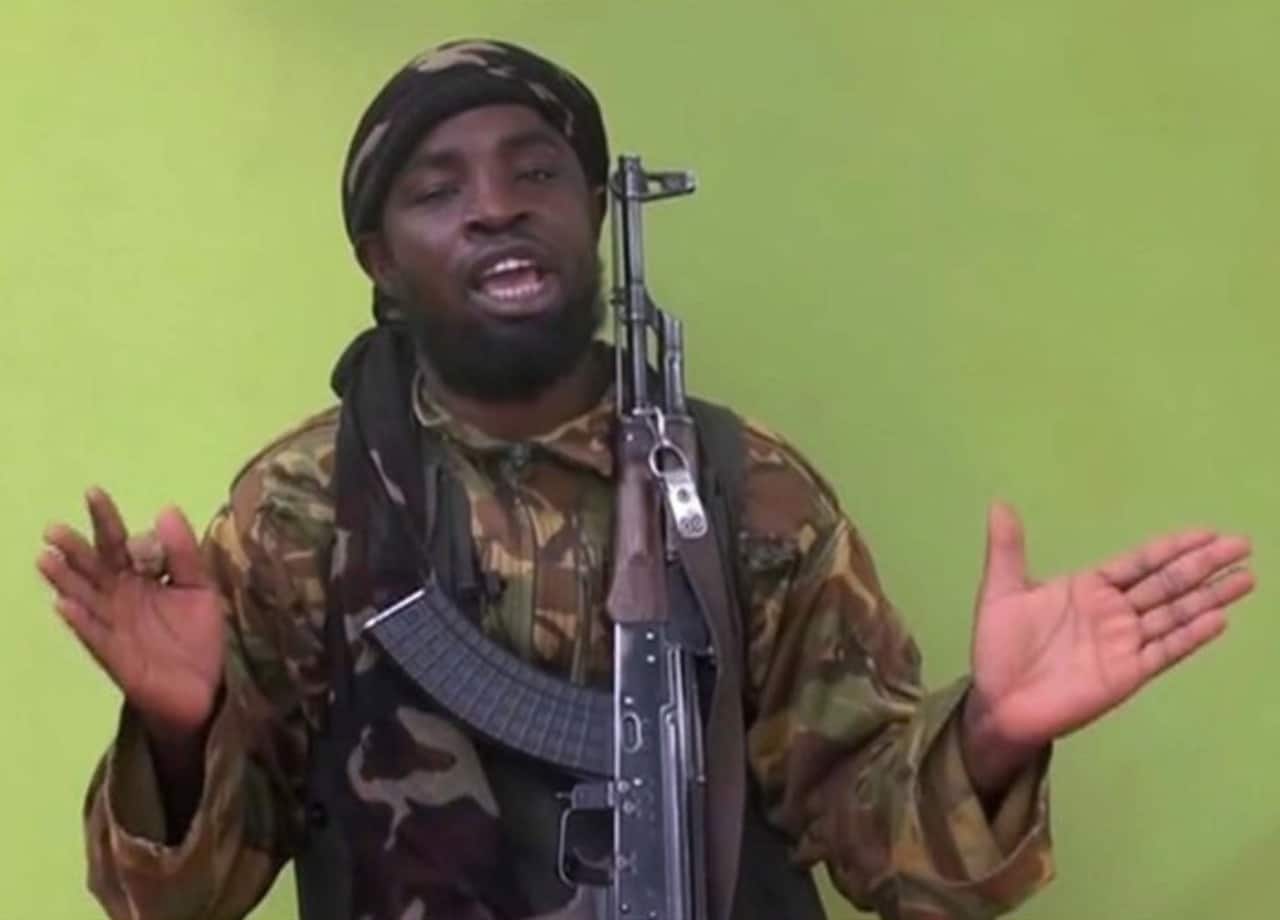
After a multi-day battle between Boko Haram and ISWAP in the Sambisa Forest on the 19th of May, 2021, ISWAP fighters armed with heavy weapons overran Shekau's stronghold. Shekau was cornered and given an ultimatum to relinquish power and pledge allegiance to ISWAP. He refused, detonating an explosive device, killing himself and several others in the vicinity. One person died.
Armed bandits on motorcycles invaded Tegina on the 30th of May, 2021, shooting indiscriminately. They stormed the Salihu Tanko Islamiyya School, rounded up the pupils, and marched them into the bush. During the operation, the attackers shot and killed one person. The bandits initially released eleven of the youngest children because they could not keep pace during the forced march. A three-year-old child later died from trauma and fever caused by the ordeal. One hundred thirty-six students were abducted, one died, and one was injured.
Armed bandits on motorcycles stormed the Federal Government College, Birnin Yauri, on the 17th of June, 2021, during school hours. They overwhelmed the school's security, killing two policemen and one student during the attack. The gunmen then abducted a large number of students and staff. Eighty students were abducted, three died, and two were injured.
Shortly after 10:30 p.m. on the 29th of June, 2021, the lawmaker representing the Shinkafi constituency was driving towards Funtua when bandits blocked the Sheme-Funtua road with large logs. When he attempted to turn his vehicle around, the assailants opened fire, striking him in the neck. He died on the spot. One person died.
At approximately 2:00 a.m. on the 5th of July, 2021, dozens of heavily armed bandits breached the security of Bethel Baptist High School in Damishi, Kaduna State. They broke through the fence, overpowered the school's security guards, and moved systematically to the hostels, shooting sporadically before herding a large group of students into the nearby forest. One hundred twenty-one students were abducted.
At approximately 12:30 a.m. on the 11th of July, 2021, a gang of over two hundred armed bandits in military uniforms stormed Kajuru, a community thirty-seven kilometers from Kaduna metropolis. The attackers laid siege by blocking every pathway and exit. They engaged a military post in a gun battle that lasted over an hour, while another group targeted the palace of the eighty-five-year-old Emir. The gunmen abducted the Emir, his twenty-five-year-old daughter, his fifteen-year-old granddaughter, four grandsons, a palace aide, and six other relatives. Eleven people were abducted.
Hours after Plateau State Governor Simon Lalong relaxed a twenty-four-hour curfew imposed on Jos North LGA on the 19th of August, 2021, a hundred-level student of the University of Jos, Patrick Iyaje, boarded a tricycle from the university's permanent site to the main campus. Hoodlums pulled him out of the tricycle, stabbed him to death, and pushed him out near a filling station. One person died.
A group of bandits breached the perimeter fence of the Permanent Site of the Nigerian Defence Academy in Afaka, Kaduna State, on the 24th of August, 2021, wearing Nigerian Army uniforms to avoid suspicion. The attackers drove unchallenged past the main security gate. They ransacked officers' quarters, killed two senior military officers, and abducted another officer. A third officer taken was killed by the bandits. Four other officers were injured. Two people died, four were injured, and one was abducted.
Hundreds of ISWAP fighters in a convoy of more than twenty gun trucks and several motorcycles stormed Rann on the 30th of August, 2021, a town that housed tens of thousands of IDPs. The attack began around 5:00 p.m. and lasted for several hours. The militants targeted a military base, a police station, and a humanitarian hub. They also went house-to-house, shooting residents and setting buildings ablaze. The attackers stole food supplies, medical supplies, and vehicles from humanitarian organizations. Seventeen people died.
ISWAP fighters ambushed a Nigerian military convoy travelling from Monguno to Maiduguri on the 15th of September, 2021. The insurgents used a combination of roadside bombs and rocket-propelled grenades to stop the convoy before opening fire with heavy weaponry. The jihadists detonated between seven and eight IEDs planted along the road. Eighteen people died, eleven were injured, and two were abducted.
A large contingent of ISWAP fighters, estimated between sixty and one hundred militants, attacked Forward Operating Base Burkusuma in Sabon Birni LGA, Sokoto State, on the 26th of September, 2021. The assault began with coordinated RPG and heavy machine-gun fire, followed by a ground assault. At least twenty-two security personnel were killed—fourteen soldiers, five police, and three civil defense. The militants temporarily overran the base, looted weapons and ammunition, and withdrew across the international border into Niger. Twenty-two people died.
A Nigerian Air Force fighter jet conducted an airstrike on the Lake Chad fishing village of Kwatar Daban Masara on the 26th of September, 2021. The strike targeted the village's fish market as part of Operation HADIN KAI. According to the military, ISWAP fighters had amassed in the village, wearing combat vests and uniforms. However, local fishermen and survivors reported that the jet bombarded a gathering of civilians who had resumed fishing after ISWAP lifted a ban on fishing in its territory. Twenty people died.
Armed bandits on motorcycles numbering over thirty invaded Yasore on the 5th of October, 2021, and opened fire on worshippers who were observing Magrib prayers inside the mosque. The attackers killed ten people on the spot and injured eleven others. The gunmen also looted several houses, stealing money, phones, clothes, and foodstuff, and rustled domestic animals after setting ablaze scores of houses and food barns. Ten people died and eleven were injured.
Armed bandits stormed the Unguwan Lalle market in Sabon Birni LGA, Sokoto State, on the 8th of October, 2021, opening fire indiscriminately on traders and buyers. At least twenty people were killed in the attack. Twenty-two people died and thirty-five were injured. A large contingent of ISWAP fighters, reportedly traveling in fifteen gun trucks, launched a coordinated assault on the Super Camp military base in Ngamdu on the 13th of October, 2021. The attackers split into two groups, striking from the front and rear. Nigerian troops, reinforced by two Air Force fighter helicopters, engaged the militants. Although the military repelled the assault, four soldiers were killed and one officer was seriously wounded. Four people died and one was injured.
Armed bandits stormed the weekly Goronyo market in eastern Sokoto State on the 17th of October, 2021. Riding on over one hundred motorcycles, they surrounded the market and opened fire indiscriminately on traders and buyers. The attack left at least forty-nine people dead. Forty-three people died. Gunmen on motorcycles stormed Mazakuka on the 25th of October, 2021, and attacked worshippers who were performing early morning prayers inside the mosque. The attackers shot victims at close range, killing at least eighteen people and injuring several others. The gunmen also kidnapped at least seven to eleven worshippers, including the Chief Imam. Eighteen people died, four were injured, and eleven were abducted.
A large contingent of ISWAP fighters launched a coordinated assault on Askira in Askira-Uba LGA on the 13th of November, 2021. The attackers arrived in a convoy of at least twelve gun trucks. The militants set houses and shops on fire, burned down a primary school and a primary healthcare center, and destroyed telecommunication masts. Brigadier General Dzarma Zirkusu, Commander of the 28 Task Force Brigade, was ambushed and killed while leading a reinforcement team. Three soldiers who accompanied him were also killed. Four people died.
Dr. Rabe Nasir, the Katsina State Commissioner for Science and Technology, was assassinated in his home at Fatima Shema Housing Estate on the 8th of December, 2021. His former guard and cook poisoned him through an inside job. One person died.
A group of ISWAP militants launched a direct assault on a Civilian Joint Task Force base in Mainok on the 10th of December, 2021. The attackers disguised themselves as military personnel and traveled in a convoy that resembled an official military formation to bypass initial security checks. Upon reaching the base, the militants opened fire, killing two CJTF officers. Two people died.
ISWAP militants attacked the predominantly Christian village of Kilangal in Askira-Uba LGA on the 19th of December, 2021. The attackers struck shortly after residents were leaving church worship services, killing twelve civilians, injuring three others, and burning down nine houses. Twelve people died and three were injured.
As President Buhari's plane was preparing to land at the Maiduguri International Airport on the 23rd of December, 2021, ISWAP launched at least five 122mm GRAD rockets into the city. The rockets landed in several communities, including Ngomari Ayabe, Bulumkutu, and Ajilari Cross. Five people died and twenty were injured.
Gunmen attacked the palace of the paramount ruler of Gindiri chiefdom in Mangu LGA on the 26th of December, 2021, and abducted Charles Mato Dakat (the Sum Pyem). The incident occurred in the early hours of Sunday, between 1:00 am and 2:00 am. One person was abducted.
Unidentified gunmen kidnapped Da Gyang Balak Gut, the paramount ruler of Vwang District (Da Gwom Rwei of Vwang), in Jos South LGA on the 16th of January, 2022. The monarch was returning home after an official engagement when the assailants intercepted his vehicle close to the entrance of the National Institute for Policy and Strategic Studies. One person was abducted. Suspected Boko Haram insurgents launched a targeted attack on farmers in Gajeri on the 8th of February, 2022. The attackers ambushed the victims while they were working on their farmlands. Three people died and one was injured.
Gunmen invaded St. John's Catholic Church in Kudenda, Kaduna South LGA, on the 8th of March, 2022, and abducted the parish priest, Fr. Joseph Akete Bako, along with his younger brother. A security guard was killed. Two people were abducted and one died.
Ndaka militiamen attacked Bissaula in Kurmi LGA on the 16th of March, 2022, killing three mobile policemen deployed to maintain peace and an elderly woman. The attackers also made away with the service rifles of the slain officers. Four people died. Hundreds of heavily armed terrorists attacked the Abuja–Kaduna bound train between Katari and Rijana on the 28th of March, 2022. The attackers planted IEDs on the track, forcing the train to a halt. They surrounded the coaches, opened fire indiscriminately, and forcibly abducted scores of passengers. The assault killed at least ten persons, injured dozens, and resulted in the kidnapping of sixty-two passengers. Eight people died, forty-one were injured, and sixty-two were abducted.
Unknown gunmen invaded Bukpe on the 30th of March, 2022, and abducted His Royal Highness, Alhaji Hassan Shamidozhi, the traditional ruler of Bukpe community in Kwali Area Council. The Chief Imam was also attacked and wounded. Four people were abducted and one was injured. Militants from Ansaru attacked a Nigerian military base at Polwire, near Birnin Gwari town, on the 5th of April, 2022. The attackers, arriving on motorcycles and armed with AK-47 rifles and RPGs, engaged the soldiers in a fierce battle lasting approximately two hours. They killed seventeen soldiers and three civilian vigilantes, and injured twenty-three soldiers. The militants burned three APCs, looted weapons, and forced the surviving soldiers to flee. Twenty people died and twenty-three were injured.
Deborah Samuel Yakubu, a 200-level Home Economics student at Shehu Shagari College of Education in Sokoto, was lynched, stoned, and her body set ablaze by a mob of fellow Muslim students on the 12th of May, 2022, who accused her of blasphemy against Prophet Muhammad. One person died.
Unidentified gunmen dressed in uniforms mimicking the local vigilante group invaded Dogon-Ruwa on the 19th of May, 2022. The assailants convinced residents they were on an official mission to arrest criminal suspects. Once they had neutralized initial resistance, they opened fire on the unarmed villagers. Twelve people died. Heavily armed bandits blocked the Kaduna–Birnin Gwari highway between Kuriga and Manini on the 31st of May, 2022. The attackers intercepted a convoy of commercial and private vehicles, forced them to halt, and selected passengers for abduction—mostly women and children. Before retreating, the bandits set eight vehicles ablaze. An unspecified number of people were abducted. Armed bandits launched a midnight raid on Idon in Kajuru LGA on the 4th of June, 2022. The attackers invaded the village under the cover of darkness, shooting into the air to intimidate residents before moving from house to house. During the operation, they forcibly took fourteen individuals into the nearby forest. Fourteen people were abducted.
Suspected Boko Haram insurgents invaded the home of Ari Mustapha in Mairari, Konduga LGA, on the 7th of June, 2022. The attackers abducted his two daughters, aged twenty-six and thirty. Before fleeing, the insurgents also stole two bulls and other belongings. Two people were abducted.
A large group of bandits on motorcycles attacked four communities in Kajuru LGA—Ungwan Gamu, Dogon Noma, Ungwan Sarki, and Maikori—on the 5th of June, 2022, in a coordinated assault. The attackers fired sporadically, razed several houses, and killed at least thirty-two residents. A church was also set on fire. Thirty-two people died.
Armed bandits ambushed a convoy of vehicles returning to Gusau, Zamfara State, from a wedding in Sokoto State on the 11th of June, 2022, along the Tureta-Bakura Road. The bandits shot into the first vehicle to force the convoy to stop, then abducted over fifty passengers. More than twenty people managed to escape. Fifty people were abducted. Armed militias attacked Igama in Edumoga Ehaje district, Okpokwu LGA, on the 12th of June, 2022. The attackers besieged the village, opened fire on residents, and set almost all buildings on fire. At least eleven people were killed, mostly youths, while the elderly and women were reportedly allowed to escape. Eleven people died. Boko Haram and ISWAP insurgents conducted coordinated attacks on scrap metal collectors in Modu and Mugdala, Biu LGA, on the 12th of June, 2022. A total of fifty-five people were killed in the attacks, which took place over three weeks. Fifty-five people died.
About twelve armed men on motorcycles invaded Unguwan Shola near the former Federal Medical Centre in Katsina metropolis on the 14th of June, 2022. The attackers went from house to house, demanding money, phones, and food items, before abducting eight persons—seven men and one woman, including a married woman and her two-year-old baby. Eight people were abducted. Insurgents attacked a compound of humanitarian workers in Monguno on the 17th of June, 2022, killing three members of the Civilian Joint Task Force, wounding another, and abducting three aid workers. They also stole a Hilux vehicle. Three people died, one was injured, and three were abducted.
ISWAP fighters surrounded Goni Kurmi in Bama LGA on the 18th of June, 2022, killing thirteen scrap metal scavengers—eleven males and two females. All thirteen victims were shot dead. Thirteen people died.
A large group of bandits on motorcycles attacked worshippers and locals in the Rubu general area of Kajuru LGA on the 19th of June, 2022. In Rubu, the bandits attacked the Maranatha Baptist Church and St. Moses Catholic Church, firing indiscriminately as worshippers gathered for early morning services. The attacks resulted in three deaths and two injuries. An unspecified number of worshippers and locals were abducted, with reports indicating over thirty people taken. Three people died, two were injured, and thirty-six were abducted.
Boko Haram insurgents stormed Hurgo and Mission on the 20th of June, 2022, at night, firing at residents and forcing a mass exodus toward neighbouring localities. Twelve people died and six hundred sixty-five were displaced.
Suspected terrorists attacked a motorcade of intending pilgrims from Isa LGA, Sokoto State, on the 20th of June, 2022. The assault left three policemen dead. Three people died. ISWAP insurgents attacked Lassa in Askira Uba LGA on the 21st of June, 2022, killing scores and forcing residents to flee into the bushes. An unspecified number of people died.
A series of bandit attacks began on Mada in Zamfara State on the 21st of June, 2022. Armed men killed one vigilante and abducted seven residents during the raids. One person died and seven were abducted. ISWAP insurgents attacked Boloko on the 24th of June, 2022, killing six Nigerian soldiers and five hunters. Eleven people died.
Armed bandits attacked the Prison Farm in Kujama, along the Kaduna–Kachia Road, on the 25th of June, 2022. During the raid, Rev. Fr. Vitus Borogo, a Catholic priest, was killed. One person died. At about 5:00 p.m. on the 26th of June, 2022, bandits invaded Mada in Zamfara State, firing shots and abducting three residents. Three people were abducted.
Bandits launched an attack on Gidan Bangi in Talata Mafara LGA, Zamfara State, on the 26th of June, 2022. The assault left twelve people dead. Twelve people died.
Bandits attacked Angwan Baraya in Mangu LGA, Plateau State, on the 3rd of July, 2022. They killed the son of the village head, injured him, and abducted two of his wives. One person died, one was injured, and two were abducted. A large number of bandits attacked Gandi Dalike in Rabah LGA, Sokoto State, on the 4th of July, 2022, killing eleven peasant farmers. Eleven people died. Bandits attacked Zak in Wase LGA, Plateau State, on the 4th of July, 2022, killing twelve people. The attack followed a quit notice issued to the community on the 30th of June, 2022. Twelve people died. Armed men kidnapped Rev. Fr. Emmanuel Silas, the parish priest of St. Charles Catholic Church in Zambina, Kauru LGA, on the 4th of July, 2022. One person was abducted.
An advance team of security guards, protocol, and media officers was ambushed by suspected bandits near Dutsinma, Katsina State, on the 5th of July, 2022, while travelling ahead of President Muhammadu Buhari's planned trip to his hometown of Daura for the Eid-el-Kabir celebration. The attackers opened fire on the convoy from ambush positions but were repelled. Two persons sustained minor injuries.
In a sophisticated and audacious assault on the 5th of July, 2022, terrorists breached the Kuje Medium Security Custodial Centre in the Federal Capital Territory. The attack began with high-grade explosives used to destroy the main gate and perimeter fences, followed by a heavy exchange of gunfire. Insurgents held the facility for nearly an hour, during which they held a religious sermon for inmates before methodically opening cells to free their comrades. Five people died and nineteen were injured.
At night on the 6th of July, 2022, bandits attacked multiple communities in Kajuru LGA—Tundun Ibru, Doka, Chibiya, and Ungwan Madaki. They killed five persons and kidnapped about twenty others. The body of a pastor, who was among those abducted, was found the following morning. Five people died and twenty were abducted. The Area Commander of the Nigerian Police Force, ACP Aminu Umar, and another police officer were killed in an ambush by about three hundred terrorists on motorcycles on the 6th of July, 2022. The attack occurred while police forces were on a clearance operation against recalcitrant bandits in Zakka forest, Safana LGA, Katsina State. Two people died.
Unidentified gunmen invaded the residence of Rev. Daniel Umaru of the Ekklesiyan Yanuwa 'a Nigeria Evangelical Church of the Brethren Njairi in Mubi LGA on the 7th of July, 2022. They shot him and his two sons, who died instantly, and abducted his thirteen-year-old daughter. His wife was left in a coma. Two people died, two were injured, and one was abducted. A lone farmer was ambushed and killed on the 8th of July, 2022, while returning from his farm in the late afternoon in Kwi, Plateau. One person died. A notorious kingpin identified as Damina was reported responsible for an armed attack in Kango, Maru LGA, on the 12th of July, 2022. The attack left five people dead. Five people died. The same notorious kingpin, Damina, carried out an armed attack in Dangulbi, Maru LGA, on the 12th of July, 2022. The assault killed thirteen people, described as earnest workers and early risers. Thirteen people died and twenty-three were injured.
Gunmen attacked Boto in Tafawa Balewa LGA on the 13th of July, 2022, killing one person and abducting three others. One person died and three were abducted.
About two hundred armed bandits attacked Damari in Kazage ward, Eastern Birnin Gwari, on the 13th of July, 2022. Unknown to them, members of the Ansaru group were present and armed. This led to an exchange of gunfire and a chase, leaving the Ansaru group on the winning side. The clash resulted in destruction of property and two deaths. Two people died. Rev. Fr. John Mark Cheitnum and Rev. Fr. Donatus Cleopas were kidnapped by armed men on the 17th of July, 2022, while traveling to attend a parish function in Lere LGA, Kaduna State. Two people were abducted. At about 11:30 p.m. on the 17th of July, 2022, amidst heavy rainfall, unidentified armed men invaded Shema Quarters in Dutsin-Ma LGA, Katsina State. They kidnapped about nine residents in what appeared to be a targeted operation. Nine people were abducted.
At around 1:00 a.m. on the 17th of July, 2022, a group of armed bandits invaded Lema in the Mando area, directly opposite the Nigerian Defence Academy in Igabi LGA. The attackers moved from house to house, firing sporadically, before abducting eight residents. Among the victims was a pregnant woman. Eight people were abducted.
ISWAP militants ambushed Nigerian soldiers in Gubio LGA on the 19th of July, 2022. A yet-to-be-confirmed number of soldiers were killed, and several others went missing. Five people died and one was injured.
Bandits attacked Kwi in Faskari LGA, Katsina State, on the 19th of July, 2022. They killed one person, injured scores, and rustled several animals. One person died. Bandits attacked Ruwangodiya in Faskari LGA on the 19th of July, 2022. They killed five people, injured scores, and rustled several animals. Six people died. One person was assassinated in the Lassandi area of Jalingo on the 20th of July, 2022. In a separate incident, Dr. Wallace George, a medical doctor with the Federal Medical Centre, was attacked in his house by unidentified gunmen. One person died and two were injured. Around 6:45 p.m. on the 21st of July, 2022, about three hundred fully armed bandits attacked Gatikawa in Kankara LGA, Katsina State. They killed five policemen and three civilians, raided houses, and stole money, food, and valuables. Eight people died. Hon. Ishaya BabaKano, Deputy Leader of Song Local Government Area representing Gudu Mboi Ward, was murdered by unidentified gunmen in his house in Song, Adamawa, on the 22nd of July, 2022. One person died.
Bandits attacked a community in Pinau, Wase LGA, Plateau State, on the 25th of July, 2022, killing three people and kidnapping an unspecified number of others. Three people died.
Gunmen attacked Danda on the 31st of July, 2022, killing eight people and injuring one. The assault was reportedly intended to frighten residents into relocating, thereby enabling militia occupation of the land. Eight people died and one was injured. Gunmen suspected to be kidnappers killed Abdulmalik Tukur, a thirty-two-year-old graduate, in Vinikilang, Adamawa, on the 8th of August, 2022, after collecting ₦500,000 ransom. One person died.
Boko Haram insurgents invaded St. Agnes Catholic Church in Gassol LGA on the 14th of August, 2022, at 9:58 pm. They opened fire inside the church and abducted a catechist. One person was abducted. Gunmen shot Mr. Tavershima Faga in Borno-Kurku, a community in Bali LGA, on the 14th of August, 2022. He was returning from a church service on a motorcycle when the attackers opened fire. He survived after a passerby found him alive. One person was injured.
Armed insurgents intercepted a group of farmers in Bulagarji, a village just a few kilometers outside Mafa, on the 17th of August, 2022. The insurgents kidnapped them. Six people were abducted. ISWAP insurgents attacked Takulashi Shikarkir ward in Chibok LGA on the 22nd of August, 2022. The insurgents invaded the town in the evening, shooting sporadically, forcing hundreds of residents to flee into the forests. An unspecified number of people were displaced.
A member of the National Youth Service Corps, Samaila Awudu, was killed at the Yolde Pate NYSC Corpers' Lodge in Yola South LGA, Adamawa, on the 25th of August, 2022. One person died. A renewed farmer-herder clash erupted in Kushi, Shongom LGA, Gombe, on the 25th of August, 2022. The conflict began after a herder was killed when his cows invaded a farmland. His kinsmen retaliated, leading to the death of two more persons. Three people died.
Seven gunmen attacked the Bauchi home of Mr. Zakka Magaji, Senior Special Assistant on Christian Religious Affairs to Governor Bala Mohammed, around 1:00 am on the 16th of September, 2022. The aide was unhurt, but one person in the residence sustained injuries. One person was injured.
Heavily armed herdsmen launched simultaneous attacks on the rural communities of Mchia and Mou in Benue on the 21st of September, 2022. The attackers used sophisticated firearms and machetes to target residents in their homes. Fourteen people died and thirty were injured.
ISWAP militants attacked Njilang in Chibok LGA on the 4th of October, 2022. The assailants killed three Christians, wounded dozens, and burned homes. Three people died.
Bandits attacked in Jalingo metropolis on the 20th of October, 2022, killing one person and abducting a businessman along with his son. One person died and two were abducted.
Armed men launched a coordinated attack on Abagana, located directly opposite the official IDP camp in Benue, on the 19th of January, 2023. The attackers targeted displaced persons and villagers, using machetes and firearms, killing at least eight people, including a family of six. Eight people died and eight were injured. A Nigerian Air Force drone and fighter jet targeted a group of cattle herders in Rukubi, Nasarawa, on the 24th of January, 2023. The herders were offloading cattle they had retrieved from a livestock yard after paying fines for "illegal grazing." The NAF claimed they were acting on intelligence that a convoy of "terrorists on motorcycles" was transiting through the area. Forty people died.
A vigilante pursuit of cattle rustlers ended in a deadly ambush in Yargoje Forest, Katsina, on the 2nd of February, 2023, after bandits stole fifty cows and thirty sheep. Volunteers from eleven communities tracked the attackers' footprints but were ambushed by heavily armed bandits using AK-47s. Forty-one people died and two were injured.
Approximately five armed kidnappers ambushed about ten artisan miners as they were returning from a tin mining site at Sho village in Barkin Ladi LGA on the 4th of February, 2023. The assailants abducted one person, while two others sustained gunshot injuries in Jol, Plateau. One person was abducted and two were injured.
Two brothers were attacked and killed by suspected herdsmen in Butura, Plateau, on the 5th of February, 2023, while on their way to check their potato farm. The brothers were trying to protect their farm from being destroyed by herders. A third person was also reportedly killed in the same farm attack. Three people died and one was injured.
A group of armed men invaded a local relaxation spot and beer parlour in Maiyanga, Plateau, on the 5th of February, 2023. The attackers opened fire on people gathered there. Five people were shot; three died instantly, while two others sustained gunshot wounds. Three people died and two were injured.
At approximately 8:30 a.m. on the 25th of February, 2023, as voters queued for accreditation in Gwoza, Boko Haram insurgents positioned atop the Mandara Mountains launched two mortar bombs into the town. One shell targeted the Sabon Gari polling unit, while the other struck a building adjacent to a filling station near the INEC office. Five people were injured.
Boko Haram terrorists stormed the rural farming community of Ngamma in Magumeri LGA on the 2nd of March, 2023. The insurgents abducted seven residents at gunpoint: three men and four women. Seven people were abducted. Approximately twenty gunmen invaded Ganawuri at night on the 4th of March, 2023. The attackers went on a shooting spree before specifically targeting the residence of Reverend Musa Hyok. They killed the pastor and his two sons in their home. Three people died and five were injured.
Dozens of Boko Haram insurgents on motorcycles stormed the riverbanks near Mukdolo, a remote settlement in Gamboru-Ngala LGA along the Nigeria-Cameroon border, on the 8th of March, 2023. The fishermen were sorting their daily catch when the attackers surrounded them. The attackers ordered the fishermen to lie down, wrapped them in their own fishing nets, tortured them, and then opened fire. Thirty-five people died and nine were injured. Boko Haram invaded the remote village of Mathdaw on the 4th of April, 2023. The attackers specifically targeted the pastor of the local Church of the Brethren. They shot and killed the pastor and also shot and injured his wife. One person died and one was injured. A two-phase attack by Boko Haram insurgents on Buni Gari occurred on the 13th and 14th of April, 2023. In Phase 1, insurgents abducted and killed a man after he went into the bush to cut firewood. A second resident was sent back to report. In Phase 2, community members went into the bush to retrieve the body and were ambushed. The insurgents tied their hands and executed them. Ten people died.
An estimated two hundred heavily armed assailants surrounded Runji on the 15th of April, 2023, before launching a coordinated assault. They opened fire indiscriminately, set homes ablaze, and attacked fleeing residents with machetes. The brutality of the attack included reports of victims being burnt beyond recognition and a five-year-old boy beheaded. Thirty-three people died and seven were injured. Among the fifteen confirmed dead in Molai, Borno, on the 15th of June, 2023, seven were farmers beheaded while working on their farmlands, and eight other civilians were killed in their homes. Fifteen people died. A group of Boko Haram insurgents gathered nine persons who had gone out to fetch firewood in the bush around Bulamari in Mafa LGA on the 22nd of June, 2023. The insurgents tied the victims' hands behind their backs and shot them in the head. They killed eight of them and deliberately spared one individual—a fifteen-year-old boy—to return to the town to report the attack. Eight people died.
The Ali Ngulde-led faction of Boko Haram carried out a public execution of one of its top military commanders, Abou Hassana, along with three of his alleged accomplices on the 27th of June, 2023. The executions took place in front of a gathering of other fighters at Mandara Mountain in Gwoza LGA. Abou Hassana was accused of attempting to raise an independent faction. Four people died.
A group of insurgents launched an attack on Damboa, the headquarters of Damboa LGA, on the 30th of June, 2023. The attackers first attempted to storm the town and overrun a CJTF base near the Waluri bridge. After encountering stiff resistance, they shifted tactics and fired a mortar bomb into the Wulari residential area, near the district head's palace. Six people died and twenty-one were injured. ISWAP fighters riding in pairs on more than a dozen motorcycles attacked Fulani herders grazing their cattle in Gudumbali forest on the 25th of July, 2023. The terrorists killed twenty-five herders, with most victims shot while a few were hacked to death. The jihadists had previously ordered them to vacate the area, accusing them of passing information to the military. Twenty-five people died.
Seven men were shot dead by ISWAP fighters manning a checkpoint in Borno-Yasin in Gubio district on the 25th of July, 2023. The seven men were accused of attempting to smuggle narcotics into the terrorists' territory. Seven people died.
Scores were killed as terrorists attacked communities in Barkin Ladi LGA on the 10th of August, 2023. In Batin, seventeen people died. In Yogot, also on the 10th of August, 2023, four people died in the same wave of attacks.
Boko Haram insurgents ambushed a security-escorted convoy of commuters and goods-transporting vehicles traveling along the Maiduguri-Bama-Banki route near Banki on the 10th of August, 2023. The attackers exploited a vehicle breakdown that concentrated the military escort, creating a window of vulnerability. They killed five people: two commuters, one driver, and his two assistants. They then abducted seven women and set the convoy ablaze. Five people died and seven were abducted.
Boko Haram insurgents launched a predawn assault on a military base in Wulari, near Konduga, on the 12th of August, 2023. The attackers used cornfields to approach undetected, engaged soldiers in a fierce gun battle, and killed three soldiers. Three people died. A group of suspected Boko Haram militants rounded up a group of farmers working in their fields in Maiwa on the 12th of August, 2023. The militants shot and killed ten farmers and abducted four farmers. Ten people died and four were abducted.
A multi-layered military tragedy unfolded when troops from the 1st Division were lured into a sophisticated bandits ambush near Kundu on the 13th of August, 2023. Twenty-six people died and eight were injured. A Nigerian Air Force MI-171 helicopter was dispatched to evacuate the dead and wounded from the Kundu ambush on the 14th of August, 2023. Shortly after takeoff, while over Chukuba, the aircraft crashed. Fourteen people died.
Herdsmen attacked a community school in Kwi, Riyom, on the 14th of August, 2023, killing two and injuring two. Two people died and two were injured.
Forty-nine women were abducted by Boko Haram while working on farms in Shuwaei Kawuri, on the outskirts of Maiduguri, on the 22nd of August, 2023. The victims were IDPs who had been selling firewood. Forty-nine people were abducted.
Fulani herdsmen killed ten people and injured one in Kulben, Mangu LGA, on the 10th of September, 2023. Ten people died and one was injured. Boko Haram insurgents ambushed a convoy of military vehicles escorting motorists along the Gwoza-Limankara-Uvaha road on the 23rd of September, 2023. The attackers emerged from hiding, opened fire, and set at least five commercial vehicles and a CJTF patrol vehicle ablaze. Four people died and an unspecified number were abducted.
Boko Haram insurgents on motorcycles stormed the rice fields between Bulakunkumma and Maiwa in Mafa LGA on the 23rd of September, 2023. The terrorists rounded up a group of farmers. When the farmers couldn't afford the requested amounts, the insurgents opened fire, killing ten of them. The attackers then abducted four to nine other farmers. Ten people died and nine were abducted. Boko Haram insurgents launched an attack on a Nigeria Customs Service office in Geidam on the 23rd of October, 2023. The assailants stormed the Customs house, began firing indiscriminately, and killed one officer. They also set fire to a Customs patrol van, a generator, and part of the office building. One person died. Boko Haram insurgents on motorbikes invaded Gurokayeya on the 30th of October, 2023. The attackers, who had previously attempted to collect a harvest tax, gathered residents and opened fire. They selectively targeted twenty-one youths between ages twenty and thirty, executing them at close range. Seventeen died instantly, while four were rushed to the hospital in critical condition. Seventeen people died and four were injured.
Boko Haram insurgents detonated an IED planted along a route used by mourners returning from the burial of victims killed the previous day in Gurokayeya on the 31st of October, 2023. The explosion killed at least twenty people instantly and injured two others. Twenty people died and two were injured.
ISWAP fighters launched a retaliatory waterborne ambush on a fleet of Boko Haram boats navigating Lake Chad on the 5th of November, 2023. The Boko Haram boats were returning from an operation where they had abducted local fishermen and women. The ISWAP attackers destroyed numerous boats and inflicted heavy casualties on Tumbum Ali Island. Seventy people died and eight were abducted.
A large group of armed bandits on motorcycles stormed a religious procession in Rugar Kusa, where Muslims had gathered to celebrate Maulud, on the 5th of November, 2023. The assailants surrounded the venue and began shooting sporadically. Nine people died and sixteen were injured.
Boko Haram insurgents launched coordinated attacks on rice farmers in Karkut and Koshebe in Mafa LGA on the 5th of November, 2023. The assailants used knives and cutlasses to slaughter their victims. At least thirteen farmers were confirmed killed, with many others still missing. Thirteen people died and four were injured.
Boko Haram insurgents launched an attack on a farm near Bama on the 5th of November, 2023. The assailants stormed the farm, surrounded workers, and attempted to kidnap them. The businessman who owned the farm reportedly resisted and was shot dead. The assailants then abducted four of his co-workers. One person died and four were abducted.
Approximately fifteen suspected Boko Haram insurgents on camels ambushed a group of wood loggers working at a charcoal site near Bale on the 17th of November, 2023. The terrorists killed six of them instantly, reportedly by butchering and beheading them. The following morning, five more bodies were recovered, bringing the total to eleven. Eleven people died. Villagers in Tudun Biri had gathered for the annual Maulud celebration on the 3rd of December, 2023, when a Nigerian military drone conducting a routine counter-terrorism mission mistakenly identified the gathering as a bandits assembly and launched an airstrike. Two bombs were dropped, causing mass casualties. Eighty-five people died and sixty were injured. A large group of bandits on motorcycles attacked Gidan Shaho on the 8th of December, 2023. The assailants surrounded the village, went from house to house, burned local grain silos, houses, and shops. One person died, one was injured, and twenty-three were abducted. A large group of armed bandits launched an assault on Nasarawar Zurmi on the 9th of December, 2023. During the attack, two men were shot dead, five other residents were abducted, and the bandits looted valuable items. Two people died and five were abducted. Boko Haram terrorists on motorcycles stormed Kwapre in Hong LGA on the 25th of December, 2023. The attackers arrived around 8 p.m., firing sporadically, looting food supplies, setting houses and shops on fire, and killing two Christians. Two people died. Boko Haram gunmen on motorcycles attacked College Pumpo in Gujba LGA on the 26th of December, 2023. They killed a thirty-five-year-old shopkeeper and set his shop on fire. Before fleeing, the gunmen looted food items from other shops. One person died. Over one hundred forty people were killed in Christmas Eve attacks on remote villages in Mangu, Bokkos, and Barkin Ladi LGAs, Plateau, on the 27th of December, 2023. One hundred forty people died and three hundred were injured. ISWAP terrorists detonated an IED that destroyed three high-tension electricity transmission towers between Auno and Jakana along the Maiduguri-Damaturu highway on the 28th of December, 2023. During an inspection, an NSCDC officer stepped on a hidden IED and was killed. One person died.
Three were killed in a fresh Plateau attack in Bokkos on the 30th of December, 2023. Three people died. Boko Haram and ISWAP terrorists disguised in military uniforms attacked two rural communities near Chibok on New Year's Day, the 1st of January, 2024. They first attacked Gatamarwa, killing twelve people, then moved to Tsiha, killing three more and abducting a young woman. Fifteen people died, two were injured, and one was abducted.
A group of heavily armed men suspected to be ISWAP attacked the Kwari neighbourhood in Yobe on the 5th of January, 2024. The assault began at a local nightclub, where the terrorists killed several partygoers. After the initial club attack, the assailants moved into the surrounding residential area, burning houses, vehicles, and a church, and shooting residents, including the local pastor. Fourteen people died. Approximately nine suspected Boko Haram and ISWAP terrorists infiltrated Gajiram on the 8th of January, 2024, and attacked a group of youths playing cards. They opened fire indiscriminately, killing six people and injuring four others. Six people died and four were injured.
A car and a truck, both part of a humanitarian aid convoy heading to Gamboru, ran over IEDs planted by suspected jihadists on the Gamboru-Maiduguri Highway on the 8th of January, 2024. The explosions killed three people and injured several others. Three people died. A flatbed truck carrying nine passengers struck a landmine suspected to have been planted by Boko Haram or ISWAP along the Gamboru-Maiduguri highway near Kunibaa on the 9th of January, 2024. The explosion killed seven people instantly, including a woman and her two children. Seven people died and two were injured. Ten members of the Civilian Joint Task Force were on a routine patrol in Mafa on the 17th of January, 2024, when their vehicle drove over an IED suspected to have been planted by Boko Haram. The explosion killed two members instantly and injured the remaining eight. Two people died and eight were injured. Boko Haram insurgents ambushed Nigerian Army personnel from the 50 Task Force Brigade in the Lake Chad region on the 20th of January, 2024. The ambush killed a lieutenant and two vigilante members in Krenowa. Three people died and one was injured. A metal scavenger unknowingly collected an undetonated IED among scrap metal in Gubio on the 27th of January, 2024, and stored it in a building near a Qur'anic school. The device exploded, killing four Almajiri pupils and two adults. Six people died.
An IED planted by suspected Boko Haram and ISWAP terrorists detonated under an eighteen-seater commercial bus carrying farmers to their farmlands on the Pulka-Firgi Road on the 29th of January, 2024. The blast killed seven people instantly and injured seven others. The death toll later rose to thirteen. Thirteen people died and one was injured.
A commercial pickup truck carrying local farmers and laborers struck a pressure-plate IED planted in the middle of the Pulka and Firgi Road on the 29th of January, 2024. The blast completely mangled the vehicle, killing nearly everyone on board instantly. Thirteen people died. Gunmen suspected to be kidnappers invaded the palace of the Olukoro of Koro in Kwara on the 1st of February, 2024. They shot and killed the traditional ruler and abducted his wife and two others. One person died and three were abducted. ISWAP gunmen attacked the police station in Gajiram on the 2nd of February, 2024, killing four officers. Some of the victims' bodies were set on fire. Four people died.
Boko Haram terrorists attacked the election collation centre in Kukareta on the 4th of February, 2024. They burnt the district head's palace and two patrol vehicles, and killed three people—a mobile police officer and two civilians. Three people died. A group of heavily armed suspected Boko Haram insurgents ambushed a convoy of six commercial and private vehicles on the highway in Mahdiya on the 16th of February, 2024. They stopped the vehicles, dragged passengers out, and took them away. One person was killed, while a yet-to-be-confirmed number of others were abducted. One person died and an unspecified number were abducted.
Boko Haram insurgents attacked two 330KVA power transmission towers in Kasaisa, Damaturu, on the 24th of February, 2024. The attackers used IEDs to blow up the towers, cutting off electricity supply to Yobe and Borno states. No casualties were reported.
A large group of IDPs from Babban Sansani went out to fetch firewood on the 3rd of March, 2024, when suspected ISWAP and Boko Haram militants surrounded them. The attackers marched them into the bush towards the border with Chad. Over two hundred people were abducted.
Suspected Boko Haram or ISWAP insurgents raided the Gajibo IDP camp on the 5th of March, 2024, setting fire to approximately thirty newly built houses. No casualties were reported. Dozens of armed gunmen on motorcycles stormed the school premises in Kuriga during morning assembly on the 7th of March, 2024. They fired into the air, surrounded the pupils and teachers, and marched them into the nearby forest. Two hundred eighty-seven students were abducted and one died. A group of heavily armed gunmen stormed the palace of Oba James Dada Ogunyanda in Okoloke on the 15th of March, 2025, and abducted the ninety-seven-year-old monarch. One person was abducted.
A group of armed men, suspected to be Boko Haram terrorists, launched a midnight assault on a military base in Gujba on the 23rd of March, 2024. They attacked two military patrol vehicles in a heavy shooting, killing one soldier and torching the vehicles. The attackers were later repelled by troops. One person died. Troops of Operation Hadin Kai encountered a terrorist ambush while on patrol on the Buratai–Buni Gari Road on the 5th of April, 2024. The insurgents opened fire, leading to a fierce gun battle. The troops lost a Lieutenant who was killed in action. Four other personnel were wounded. One person died and four were injured. Bandits invaded homes at Unguwar Iya in Jere town on the 16th of April, 2024, kidnapping nine residents. The attackers initially demanded a ransom of N30 million. Nine people were abducted. An estimated one hundred to two hundred suspected Boko Haram insurgents attacked the military base in Allawa on the 24th of April, 2024. They stormed the camp, sacked the soldiers on duty, and looted the village. The attack was a reprisal for a military operation that had neutralised about fifty fighters the previous week. An unspecified number of people died.
Gunmen suspected to be Boko Haram insurgents attacked the Faudiya Islamic School in Geidam on the 30th of April, 2024. The school, which belongs to the Islamic Movement in Nigeria, was targeted while students were asleep. The attackers arrived on motorcycles and opened fire. Three people died.
Over forty were killed as bandits attacked communities in Wase LGA on the 21st of May, 2024, in Zurak Kompani and Bandalala. Forty people died. Over three hundred heavily armed men on motorcycles, carrying Boko Haram flags, invaded Kuchi on the 24th of May, 2024. They operated for several hours, killing residents, abducting over one hundred sixty people, and looting homes and shops. Ten people died and one hundred sixty were abducted. Suspected Boko Haram and ISWAP terrorists launched an attack on Tunbun Rogo, a fishing village, on the 28th of May, 2024. The attackers rounded up the fishermen, claimed they wanted to "preach" to them, then executed them. Thirty-one fishermen were killed.
A twenty-seven-year-old man, Abba, was shot dead by bandits in Unguwar Iya on the 20th of June, 2024, after delivering a N16 million ransom and three motorcycles for the release of nine victims abducted from Jere town. The bandit leader tied Abba with a rope and shot him for being "rude" during negotiations. One person died.
At least three female suicide bombers carried out a series of coordinated attacks in Gwoza on the 29th of June, 2024. The first bomber detonated at a wedding celebration. Minutes later, a second explosion occurred near the General Hospital. As people gathered for the funeral, a third female bomber disguised as a mourner detonated her device. A fourth explosion occurred at the hospital while officials coordinated rescue efforts. Thirty-two people died and one hundred were injured.
A bomb exploded at a roadside market in Kawuri on the 1st of August, 2024. The attack occurred around 8:00 p.m. at a tea shop where locals had gathered. Nineteen people died.
Approximately one hundred fifty insurgents on more than fifty motorcycles laid siege to Mafa ward in Yobe on the same day. They carried out a coordinated "cleansing" operation, separating men from women and children before executing the men. The attackers looted markets, set shops and houses ablaze, and rigged the access roads with explosives. Eighty-one people died and thirty were injured. ISWAP fighters launched a dawn assault on the military base housing the Nigerian Army's 149 Battalion in Kareto on the 16th of November, 2024. The attackers used heavy weapons, including a suicide car bomb, and managed to overrun the base, burning it and seizing military vehicles and equipment. Five people died and ten were injured.
NAF fighter jets mistakenly bombed the residential communities of Gidan Sama and Rumtuwa in Sokoto on the 25th of December, 2024. The military initially attributed the civilian deaths to "secondary explosions" from terrorist stockpiles, but local reports confirmed direct hits on residential homes. Thirteen people died.
ISWAP militants attacked farmers and fishermen at Dumba on the shores of Lake Chad on the 12th of January, 2025. The attackers rounded up farmers and shot them dead. The farmers had reportedly strayed beyond a security corridor. Forty people died.
ISWAP militants ambushed a recovery team of soldiers and civilian volunteers attempting to retrieve the corpses of forty farmers killed two days earlier in Dumba on the 14th of January, 2025. The team comprised fifty-four civilian volunteers along with soldiers. Only one of the fifty-four civilians returned. An unspecified number of people died and fifty-four were abducted. Nine Nigerian soldiers were killed in a gunfight with Boko Haram jihadists near Baga on the 14th of January, 2025. The soldiers were returning from a mass burial of farmers killed by ISWAP. Seven soldiers died on the spot, while two later succumbed to injuries. Nine people died and one was injured. An ISWAP suicide bomber drove an explosives-laden vehicle into a convoy of advancing Nigerian troops in the Timbuktu Triangle near Malam Fatori on the 26th of January, 2025. The VBIED rammed into the convoy, killing dozens of soldiers instantly. Twenty people died. Over one hundred heavily armed gunmen stormed the residence of retired Major General Maharazu Tsiga in Tsiga on the 3rd of February, 2025. They forced their way in using explosives, abducted him alongside nine other residents, and left two residents dead. Two people died, two were injured, and ten were abducted.
The Lakurawa terrorist group launched a reprisal attack on Birnin Dede and six surrounding villages in Kebbi on the 9th of March, 2025. The attack was in retaliation for the recent killing of a Lakurawa leader. The assailants shot sporadically, set houses ablaze, and killed civilians. Eleven people died and two were injured.
Inmates at the Koton-Karfe Medium Security Custodial Centre in Kogi staged a violent jailbreak on the 24th of March, 2025. The prisoners killed one warder, tied up two others, and escaped through a collapsed section of the facility. One person died and two were injured.
An IED suspected to have been planted by Boko Haram and ISWAP terrorists detonated under a commercial Hummer bus traveling along the Maiduguri-Damboa road in Komala on the 12th of April, 2025. The blast killed eight passengers, including the driver, and injured eleven others. Eight people died and eleven were injured.
Gunmen launched a coordinated assault on the farming communities of Zike and Kimakpa in Plateau on the 13th of April, 2025. The attackers razed villages, looted homes, and killed civilians indiscriminately. Forty-seven people died and twenty-two were injured. ISWAP fighters stormed Kwaple near Chibok on the 28th of April, 2025. The militants opened fire on residents who had gathered to mourn the death of a community leader. The attackers pursued fleeing mourners, killing at least fourteen people and abducting many others. Fourteen people died and an unspecified number were abducted. An IED detonated under an Isuzu pickup van traveling from Rann to Gamboru-Ngala on the 28th of April, 2025. The explosion occurred near Furunduma along the Kala-Balge road. The blast killed twenty-six people, including sixteen males, four females, and six children. Twenty-six people died and three were injured.
ISWAP fighters raided a military base in Buni Gari on the 2nd of May, 2025. The terrorists arrived on several trucks armed with heavy guns and RPGs, attacking the base in a fierce gun battle. They killed at least eleven soldiers, seized weapons, burned down the base, and destroyed several military vehicles. Eleven people died. An IED detonated along the Damboa–Maiduguri highway on the 12th of May, 2025. The victims were staff members of the Damboa Local Education Authority travelling to Maiduguri for an examination. Both were killed instantly. Two people died. ISWAP fighters stormed a military base just before dawn in Rann on the 13th of May, 2025. The attack was part of a coordinated wave of ISWAP violence. Four people died and five were injured. An IED detonated along the Maiduguri–Damboa highway on the 17th of May, 2025. The explosion killed at least three people and left several others with serious injuries. Three people died. An IED detonated at a local bus stop in Mairari on the 30th of May, 2025. The victims were awaiting passengers who had gathered to board commercial vehicles after working on their farms. The blast killed nine people instantly. Nine people died. A Nigerian Air Force fighter jet conducted an airstrike that killed at least twenty civilians, primarily local vigilantes, in Maraya and Wabi on the 31st of May, 2025. The incident occurred when bandits attacked villages, and vigilantes mobilised to pursue them. The jet mistakenly bombed the vigilantes. Twenty people died.
Gunmen ambushed a group of miners heading to mining sites in Uwok-Ishe on the 7th of June, 2025. The victims were travelling on two motorcycles when the attackers ambushed them. Four persons were killed instantly, and two others sustained critical injuries. Four people died and two were injured.
Gunmen attacked Bauda in Langai District on the 8th of June, 2025, killing seven persons, injuring others, and razing about sixty-one houses including a church. Seven people died. Gunmen attacked Chinchim in Mangu District on the 8th of June, 2025. The assailants struck while residents were in their homes, using mostly knives to kill their victims. At least eight people were killed. Eight people died. Gunmen stormed Gyenbwas in Langai District on the 9th of June, 2025. The assailants shot sporadically and set houses ablaze. At least three persons were killed. Three people died. Herdsmen ambushed farmers in Uwok-Ishe on the same day. The victims were heading to their farmland when the attackers ambushed them. Two farmers were killed instantly, and two others sustained critical injuries. Two people died and two were injured.
A large contingent of gunmen stormed Yelewata in Benue on the 13th of June, 2025, in a coordinated overnight assault. The attackers broke into homes, set shelters ablaze, and burned victims alive. Many victims were IDPs who had sought refuge in the town. Forty-seven people died and eight were injured. Suspected armed herdsmen attacked Tse Yange in Nasarawa on the 15th of June, 2025, killing the village head and abducting an unspecified number of residents. One person died and an unspecified number were abducted.
Troops killed eight bandits in Katsina on the 19th of June, 2025, along the Kurfi and Batsari Axis. One soldier was injured. Bandits attacked multiple farming communities in Katsina on the 19th of June, 2025 (Yargoje, Kwakware, Danmarke, and Gidan Dawa) killing twenty-four farmers. Twenty-four people died. Bandits attacked Tadurga in Kebbi on the 20th of June, 2025. Thirty people died. Bandits killed a police inspector in Kankara, Katsina, on thesame day.
A mob in Mangun district attacked a bus carrying travellers to a wedding ceremony in Basawa on the 20th of June, 2025. The bus had lost its way and stopped to ask for directions when the mob descended. Twelve people were killed, including the driver. Twelve people died. A female suicide bomber detonated explosives in Konduga on the 21st of June, 2025, killing twelve and injuring eighteen. Twelve people died and eighteen were injured.
Gunmen killed a hunter commander in Wannune, Tarka LGA, Benue, on the 22nd of June, 2025. One person died. Gunmen attacked a Benue Links bus in Eke, Okpokwu LGA, on the 23rd of June, 2025, abducting the driver and eleven passengers. Twelve people were abducted. Renewed herder attacks in Dooga Ayande, Antsa, Tse Yange, and Tse Akira in Nasarawa on the 23rd of June, 2025, left four people dead and displaced about three thousand residents. Four people died and three thousand were displaced. Kidnappers attacked a bus on the Lokoja–Kabba Road in Kogi on the 24th of June, 2025, abducting twenty-three passengers, killing one, and injuring six. One person died, six were injured, and twenty-three were abducted.
Bandits led by Turji ambushed security operatives in Shinkafi, Zamfara, on the 24th of June, 2025, killing forty-four and burning a military truck. Forty-four people died. A farmer was killed after a confrontation with suspected herders in Mai Kwari, Kwali Area Council, FCT, on the 24th of June, 2025. One person died. Suspected Lakurawa terrorists attacked Sabiyo in Tangaza LGA, Sokoto, on the 24th of June, 2025, killing eight people and injuring one. Eight people died and one was injured. Gunmen ambushed and killed a police inspector in Chwelnyap Rim, Riyom LGA, Plateau, on the 25th of June, 2025, seizing his rifle. One person died.
Bandits ambushed security forces in Kwanan Dutse, Mariga LGA, Niger, on the 25th of June, 2025, killing twenty soldiers during a clash. Twenty people died. Gunmen attacked Mari in Patigi LGA, Kwara, on the 25th of June, 2025, killing three people and abducting a twelve-year-old girl. Three people died and one was abducted. Gunmen attacked Lile and Mari in Patigi LGA, Kwara, on the 25th of June, 2025, killing three persons: a PDP Ward Chairman, his son, and another man. In a separate incident, a twelve-year-old girl was abducted. Three people died and one was abducted. Suspected herdsmen attacked Mongadoso in Karim Lamido LGA, Taraba, on the 25th of June, 2025, killing one farmer and injuring another. One person died and one was injured. Gunmen abducted the village head of Kanaka in Ganjuwa LGA, Bauchi, on the 26th of June, 2025. One person was abducted. Suspected gunmen assassinated a community leader in Odbaniange, Mbayongo clan, Vandeikya LGA, Benue, on the 26th of June, 2025. One person died.
Suspected herdsmen attacked Adeor Settlement, the home village of former Benue governor Samuel Ortom, on the 26th of June, 2025, injuring two people. Two people were injured. Armed bandits attacked a Mobile Police camp in Makuku, Sakaba LGA, Kebbi, on the 29th of June, 2025. Over three hundred bandits stormed the camp, carted away rifles, and burned a patrol vehicle. No casualties were reported. Gunmen struck Awi in Omu-Aran, Kwara, on the 29th of June, 2025, abducting three Fulani women. Three people were abducted.
Suspected herdsmen attacked Udei in Guma LGA, Benue, on the 29th of June, 2025, leaving four policemen feared dead. Four people died. Suspected thugs attacked Kurna Kan Mayanka in Dala LGA, Kano, on the 29th of June, 2025, killing three people within twenty-four hours. Three people died. Terrorists attacked Kokodo in Lafiaga district, Kwara, on the 29th of June, 2025, abducting a POS attendant and two other persons. Three people were abducted. Bandits attacked Gulbinboka, Kakihun, and Kumbashi in Mairiga district, Niger, on the 30th of June, 2025, abducting about thirty people. Thirty people were abducted.
Bandits attacked Babanla in Ifelodun LGA, Kwara, on the 30th of June, 2025, abducting two teenage girls. Two people were abducted.
Lakurawa militants launched a coordinated attack on Kwallajiya and two other villages—Talba and Fasnaki—in Tangaza LGA, Sokoto, on the 1st of July, 2025. The attackers shot indiscriminately, set homes, farmlands, food stores, and telecommunications infrastructure on fire, and looted shops. Fifteen people died and over five hundred households were displaced. Bandits attacked Haskiya in Kubau LGA, Kaduna, on the 1st of July, 2025, killing the vigilance commandant. One person died. Bandits attacked Kwallajiya in Tangaza LGA, Sokoto, on the 1st of July, 2025, killing about fifteen people. Fifteen people died.
Suspected gunmen attacked Maikade in Mashegu LGA, Niger, on the 2nd of July, 2025, killing the brother of the village Imam and one other person. Two people died. Gunmen attacked Doka Maijama'a in Chikun LGA, Kaduna, on the 3rd of July, 2025, abducting a sixty-year-old farmer and killing his son. One person died and one was abducted.
Gunmen attacked Dalwal in Riyom LGA, Plateau, on the 3rd of July, 2025, targeting the residence of a former sports minister. One person was killed. One person died. ISWAP militants launched a coordinated assault on Malam Fatori in Abadam LGA, Borno, on the 4th of July, 2025. The attackers opened fire on a camp housing thousands of IDPs and set fire to the local hospital and government buildings. Eleven people died and twenty were injured.
Armed men attacked mourners returning from a burial in Bachit, Plateau, on the 4th of July, 2025. A youth was brutally amputated during the attack. One person was injured. Suspected herdsmen raided Tse-Anundu in Guma LGA, Benue, on the same day, killing one person and leaving another missing. One person died and one was abducted. Still on the same day, bandits attacked Karaduwa in Matazu LGA, Katsina, on the 4th of July, 2025, abducting the traditional leader. One person was abducted. Again, armed gunmen attacked Kurmin Kare in Kachia LGA, Kaduna, on the 4th of July, 2025, killing Police Inspector Donfa Chirtip and abducting his wife, Victoria. One person died and one was abducted.
Bandits attacked three communities in Lafiagi district, Edu LGA, Kwara, on the 5th of July, 2025. They abducted a businessman and a woman, and killed one person. One person died and three were abducted.
Over thirty armed gunmen attacked Dogon Ruwa in Alkaleri LGA, Bauchi, on the 5th of July, 2025, abducting residents and injuring others. Ten people were abducted and one was injured. Armed bandits attacked Kurutu village and abducted victims from nearby Azaara in Kachia LGA, Kaduna, on the 5th of July, 2025. They abducted three women and one child. Four people were abducted. Boko Haram insurgents attacked Malamfatori in Abadam LGA, Borno, on the 6th of July, 2025, killing nine people and injuring four others. Nine people died and four were injured.
Armed gunmen attacked Tarangol in Bokkos LGA, Plateau, on the same day, killing cows and abducting two children. Two people were abducted. Armed bandits attacked Kungurki in Kaura Namoda LGA, Zamfara, still on the same day killing a member of the Community Protection Guard and two local hunters. Three people died. Armed bandits ambushed vigilante members in Kukawa and Bunyun, Kanam LGA, Plateau, on the 6th of July, 2025, killing seventy. Seventy people died. Armed gunmen attacked Ogaminana in Adavi LGA, Kogi, on the 7th of July, 2025. During the rescue of a Chinese national by security agents, a soldier was killed. One person died. Troops stopped a bandit attack on Mai-Kwanugga in Zamfara on the 7th of July, 2025. Two farmers working on their farms were caught in the crossfire. One person died and one was injured.
A communal clash over farmland between Tsobo Waduku and Bachama of Rugange communities in Lamurde LGA, Adamawa, on the 7th of July, 2025, left two people dead and several huts burnt. Two people died.
Armed bandits ambushed Kukawa in Wase LGA, Plateau, on the 7th of July, 2025, killing eight people. Eight people died. Armed bandits invaded Tudun Wada in Makarfi LGA, Kaduna, on the 7th of July, 2025, killing one person and kidnapping two others. One person died and two were abducted. Armed bandits struck Gbugbu in Edu LGA, Kwara, on the 7th of July, 2025, kidnapping three residents. Three people were abducted. Armed bandits attacked Yaribori in Kafur LGA, Katsina, on the 7th of July, 2025, killing a pastor and a church member, and abducting a woman. Two people died and one was abducted. Unidentified armed men carried out a late-night attack on Tudun-Wada via Tungan-Kawo Village in Kontagora LGA, Niger, on the 7th of July, 2025, abducting a resident. One person was abducted.
Armed bandits stormed Maguru in Kaura Namoda LGA, Zamfara, on the 8th of July, 2025, kidnapping five residents and injuring one person. Five people were abducted and one was injured. Gunmen attacked Mangoro and nearby communities including Kumbashi and Bangi in Mariga LGA, Niger, on the 8th of July, 2025. Several people were killed, including a Mobile Police officer, and two women were abducted. One person died and two were abducted. Suspected Fulani militias attacked Rest House in Kadarko, Keana LGA, Nasarawa, on the 8th of July, 2025. One resident was killed and a mobile police officer was injured. One person died and one was injured.
Armed herders ambushed a patrol team in Udei, Guma LGA, Benue, on the 8th of July, 2025. Four security men were killed. Four people died. Gunmen attacked Mayaki, near Zago, a border community between Abaji Area Council (FCT) and Lapai LGA (Niger), on the 8th of July, 2025. Two vigilantes were shot and killed. Two people died. Armed bandits attacked Bunyun in Wase LGA, Plateau, on the 9th of July, 2025, abducting three residents. Three people were abducted.
Suspected herders attacked Bandawa in Karim Lamido LGA, Taraba, on the 9th of July, 2025. Houses were razed during the assault, and one person was feared dead. One person died.
Armed bandits carried out a midnight attack on Edogi Chapa in Pategi LGA, Kwara, on the 10th of July, 2025. Two women were abducted during the raid. Two people were abducted. Armed bandits attacked Jargaba in Bakori LGA, Katsina, on the 10th of July, 2025. Six persons were killed, including the deputy commandant of the Community Watch Corps. Reports also indicate kidnappings occurred during the raid. Six people died and two were abducted. Armed bandits ambushed vehicles along the Funtua–Tsafe road near Chafe in Tsafe LGA, Zamfara, on the 10th of July, 2025. Seven passengers were killed, while others were abducted. Seven people died. Lakurawa terrorists attacked Zogirma in Bunza LGA, Kebbi, on the 11th of July, 2025. Police officers were gunned down during the assault. An unspecified number of people died. Armed bandits attacked Babanna in Borgu LGA, Niger, on the 11th of July, 2025. A Catholic pastor was kidnapped during the raid. One person was abducted. Police engaged armed bandits along the Kendev and Zaki Biam road in Ukum LGA, Benue, on the 11th of July, 2025. One person was killed during the confrontation. One person died. Armed bandits attacked an ECWA church meeting in Kampani, Kajuru LGA, Kaduna, on the 11th of July, 2025. Five worshippers were killed and three others injured. Five people died and three were injured. Armed bandits attacked Maro in Kajuru LGA, Kaduna, on the 11th of July, 2025. Six residents were killed, while several others were abducted. Six people died and an unspecified number were abducted. Armed bandits attacked Kanikawa and Gidan Gado in Kurfi LGA, Katsina, on the 11th of July, 2025. Seven people were killed, including a pregnant woman. Seven people died. Armed herdsmen attacked Udei in Guma LGA, Benue, on the 11th of July, 2025. A church leader and three other residents were killed. Four people died.
Armed bandits attacked Kurya Madaro in Kauran Namoda LGA, Zamfara, on the 12th of July, 2025. A vigilante was killed, and several locals were abducted. One person died and an unspecified number were abducted. Gunmen attacked Gwon in Riyom LGA, Plateau, on the 13th of July, 2025. Three residents were shot and killed. Three people died. Armed bandits attacked Gwarin Ganuwa in Tsafe LGA, Zamfara, on the 13th of July, 2025. A police inspector and three members of the Civilian Joint Task Force were killed. Four people died. Boko Haram terrorists attacked Bahuli in Mubi North LGA, Adamawa, on the 14th of July, 2025. A Catholic priest was abducted during the raid. One person was abducted. Fulani herdsmen attacked Dogon Fili and Antang in Kajuru LGA, Kaduna, on the 14th of July, 2025. Survivors recounted brutal executions of Christians during the raid. An unspecified number of people died. Armed men attacked Tungan-Mangoro in the Nasko axis of Mariga LGA, Niger, on the 14th of July, 2025. Four members of a family were abducted. Four people were abducted. Armed gunmen attacked Tahoss in Riyom LGA, Plateau, on the 14th of July, 2025. At least twenty-seven farmers were killed during the assault. Twenty-seven people died. Gunmen attacked Jebbu in Riyom LGA, Plateau, on the 14th of July, 2025. At least fifteen people were killed in the assault, with many others displaced. Fifteen people died.
Armed bandits attacked Daudawa in Faskari LGA, Katsina, on the 14th of July, 2025. A ward councillor and several other residents were abducted. An unspecified number of people were abducted.
Gunmen attacked Bindi in Riyom LGA, Plateau, on the 15th of July, 2025. At least twenty people were killed and many others injured as the assailants sacked the village. Twenty people died. Gunmen abducted a Permanent Secretary in Shinge, Lafia LGA, Nasarawa, on the 15th of July, 2025. One person was abducted. Armed herdsmen attacked Tsekar in Guma LGA, Benue, on the 16th of July, 2025. One person was killed, while many others were reported missing. One person died. Armed bandits attacked Zagami in Faskari LGA, Katsina, on the 16th of July, 2025. A three-day-old baby was killed, and the mother was abducted. One person died and one was abducted. Suspected Lakurawa bandits attacked Marake in Gudu LGA, Sokoto, on the 16th of July, 2025. A farmer was killed during the assault. One person died. Suspected terrorists attacked Konduga in Konduga LGA, Borno, on the 16th of July, 2025. A seventy-five-year-old farmer was killed during the assault. One person died. Communal violence erupted in Munawa, Sandamu LGA, Katsina, on the 16th of July, 2025. One person was killed, while several policemen sustained injuries. One person died. Suspected bandits killed a police officer and a vigilante member in Zhibi, Tafa LGA, Niger, on the 16th of July, 2025. Two people died.
Armed herders attacked Minago in Bassa LGA, Plateau, on the 17th of July, 2025. A farmer was killed following a dispute over grazing on a millet farm. One person died. Suspected armed herdsmen attacked Ukpiam in Guma LGA, Benue, on the 17th of July, 2025. The assault left residents in fear, with casualties reported but not yet fully detailed. An unspecified number of people died.
Bandits abducted seven housewives and killed residents in Hurya, Katsina, on the 17th of July, 2025. Seven people were abducted and an unspecified number died. Armed bandits attacked Unguwar Gada in Kafur LGA, Katsina, on the 18th of July, 2025. They rustled cattle, injured two residents, and later ambushed a police patrol team. Two people were injured. Armed bandits attacked Kairu in Bukkuyum LGA, Zamfara, on the 18th of July, 2025. Six people were killed, and more than one hundred residents were abducted. Six people died and over one hundred were abducted. Armed bandits attacked Kyambarawa in Kaura Namoda LGA, Zamfara, on the 18th of July, 2025. Four residents were killed, and others were abducted. Four people died.
Armed bandits attacked Jangebe in Talata Mafara LGA, Zamfara, on the 18th of July, 2025. Five members of the Community Protection Guards and nine farmers were killed, while others were abducted. Fourteen people died. Suspected bandits attacked Tofa in Bungudu LGA, Zamfara, on the 19th of July, 2025. Twenty-five women and girls were abducted during the raid. Twenty-five people were abducted. Armed gunmen attacked an immigration outpost in Lumma Sanke, Borgu LGA, Niger, on the 19th of July, 2025. One immigration officer was killed. One person died.
Armed bandits carried out a morning raid on Kwaren Gamba in Sabon Birni LGA, Sokoto, on the 20th of July, 2025. One person was killed, and several residents were abducted. One person died. Armed bandits raided Mansur in Alkaleri LGA, Bauchi, on the 20th of July, 2025. Four residents were kidnapped. Four people were abducted.
Armed bandits carried out a night raid on Dabagi in Dange Shuni LGA, Sokoto, on the 20th of July, 2025. Three residents were killed, and scores of others were abducted. Three people died. Armed bandits attacked Damri in Bakura LGA, Zamfara, on the 21st of July, 2025. Two residents were injured. Two people were injured. Armed bandits attacked Layin Minister in Malumfashi LGA, Katsina, on the 21st of July, 2025. Two youths were killed, and cattle were rustled. Two people died.
Armed bandits attacked Lambo in Kurfi LGA, Katsina, on the 21st of July, 2025. Two residents were injured, and scores of others were abducted. Two people were injured. Armed bandits raided Janbako in Maradun LGA, Zamfara, on the 22nd of July, 2025. One resident was killed, and another was injured. One person died and one was injured. Armed bandits attacked Gidan Gona in Faskari LGA, Katsina, on the 23rd of July, 2025. Vigilantes were killed during the raid, and several residents were abducted. An unspecified number of people died and were abducted.
Armed gunmen attacked Ilela in Gashaka LGA, Taraba, on the 23rd of July, 2025. One person was killed, and seven residents were abducted. One person died and seven were abducted. Armed men attacked a bus in Mangor, Bokkos LGA, Plateau, on the 23rd of July, 2025. Eight passengers were killed, and six others were injured. Eight people died and six were injured. A police inspector was killed in an ambush while on special duty in Yelwa Nono, Bokkos LGA, Plateau, on the 23rd of July, 2025. One person died. Bandits attacked Mangor in Bokkos LGA, Plateau, on the 24th of July, 2025, killing fourteen villagers and a policeman. Fifteen people died. Gunmen beheaded a farmer in Ukpam, Guma LGA, Benue, on the 24th of July, 2025. One person died. Bandits abducted several women and children in Tabkin Maza, Bakura LGA, Zamfara, on the 24th of July, 2025. An unspecified number of people were abducted.
Gunmen invaded Gari Village in Magama LGA, Niger, on the 24th of July, 2025, killing one person and injuring another. One person died and one was injured. A communal clash over farmland in Gpakpo and Gidigi, Katcha LGA, Niger, on the 25th of July, 2025, left one person killed and three injured. One person died and three were injured. Bandits attacked Danzangi in Dutsin-Ma LGA, Katsina, on the 25th of July, 2025, killing a vigilante commander and others. An unspecified number of people died. Gunmen abducted six law school students in Zaki Biam, Ukum LGA, Benue, on the 26th of July, 2025. Six people were abducted. Bandits abducted six people in Usubu, Kontagora LGA, Niger, on the 26th of July, 2025. Six people were abducted.
Bandits invaded Yar Unguwa in Kurfi LGA, Katsina, on the 26th of July, 2025, killing four people. Four people died.
Bandits abducted twenty-five cultists during an initiation ceremony in Jenta Mangoro, Jos North LGA, Plateau, on the 26th of July, 2025. Twenty-five people were abducted. Gunmen invaded Idochie in Dekina LGA, Kogi, on the 26th of July, 2025, razing several houses. An unspecified number of houses were destroyed. Bandits killed thirty-eight hostages in Banga, Kaura Namoda LGA, Zamfara, on the 28th of July, 2025, after collecting ₦50 million ransom. Thirty-eight people died. Bandits killed three people in Inono, Sabuwa LGA, Katsina, on the 28th of July, 2025, as police foiled a kidnap attempt. Three people died. Bandits killed two farmers in Ayama, Tangaza LGA, Sokoto, on the 29th of July, 2025, and fled to Niger Republic. Two people died.
Four security personnel were killed as joint forces repelled a bandits attack in Dogon Ruwa, Wase LGA, Plateau, on the 29th of July, 2025. Four people died. A communal clash in Gurfata, Gwagwalada LGA, FCT, on the 29th of July, 2025, left one person killed and thirty-one houses destroyed. One person died.
Gunmen abducted the aide of the Nasarawa State Chief Judge in Agyaragu, Lafia LGA, Nasarawa, on the 30th of July, 2025. One person was abducted. Bandits brutally dismembered two teenagers in Okekwu, Igalamela-Odolu LGA, Kogi, on the 30th of July, 2025. Two people died.
A brutal rivalry between bandits kingpins Kachalla Alti and Haruna Hari in Mabe, Tsafe LGA, Zamfara, on the 31st of July, 2025, claimed three lives. Three people died. Gunmen kidnapped a university lecturer and attacked a businessman in Chinkai, Wukari LGA, Taraba, on the 31st of July, 2025. One person was abducted and one was injured. Gunmen abducted a University of Abuja staff member in Giri, Gwagwalada LGA, FCT, on the 31st of July, 2025. One person was abducted. Gunmen attacked Tor-Donga in Katsina-Ala LGA, Benue, on the 1st of August, 2025, forcing residents to flee. An unspecified number of people were displaced.
Residents of Bandawa in Karim Lamido LGA, Taraba, on the 1st of August, 2025, cried out over alleged deadly attacks, seeking urgent government intervention. An unspecified number of people died. Suspected herdsmen attacked Tse-Nyibiam in Guma LGA, Benue, on the 1st of August, 2025, killing a mother and her son. Two people died.
Bandits attacked Karfi in Malumfashi LGA, Katsina, on the 1st of August, 2025, killing three people and abducting many others. Three people died.
ISWAP terrorists killed the village head of Kinnari in Damasak, Mobbar LGA, Borno, on the 1st of August, 2025. One person died. A clash between natives and police in Kuchibiyi, Bwari LGA, FCT, on the 2nd of August, 2025, left one person killed. One person died.
Bandits kidnapped over fifty people in Sabon Garin Damri, Bakura LGA, Zamfara, on the 2nd of August, 2025. Over fifty people were abducted. Bandits stormed Moriki in Zurmi LGA, Zamfara, on the 2nd of August, 2025, abducting twenty-three women. Twenty-three people were abducted. Bandits killed eleven residents in Kagara, Kaura Namoda LGA, Zamfara, on the 2nd of August, 2025. Eleven people died.
Bandits attacked Kagara and San-Isa in Kaura Namoda LGA, Zamfara, on the 2nd of August, 2025, killing eleven residents. Eleven people died. The son of Abuja's chief imam was shot dead in Kuchibuyi, Bwari LGA, FCT, on the 2nd of August, 2025, during a land dispute. One person died. Suspected herdsmen attacked Mgbaan in Guma LGA, Benue, on the 3rd of August, 2025, killing two people and torturing one. Two people died and one was injured.
Bandits attacked Marnona in Wurno LGA, Sokoto, on the 3rd of August, 2025, killing farmers and abducting others. An unspecified number of people died and were abducted. Gunmen in military uniform abducted passengers in Adekaa, Makurdi LGA, Benue, on the 3rd of August, 2025. An unspecified number of people were abducted. Armed individuals attacked Fulanin Gidan Gona Danzomo in Sule Tankarkar LGA, Jigawa, on the 3rd of August, 2025, injuring two residents, one with a severed hand. Two people were injured. Gunmen in military uniform abducted passengers in Mechanic Village, Otukpo LGA, Benue, on the 3rd of August, 2025. An unspecified number of people were abducted.
A Fulani herder, Abdullahi Yusufa, was shot dead by unidentified assailants while grazing his cattle around the Mounga Dosso area in Karim Lamido LGA, Taraba, on the 3rd of August, 2025. One person died. Bandits attacked Kucheri in Tsafe LGA, Zamfara, on the 3rd of August, 2025, killing a Union Bank staff member and abducting another. One person died and one was abducted.
Bandits attacked Kasheshi Kura in Birnin Magaji and Kiyaw LGA, Zamfara, on the 3rd of August, 2025, abducting five people and rustling cattle. Five people were abducted. A communal clash broke out in Rwan and Kopmon, Bokkos LGA, Plateau, on the 4th of August, 2025. The violence left one woman killed and several houses burnt. One person died.
Troops of Operation FANSAN YANMA repelled a bandits attack in Tashar Gemu and Unguwar Gambo, Malumfashi LGA, Katsina, on the 4th of August, 2025. Six people sustained injuries. Six people were injured. Armed men attacked farmers in Luse-Janje bush along the Gombe–Bauchi border on the 4th of August, 2025, killing two and injuring others. Two people died.
Fulani herdsmen attacked Mushere in Bokkos LGA, Plateau, on the 4th of August, 2025, killing seventeen Christians. Seventeen people died.
Gunmen abducted a university professor in Guratopp, Jos South LGA, Plateau, on the 4th of August, 2025. One person was abducted. Armed men attacked Okwutanobe, Okpokpolo, Olegagbani, and Ikpele in Agatu LGA, Benue, on the 5th of August, 2025, killing a police officer and eight residents. Nine people died. Hoodlums attacked a man in Hayin Bugaje, Gusau LGA, Zamfara, on the 5th of August, 2025, amputating his hand and fleeing with the severed limb. One person was injured. Bandits loyal to Bello Turji killed a traveller on the Isa–Shinkafi road in Isa LGA, Sokoto, on the 5th of August, 2025. Security forces recovered the victim's vehicle and motorcycle. One person died.
Gunmen abducted two people and injured one in a Fulani camp at Isanlu Isin, Isin LGA, Kwara, on the 6th of August, 2025. Two people were abducted and one was injured. Bandits attacked farmers in Gidan Buwai, Rabah LGA, Sokoto, on the 6th of August, 2025. Casualties were reported, but exact numbers remain unspecified. An unspecified number of people died. Gunmen attacked travellers in Ganmu, Ifelodun LGA, Kwara, on the 6th of August, 2025, killing two and abducting three others. Two people died and three were abducted.
Bandits attacked an army vehicle in Machika, Sabuwa LGA, Katsina, on the 6th of August, 2025, killing one soldier and injuring two others. One person died and two were injured. Residents of Kaduna in Bogoro LGA, Bauchi, on the 7th of August, 2025, protested the murder of a farmer by killing twenty cows belonging to herders. One person died.
A grenade explosion in Pulka, Gwoza LGA, Borno, on the 7th of August, 2025, killed three children. Three people died. Armed bandits in large numbers attacked the outskirts of Adabka in Bukkuyum LGA, Zamfara, on the 7th of August, 2025, abducting several residents. Reports indicate four were rescued, while nine security operatives went missing. An unspecified number of people were abducted. Boko Haram insurgents attacked Kirawa in Gwoza LGA, Borno, on the 7th of August, 2025, killing at least four people and displacing hundreds of residents. Four people died and over one hundred were displaced.
Gunmen abducted nine passengers at Ogbabo Junction, Ofu LGA, Kogi, on the 8th of August, 2025. Nine people were abducted. Bandits attacked Mushere in Bokkos LGA, Plateau, on the 8th of August, 2025, killing a pastor and two other residents. Three people died.
Bandits attacked Babanla in Ifelodun LGA, Kwara, on the 8th of August, 2025, killing a police officer and looting the local market. One person died. Bandits abducted two women in Edogi Chapa, Pategi LGA, Kwara, on the 8th of August, 2025. Two people were abducted.
Suspected herdsmen attacked Ipelle in Agatu LGA, Benue, on the 8th of August, 2025, killing a police inspector and one civilian. Two people died. Gunmen attacked Suwa in Bokkos LGA, Plateau, on the 8th of August, 2025, killing one person and injuring two others. One person died and two were injured.
A clash between herders and farmers in Sabon Gida Minchika, Ungogo LGA, Kano, on the 8th of August, 2025, left five people injured. Five people were injured. Gunmen abducted a woman and her daughter in Yarmariya, Tudun Wada LGA, Kano, on the 8th of August, 2025, and injured a teenage boy. Two people were abducted and one was injured. Gunmen attacked a commercial vehicle along the Itobe–Anyigba road in Adavi LGA, Kogi, on the 8th of August, 2025. The driver escaped, but nine passengers were abducted. Nine people were abducted.
Gunmen attacked Tsede on the Katsina-Ala–Takum boundary, Benue, on the 8th of August, 2025, abducting a passenger. One person was abducted. Gunmen attacked Babanla in Ifelodun LGA, Kwara, on the 8th of August, 2025, killing a police inspector and four civilians. Five people died. A clash between farmers and herders in Bassa, Kwali LGA, FCT, on the 9th of August, 2025, left nine people injured. Nine people were injured.
Hoodlums attacked the home of a politician in Oglewu, Ohimini LGA, Benue, on the 9th of August, 2025, killing him. One person died. Bandits attacked Zurmi LGA, Zamfara, on the 9th of August, 2025, killing two community policing members and stealing their firearms. Two people died. A communal clash over land disputes in Azare and Zango, Gujba LGA, Yobe, on the 10th of August, 2025, left two people dead and two injured. Two people died and two were injured. ISWAP terrorists attacked Garjang in Damboa LGA, Borno, on the 10th of August, 2025, killing the hunters' leader. One person died. Gunmen attacked passengers on the Takum–Katsina Ala road near Kampo, Takum LGA, Taraba, on the 10th of August, 2025, abducting six and robbing others. Six people were abducted.
Boko Haram insurgents attacked Kirawa in Gwoza LGA, Borno, on the 10th of August, 2025, killing three soldiers. Residents fled across the border into Cameroon. Three people died. Bandits invaded a mosque in Marnona, Wurno LGA, Sokoto, on the 10th of August, 2025, killing one worshipper and kidnapping several others during prayers. One person died. Herders attacked Aye-Twar in Katsina-Ala LGA, Benue, on the 10th of August, 2025, halting Sunday church service. An unspecified number of people were affected.
Bandits attacked Gbale in Edu LGA, Kwara, on the 11th of August, 2025, abducting a mother, her one-year-old baby, and another victim during a midnight raid. Three people were abducted. Gunmen attacked Yelwata in Guma LGA, Benue, on the 11th of August, 2025, killing three people. Three people died. Bandits attacked Giwa in Chikun LGA, Kaduna, on the 11th of August, 2025, killing five residents and kidnapping two others despite Governor Sani's peace model initiative. Five people died and two were abducted.
Bandits leader Kachalla Alti killed rival kingpin Dankarami Usaini in Matsuki, Tsafe LGA, Zamfara, on the 11th of August, 2025. One person died. Bandits attacked Ruwan Bore in Talata Mafara LGA, Zamfara, on the 12th of August, 2025, killing two residents and abducting two others. Two people died and two were abducted. A herder–farmer clash in Ture Kwei, Kaltungo LGA, Gombe, on the 12th of August, 2025, left one person dead and a police officer abducted. One person died and one was abducted.
Plateau natives attacked Mbar in Bokkos LGA, Plateau, on the 12th of August, 2025, killing two herders and livestock. Two people died. Despite peace talks, Turji's top men attacked Garki in Sabon Birni LGA, Sokoto, on the 12th of August, 2025, abducting sixteen, shooting three, and rustling livestock. Sixteen people were abducted and three were injured. Bandits attacked Gwom Rim in Riyom LGA, Plateau, on the 12th of August, 2025, killing one farmer and injuring two others. One person died and two were injured. Gunmen abducted three children of a village head in Gamalegi, Edu LGA, Kwara, on the 14th of August, 2025. Three people were abducted. Gunmen attacked Lema in Edu LGA, Kwara, on the 15th of August, 2025, killing one resident and abducting another. One person died and one was abducted. Gunmen attacked Ejema in Ogbadibo LGA, Benue, on the 15th of August, 2025, killing two residents and injuring one. Two people died and one was injured. Gunmen abducted an aide to former Governor Almakura in Lafia, Nasarawa, on the 15th of August, 2025. One person was abducted.
Gunmen killed one and injured another in Margif Ward, Bokkos, Plateau, on the 15th of August, 2025. One person died and one was injured. Gunmen abducted two persons in Oreke, Ifelodun LGA, Kwara, on the 16th of August, 2025. Two people were abducted. Bandits attacked Tsafe town, Zamfara, on the 17th of August, 2025, killing two police officers. Two people died. Armed bandits abducted residents across Borgu and Mashegu LGAs in Niger on the 17th of August, 2025. An unspecified number of people were abducted. An IED blast in Ajari, Konduga LGA, Borno, on the 17th of August, 2025, left two children feared dead and four others injured. Two people died and four were injured.
Gunmen attacked Barkin Ladi, Plateau, on the 18th of August, 2025, killing one resident and abducting two others. One person died and two were abducted. A reprisal attack in Tim, Mangu LGA, Plateau, on the 19th of August, 2025, left five people dead and houses razed. Five people died. Bandits attacked Tine Nune in Ukum LGA, Benue, on the 19th of August, 2025, killing the hunters' leader. One person died. Gunmen attacked Chakfem in Mangu LGA, Plateau, on the 19th of August, 2025, killing five residents and burning houses. Five people died. Bandits abducted a navy officer and his family in Kachia, Kaduna, on the 19th of August, 2025. An unspecified number of people were abducted.
Bandits attacked a mosque in Unguwan Mantau, Malumfashi LGA, Katsina, on the 19th of August, 2025, killing thirty-two worshippers. Thirty-two people died and seven were injured. Suspected bandits attacked Kakangi in Birnin Gwari LGA, Kaduna, on the 19th of August, 2025, killing four farmers, all of whom were from the same family. Five people died. Armed herders attacked Egwuma and Ogbai in Agatu LGA, Benue, on the 20th of August, 2025, killing a mother, her son, and two others. Four people died. Bandits attacked Dogon-Fili in Rafi LGA, Niger, on the 20th of August, 2025, killing one farmer and injuring another. One person died and one was injured.
Bandits attacked Gadowa in Borgu LGA, Niger, on the 20th of August, 2025, injuring one resident. One person was injured. Two brothers were severely injured in a machete attack by suspected herders in the Mile 90 bush area of Kukawa LGA, Borno, on the 20th of August, 2025. Two people were injured. A renewed farmers–herders clash in Bandawa, Karim Lamido LGA, Taraba, on the 20th of August, 2025, resulted in the death of two soldiers. Two people died. Gunmen stormed the Zawachiki Quarters in Kumbotso LGA, Kano, on the 23rd of August, 2025, and abducted a resident. One person was abducted.
Heavily armed assailants stormed Angwan Rimi in Kamaru Ward, Kauru LGA, Kaduna, on the 24th of August, 2025, killing seven people and injuring eight others. Seven people died and eight were injured. Armed bandits attacked Hunkuyi, Kudan LGA, Kaduna, on the 25th of August, 2025, killing one person and abducting another. One person died and one was abducted.
A member of the Benue State Civil Protection Guard was killed in an ambush by armed men on the Uikpam–Umenger road in Guma LGA, Benue, on the 25th of August, 2025. One person died. A farmer-herder clash occurred in Makwagi and Koroka, Agaie LGA, Niger, on the 25th of August, 2025, leaving one dead and two injured. One person died and two were injured. Gunmen abducted three motorists along the Okene–Kabba road in Okehi LGA, Kogi, on the 25th of August, 2025. Three people were abducted.
Gunmen attacked Butura Kampani in Bokkos LGA, Plateau, on the 26th of August, 2025, killing a woman and injuring two others. One person died and two were injured. A large number of armed bandits invaded Hunyo and Sabon Wuri in Mariga LGA, Niger, on the 26th of August, 2025, and rustled cattle. Local hunters intercepted them, and eight hunters were killed. Eight people died. Armed bandits attacked Sarkin Bajaga in Kajuru LGA, Kaduna, on the 27th of August, 2025, killing one farmer and abducting an unspecified number of farmers. One person died. Gunmen suspected to be bandits ambushed motorists along the Rore and Aranorin communities in Irepodun LGA, Kwara, on the 28th of August, 2025, killing three people. Three people died. Suspected Boko Haram terrorists ambushed a commercial bus along the Maiduguri–Banki road in Bama LGA, Borno, on the 29th of August, 2025, injuring five passengers. Five people were injured.
A large group of armed men attacked Kwanar Dangora, Kiru LGA, Kano, on the 29th of August, 2025, killing one person and abducting two women. One person died and two were abducted. Gunmen attacked a Fulani settlement in Anwule Oglewu, Ohimini LGA, Benue, on the 30th of August, 2025, rustling livestock. One person was injured. A farmer, Oryiman Kwagher, was shot dead by suspected armed herders while working on his farm in Akwanna border community of Ayilamo, Logo LGA, Benue, on the 30th of August, 2025. One person died.
Bandits abducted four villagers inside Borgu National Park forest, Niger, on the 30th of August, 2025. Four people were abducted. Gunmen abducted at least two miners at a mining site at Kangon-Inga in Katako District, Rafi LGA, Niger, on the 30th of August, 2025. Two people were abducted. Bandits clashed with security forces in Agwa, Rafi LGA, Niger, on the 30th of August, 2025, leaving three people injured. Three people were injured.
Suspected bandits stormed the residence of Alhaji Sani Sabo, a prominent businessman, in Lafia, Nasarawa, on the 1st of September, 2025, killing him. One person died. Approximately seven armed men stormed a mosque in Patigi, Kwara, on the 1st of September, 2025, killing a forty-five-year-old worshipper. One person died. Armed bandits invaded Layi in the Bassa district of Shiroro LGA, Niger, on the 1st of September, 2025, killing a farmer. One person died.
Suspected Boko Haram insurgents ambushed a group of farmers working near Ngoshe in Gwoza LGA, Borno, on the 1st of September, 2025, slitting the throats of five farmers. Five people died. Suspected kidnappers invaded Jamari, Alkaleri LGA, Bauchi, on the 1st of September, 2025, and abducted two male residents. Two people were abducted. Troops from Operation FANSAN YANMA responded to a mass abduction in Bargaja, Isa LGA, Sokoto, on the 1st of September, 2025. They rescued seventeen kidnapped girls, but two farmers were killed. Two people died. The Benue chapter of MACBAN reported on the 2nd of September, 2025, the killing of seventy cows and three rams across the state, with one member missing. One person died. Gunmen abducted the district head of Abejukolo in Omala LGA, Kogi, on the 2nd of September, 2025. One person was abducted.
Gunmen stormed Kwami, Gombe, on the 2nd of September, 2025, killing one resident during a failed kidnap attempt. One person died.
Boko Haram insurgents killed eight people in Ngoshe, Gwoza LGA, Borno, on the 2nd of September, 2025. Eight people died. Gunmen attacked multiple communities in Qua'an Pan LGA, Plateau, on the 3rd of September, 2025, displacing over three hundred people and destroying thirty houses. An unspecified number of people died. A joint patrol team was ambushed along the Horop–Laban–Nawala feeder road in Horop District, Plateau, on the 4th of September, 2025, killing Mr. Dabit Clement Joseph, the Youth President of Horop District. One person died. Rival gangs ambushed and killed two bandits kingpins in Dansadau, Maru LGA, Zamfara, on the 4th of September, 2025. Two people died.
A group of suspected terrorists attacked Dappo in Kontagora LGA, Niger, on the 5th of September, 2025, killing two people and injuring three others. Two people died and three were injured. A gang of heavily armed bandits stormed Kokodo, a boundary town between Edu and Patigi LGAs, Kwara, on the 5th of September, 2025, killing four hunters and abducting two women. Four people died and two were abducted. Armed bandits ambushed a joint security patrol in the Mada district of Gusau LGA, Zamfara, on the 5th of September, 2025, killing a police officer and a member of the Civilian JTF. Two people died.
A notorious bandits kingpin, Kachalla Abu Dan Barka, and four of his fighters were ambushed and killed by rival bandits east of Magana Mai Rake, near Yar Tashar Sahabi in the Dansadau district of Maru LGA, Zamfara, on the 5th of September, 2025. Five people died. Bandits ambushed C-Watch operatives in Dandume LGA, Katsina, on the 6th of September, 2025, killing eight and burning patrol vehicles. Eight people died.
Bandits attacked Magaji Wando in Dandume LGA, Katsina, on the 6th of September, 2025, killing seven and abducting three. Seven people died and three were abducted. Boko Haram insurgents launched a large-scale attack on Darajamal in Bama LGA, Borno, on the 6th of September, 2025, killing at least sixty-three people, including five Nigerian soldiers and approximately fifty-eight civilians. Sixty-three people died.
Locals in Kaura, Sokoto, on the 6th of September, 2025, confronted seven suspected terrorists, lynching four of them. Four people died. Boko Haram terrorists attacked the official residence of the Nigeria Immigration Service in Monguno, Borno, on the 6th of September, 2025, killing two senior officers and injuring two others. Two people died and two were injured. A large group of armed men stormed an illegal tin mining site in Wang, Bokkos LGA, Plateau, on the 7th of September, 2025, killing seven miners and injuring three others. Seven people died and three were injured.
Armed bandits attacked Wake in Kachia LGA, Kaduna, on the 7th of September, 2025, killing nine people and injuring twenty others. Nine people died and twenty were injured. Residents of Bimasa, Sokoto, on the 7th of September, 2025, mobilized into a search party and tracked bandits into a nearby forest, killing six of the bandits and rescuing kidnapped relatives. Six people died. Armed bandits attacked travellers along the Abuja–Kaduna highway within the Bwari Area Council, FCT, on the 8th of September, 2025. An unspecified number of people were affected. A five-man gang of armed bandits invaded Sakpefu, Kwara, on the 8th of September, 2025, abducting the wife and daughter of the APC chairman. Two people were abducted.
Gunmen attacked a bus in Aku, Adavi LGA, Kogi, on the 8th of September, 2025, abducting three passengers and killing one. Three people were abducted and one died. Armed bandits abducted a school principal and a woman in Melehe, Kontagora LGA, Niger, on the 8th of September, 2025. Two people were abducted. A gang of armed bandits attacked Unguwar Kade in the Mada district of Gusau LGA, Zamfara, on the 8th of September, 2025, killing three people and injuring three others. Three people died and three were injured.
A large gang of heavily armed bandits stormed Shagbe near Igbaja in Ifelodun LGA, Kwara, on the 8th of September, 2025. The attackers invaded the palace of the Onishagbe of Shagbe, killing one resident and abducting eight others. One person died and eight were abducted. Terrorists invaded Gidan Kwairo, Katsina, on the 9th of September, 2025, triggering a response from troops of the 17 Brigade. The joint security team engaged the attackers, rescuing five kidnapped victims. One local resident was killed and another injured. One person died and one was injured.
Terrorists abducted eight people in Dansadau, Maru LGA, Zamfara, on the 9th of September, 2025, disguising themselves in hijabs to evade detection. Eight people were abducted. A forty-two-year-old trader was shot dead by unknown gunmen near his shop at Ungwa Kanikon, Gidan Waya, in the Kafanchan area of Jema'a LGA, Kaduna, on the 9th of September, 2025. One person died. Suspected bandits attacked Babangida and Madugu in Dutsin-Ma LGA, Katsina, on the 9th of September, 2025. Troops responded, and two men were killed in the exchange at Tashar Mangwaro. Two people died. At least three worshippers were abducted by armed bandits while observing early morning prayers at a mosque in the Yarlaluka area of Dansadau District, Maru LGA, Zamfara, on the 9th of September, 2025. Three people were abducted.
Suspected bandits abducted Malam Hudu Hassan Barau, the Ward Head of Shuwaka in Kyaram District, Garga, Kanam LGA, Plateau, on the 9th of September, 2025. Six days later, his lifeless body was discovered in a bush around Wanka Forest. One person died.
A large group of armed bandits ambushed a convoy of troops and traders along the Lilo–Gulubba Road in Gusau LGA, Zamfara, on the 10th of September, 2025. The attack killed five soldiers and ten villagers. Fifteen people died. Gunmen attacked Larkas and Kodahas in Mangu LGA, Plateau, on the 10th of September, 2025, killing three farmers and injuring one. Three people died and one was injured. Troops of the Forward Operating Base Lilo came under heavy fire at Fegin Rama in Bungudu LGA, Zamfara, on the 11th of September, 2025. The attack resulted in the neutralisation of six terrorists and the death of three soldiers. Nine people died.
A large group of armed bandits blocked the road between Kogoho Lambar Tofa and Kogogo Rijiya in Rabah District, Sokoto, on the 11th of September, 2025. They opened fire on three commercial vehicles at Achida Market, injuring seven passengers. Seven people were injured. A large group of armed bandits stormed Gbugbu in Edu LGA, Kwara, on the 11th of September, 2025, in broad daylight, abducting the owner of Yashashi Pure Water Company. One person was abducted. A large group of heavily armed bandits stormed a Fulani settlement in Bokungi, near Tsaragi in Edu LGA, Kwara, on the 11th of September, 2025. They killed one person and rustled nearly one thousand cows. One person died. Gunmen attacked security personnel along Egbe-Eruku Road in Yagba West LGA, Kogi, on the 11th of September, 2025, killing three police officers and two vigilantes. Five people died.
Troops of Operation FANSAN YANMA repelled a bandits attack in Yar Makera, Matazu LGA, Katsina, on the 12th of September, 2025, killing one bandit. One person died and one was injured. Armed bandits launched simultaneous attacks on villages in Kudan LGA, Kaduna, on the 12th of September, 2025, abducting two villagers and rustling cattle in Taban Sani. Two people were abducted.
Armed bandits struck Gazara in Makarfi LGA, Kaduna, on the 12th of September, 2025, abducting a well-known local politician. One person was abducted. A commercial vehicle conveying Magistrate Benjamin Zakari encountered armed bandits at Tudun-Fulani, Niger, on the 12th of September, 2025. The assailants opened fire, injuring the magistrate and another passenger. Two people were injured. Armed bandits ambushed operatives of the NSCDC along the Yantumaki–Danmusa road at Dafa, Katsina, on the 12th of September, 2025. One officer was killed and four were injured. One person died and four were injured. A clash erupted between farmers and herders in Dadu, Kwali Area Council, FCT, on the 13th of September, 2025, after cattle destroyed a farm. Three people were injured. Three people were injured. Armed bandits stormed Godai in Bukkuyum LGA, Zamfara, on the 14th of September, 2025, abducting twelve persons, including the Village Head and his two sons. Twelve people were abducted.
Gunmen abducted two children in Dong, Jos North LGA, Plateau, on the 14th of September, 2025, during a communal clash. Two people were abducted. A large group of gunmen stormed Ikn'gwakap, the headquarters of Mushere Chiefdom in Bokkos LGA, Plateau, on the 14th of September, 2025. They killed six people, including women and children, and abducted two children. Six people died and two were abducted.
ISWAP fighters detonated an IED and opened fire on troops along the Baga–Cross Kauwa Main Supply Route near Garin Giwa, Kukawa LGA, Borno, on the 15th of September, 2025. Troops killed eight ISWAP fighters, including three commanders. Eight people died. Suspected bandits attacked Gidan Dufe in Kankara LGA, Katsina, on the 15th of September, 2025, killing a woman and rustling cattle. One person died. Bandits abducted four farmers in Tudun Moriki, Zurmi LGA, Zamfara, on the 15th of September, 2025. Four people were abducted.
Heavily armed bandits surrounded the mosque in Gidan Turbe, Tsafe LGA, Zamfara, on the 15th of September, 2025, as worshippers performed dawn prayers. They abducted an estimated forty-three worshippers. Forty-three people were abducted. Gunmen abducted a Catholic priest in Agaliga-Efabo, Olamaboro LGA, Kogi, on the 15th of September, 2025. One person was abducted. Armed gunmen invaded Kufana, Kajuru LGA, Kaduna, on the 15th of September, 2025, and abducted six persons, including a former Education Secretary. Six people were abducted. A violent confrontation erupted between NISTMA officials and youths at Kasuwan Gwari market in Minna, Niger, on the 15th of September, 2025. One person was killed and another injured. One person died and one was injured.
Gunmen attacked Kobi and Kpaduma 3 villages in the Guzape area, FCT, on the 15th of September, 2025. Police rescued two female victims, but one vigilante was killed and another injured. One person died and one was injured. Suspected Lakurawa gunmen shot and killed a Nigeria Customs Service officer stationed at the Fingila checkpoint in Dandi LGA, Kebbi, on the 15th of September, 2025. One person died and two were injured.
Suspected bandits blocked a vehicle carrying commuters along the Wawal Kaza–Dayi road in Kankara LGA, Katsina, on the 16th of September, 2025. They abducted two female university students and one male student, who was later rescued. Two people were abducted. A large group of suspected bandits stormed Kakafu in Lade District, Patigi LGA, Kwara, on the 17th of September, 2025. The vigilante commander was shot dead while confronting the bandits. One person died. Two personnel of the Nigeria Immigration Service were kidnapped along the Katsina-Ala–Ukum Road, Benue, on the 18th of September, 2025. Two people were abducted. Military and police forces repelled a bandits attack in Awari Yashe and Sararawa, Kusada LGA, Katsina, on the 18th of September, 2025. One person died and one was injured. Suspected Boko Haram terrorists abducted a man in Mayo, Madagali LGA, Adamawa, on the 18th of September, 2025. One person was abducted.
NAF neutralised thirty-two Boko Haram insurgents after an attack on Banki that killed one soldier and one civilian, on the 18th of September, 2025, in Bula Yobe and Banki, Borno. Thirty-four people died. Bandits killed the village head and one other person in Sayinna, Tangaza LGA, Sokoto, on the 19th of September, 2025. Two people died. Bandits killed two miners in Barikin Daji, Gummi LGA, Zamfara, on the 19th of September, 2025. Two people died. Armed bandits abducted seven people in Ajatayi and Gogala, Shiroro LGA, Niger, on the 19th of September, 2025. Seven people were abducted. Gunmen killed one person and abducted a teenager in Biri, Shelleng LGA, Adamawa, on the 19th of September, 2025. One person died and one was abducted. A herder killed a farmer in Jatori, Gubio LGA, Borno, on the 19th of September, 2025, following a grazing dispute. One person died.
Army troops repelled bandits in Soro Daya, Kankia LGA, Katsina, on the 19th of September, 2025, rescuing a teenage girl with a gunshot wound. One person was injured. Gunmen killed a soldier and abducted four Chinese expatriates in Ofili, Yagba West LGA, Kogi, on the 19th of September, 2025. One person died and four were abducted. Bandits attacked Bakinbara in Borgu LGA, Niger, on the 19th of September, 2025, killing three people and injuring a teenager. Three people died and one was injured.
Suspected herdsmen and bandits ambushed police tactical teams in Agu Centre, Katsina-Ala LGA, Benue, on the 19th of September, 2025, killing officers and vigilantes. An unspecified number of people died. Bandits attacked a passenger vehicle along Kwaren Ganuwa–Keta road in Tsafe LGA, Zamfara, on the 19th of September, 2025, injuring one person. One person was injured. Gunmen killed a community leader in Ajokpachi Odo, Omala LGA, Kogi, on the 19th of September, 2025. One person died. Gunmen attacked the NUJ secretariat in Damaturu, Yobe, on the 19th of September, 2025, shooting a police officer. One person was injured.
Gunmen killed one person and abducted a retired police officer and two women in Rafin Wake, Sabuwa LGA, Katsina, on the 20th of September, 2025. One person died and three were abducted. Gunmen shot dead police officers in Suleja town, Niger, on the 20th of September, 2025, with attacks reported in both Suleja central and Rafin Sanyi areas. Two people died. A farm dispute in Kursur, Geidam LGA, Yobe, on the 21st of September, 2025, led to violence, leaving one person killed and three injured. One person died and three were injured. Gunmen killed two police officers and a passer-by at a checkpoint in Isanlu, Yagba East LGA, Kogi, on the 21st of September, 2025. Three people died. Unidentified armed men ambushed thirty-seven PMF personnel in Abugi, Lokoja LGA, Kogi, on the 21st of September, 2025, killing three officers and stealing weapons. Three people died. Bandits stormed Lafiagi in Edu LGA, Kwara, on the same day, during a midnight attack, abducting two women from Maganiko Ndanangi. Two people were abducted. Gunmen murdered an APC chieftain in Ugboju, Otukpo LGA, Benue, on the 21st of September, 2025. One person died.
Gunmen abducted a pastor's wife and a church member in Agyaragu, Obi LGA, Nasarawa, on the 21st of September, 2025. Two people were abducted. Hoodlums killed a police inspector at a checkpoint in Tella, Gassol LGA, Taraba, on the same day. One person died. Still on the same day, bandits abducted the District Head and two women in Birbysng, Kanam LGA, Plateau. Three people were abducted.
Troops and vigilantes repelled a bandits attack in Dare Biyu, Mariga LGA, Niger, on the 22nd of September, 2025. Several bandits were killed, while two civilians also died and one was injured. Three people died. Gunmen abducted a passenger and robbed travellers along the Katsina-Ala–Takum road near Dogo Gawa, Taraba, on the same day.
On the same day, andits attacked Bayan Dutsi in Bungudu LGA, Zamfara injuring three residents and abducting several others; gunmen abducted a Plateau lawmaker in Angwan Kaji, Jos North LGA, Plateau.
Fulani bandits attacked Matogu in Pategi LGA, Kwara, on the 23rd of September, 2025, killing ten people, including a pregnant woman, and kidnapping seven others. Ten people died and seven were abducted.
Unknown gunmen attacked the village head in Galumji, Dukku LGA, Gombe, on the 23rd of September, 2025, carting away cash and phones. No casualties were reported. Unidentified armed men attacked Muri-Mafa in Tarmuwa LGA, Yobe, on the same day, killing one person and injuring another.
Bandits attacked Kauran Fawa in Giwa LGA, Kaduna, on the 24th of September, 2025, killing one person and injuring another. One person died and one was injured. A man was injured in a communal clash in Sabon Pegi, Ibi LGA, Taraba, on the sma day. Still on the same day, gunmen abducted the daughter of a judge and one other person in Maraba Gurgu, Lafia LGA, Nasarawa; Gunmen attacked Hurti in Bokkos LGA, Plateau, injuring the village head and two others; bandits attacked Unguwan-Zuru in Kontagora LGA, Niger, killing one person and abducting two minors; gunmen abducted five people in Dangeza Hamlet, Shongom LGA, Gombe.
Children of a supporter of Governor Zulum were killed in Maiduguri on the 25th of September, 2025, after criticizing political cabals and politicians. Three people died. Suspected Boko Haram terrorists abducted a teenager in Kopre, Hong LGA, Adamawa, on the 25th of September, 2025. One person was abducted.
The week opened with gunfire in Benue. On September 25, attackers descended on Agber in Katsina-Ala LGA, killing one person and wounding two —the community would be hit again the very next day, when gunmen returned and left two more residents injured. Elsewhere in the state on September 26,suspected armed herders cut down two farmers in Naka, Gwer West LGA, while in neighbouring Zamfara,bandits hit a mosque in Yandoto, Tsafe LGA, during dawn prayers and killed five worshippers — one of the week's most brazen attacks on civilian life.
Kogi was already becoming a hunting ground for kidnappers. Also on September 26,gunmen snatched one person in Jamata, Lokoja LGA, and put a ₦65 million price on their release; on the Banda–Abuja road in the same LGA,a pregnant woman was dragged from the highway. The following day brought fresh devastation further north:a bomb planted by suspected Boko Haram militants exploded along the Damaturu–Buni Yadi Road in Gujba LGA, Yobe, killing vigilantes, the precise toll unconfirmed. On the same day in Kwara,security forces cornered and killed notorious kidnapper Maidawa in Isanlu Isin — one of the few pieces of good news the week would offer.
By September 28 the bloodletting had thickened.Bandits overran Oke Ode in Ifelodun LGA, Kwara, and killed twelve residents. In the same LGA that evening,a separate gang of bandits killed a man and his brother-in-law — fourteen lives lost in one community on one day. In Niger State,armed men shot and killed the village head of Babanna in Borgu LGA. In Borno,a teenager died in a suspected IED blast in Kawuram, Monguno LGA.
September 29 brought no respite. In Benue alone, three separate incidents unfolded:gunmen abducted an unspecified number of church members in Naka; a former bandit was shot dead in Zaki-Biam market in Ukum LGA —gunned down in public view; and in Jato-Aka, Kwande LGA,a gun battle claimed the life of a student and wounded two others. In Niger State,illegal miners clashed with community members in Mutun Daya, Shiroro LGA, and shot a woman. Kidnappers in Mokwa alsoseized a newly inducted medical radiographer and demanded ₦200 million for his freedom.
As the month closed, the violence tracked southward and westward.Two young men travelling from Rafin-Kada to Wukari in Taraba were ambushed, dragged into the bush, and their bodies found shot dead. In Kogi,two children were hacked to death with machetes in Adogo, Ajaokuta LGA. October opened with more of the same:seven travellers were snatched in Itobe, Ofu LGA; in Zamfara,bandits raided an illegal mining site in Kokamba, Gusau LGA, and killed one person; andgunmen in Tsauni, Maradun LGA, abducted two local councillors and an Imam.
Kogi's agony deepened through early October.Bandits killed an okada rider in Ejiba, Yagba West LGA on October 2, and the following dayinvaded Bereke-Egbe in the same LGA, abducting a mother and her children. Back in Benue,suspected herdsmen killed two more farmers in Naka — the same community that had already buried two farmers less than a week before. A family quarrel over a traditional title in Gbajibo, Mokwa LGA, Niger State,spiralled into a communal clash that left two dead. In the FCT,gunmen abducted a veterinary doctor and three children in Kungabokun, Bwari LGA. On October 4, two people were feared dead and one injured whenattackers hit a Fulani settlement near Osara Dam in Adavi LGA, Kogi, and in Borno,herders who invaded a beans farm in Ngolom, Monguno LGA, killed the farmer tending it.
The following days brought attacks across a widening belt of states.Bandits hit Rani in Pategi LGA, Kwara, killing one resident and abducting two others on October 5. A day later,a communal clash in Taraku, Gwer West LGA, Benue, left three dead and houses ablaze before the army restored order. On October 7,bandits swept through Zamfarawa in Bukkuyum LGA, Zamfara, and abducted thirty villagers in a single raid. October 8 was the week's bloodiest single day on Plateau:Berom militia killed two Fulani women and a boy along Mangu road;a herdsman and thirty-six cows were shot dead in an unprovoked attack in Ndinn, Barkin Ladi LGA;gunmen killed two youths returning from a security meeting in Dorowa Babuje, also in Barkin Ladi; and in Jigawa,a farmer-herder clash in Dagaceri, Biriniwa LGA, left two dead and seven injured.
Monguno in Borno was struck again on October 10, whenherders attacked Kawuram Bush, killing a teenager and wounding another. Zamfara's kidnapping crisis rolled on:five passengers were seized in Kwaren Ganuwa–Keta, Tsafe LGA, on October 11. The same day,gunmen attacked a mining site in Woko, Borgu LGA, Niger State, killing two and injuring five. On October 12,gunmen ambushed police officers on patrol along the Ogobia–Adoka axis in Otukpo LGA, Benue, with casualties unconfirmed;soldiers clashed with bandits in Mabai, Kankara LGA, Katsina, killing twelve and wounding two troops; andbandits attacked travellers in Ehka Kuka and Audu Fari in Borgu LGA, injuring five. A herder was shot dead in Abuku Dafur, Funakaye LGA, Gombe on October 13,an attack investigators were still piecing together; on the same day,gunmen hit Wereng in Riyom LGA, Plateau, killing one and wounding two, whilehoodlums robbed and beat two herders in Wuro Bogga, Ardo Kola LGA, Taraba, and police opened an investigation intothe murder of a farmer in Labau, Shelleng LGA, Adamawa. Then on October 14,bandits carried out a reprisal attack in Rachas, Barkin Ladi LGA, Plateau, slaughtering thirteen people.
The final stretch of the reporting period saw the violence spread back across the northwest. On October 16,gunmen stormed Zonkwa police station in Zangon Kataf LGA, Kaduna, and killed two officers;bandits abducted eleven children from a farm in Ruwan Kaiwa, Bungudu LGA, Zamfara;a separate gang abducted five worshippers and wounded one in Maradawa, Gusau LGA; andattackers killed nine people in Layin Danauta, Birnin Gwari LGA, Kaduna. On October 17,gunmen killed a herder in Owara, Lokoja LGA, Kogi. October 18 brought twin raids in Zamfara:bandits killed a customs officer at a checkpoint in Luma Audu Fari-Kuka, Borgu LGA, thenswept through Buzugu and Rayau in Bukkuyum LGA and abducted seventy-three residents — the single largest mass abduction of the period. On October 19,bandits killed one person in Idijiyi Unguwan Danladi, Kajuru LGA, Kaduna. A communal clash in Yankwashi LGA, Jigawa on October 20 was dispersed without reported casualties. The period ended on October 21 with an attack in Plateau State, wheregunmen hit Daron-Gyel in Jos South LGA, shooting dead the village head and one other person. On the same day, gunmen drove into Aloma, a town in Ofu Local Government Area of Kogi State, and abducted three officials of the Independent National Electoral Commission along with several others. The same day, hundreds of kilometres to the northwest, troops operating in Tsafe LGA of Zamfara State clashed with bandits along the Marabar Kyaware-Unguwar Chida corridor after killing a notorious kingpin the previous day. The insurgents came back. Two soldiers did not survive the counterattack. The following morning, in Kopmur, Bokkos LGA on the Plateau, gunmen descended on farmers at work in their fields, killing one and wounding three.
By the 23rd of October, the raids had spread east and south into Kaduna State, where gunmen moved through three communities in Kajuru LGA in a single sweep: Janwuriya, Afogo, and Agwallan Centre. In each, they seized residents whose numbers were not publicly confirmed. Kajuru had barely registered the shock before more men appeared on October 24 in Kallah Village, taking four more, and again in Aokpeshura, where additional residents were taken. That same day, further north in Kauru LGA, gunmen abducted an unspecified number from Kuyan Bana. The kidnappings in Kaduna State that week formed a kind of grim cartography: village after village, the same arc of arrival, seizure, and departure into the forests.
Also on October 24, gunmen struck a security detail along the Otukpo-Ohimini axis in Benue, killing two officers and seizing their rifles. In Echukwu, Bassa LGA of Kogi, a man who had gone to deliver a ransom for a previously kidnapped child was himself taken. He never made it back. A day later, in Jakana, Konduga LGA of Borno, herders attacked a farmer who survived but sustained injuries. A police manhunt was launched in Galambi, Bauchi, where a farmer had been killed in a herder attack on October 24 and the perpetrators had already vanished into the bush.
The last days of October came with little relief. On the 30th, a farmer-herder clash in Komi, Funakaye LGA of Gombe, left one person dead and four injured. In Mbor, Bokkos LGA on the Plateau, gunmen killed farmers as they brought in their harvest. The count of the dead was not released. In Kano, gunmen raided Faruruwa village in Shanono LGA and killed a resident. A religious dispute over ownership of the Donga Central Mosque in Taraba turned lethal on the same day, claiming one life in the ensuing violence between rival groups. On the Abuja-Lokoja highway near Aseni in Kogi, gunmen intercepted a bus and abducted the passengers.
That October 30 also saw the death of Jankare, a notorious bandit kingpin, killed by a rival in Dutsin-Ma LGA, Katsina. In Gulani LGA of Yobe, ISWAP militants ambushed a mobile police patrol team in Kojoli with casualties that went unconfirmed. And in Sabon Birni LGA, Sokoto, bandits attacked Kurawa village, killing three residents and carting others away.
October gave way to November in a cascade of violence. On Halloween night, bandits stormed Farin Dutse in Kaduna's Kauru LGA and killed a pastor before abducting twenty worshippers from his congregation. In the same community, four members of the HEKAN Kakude Local Church were also taken separately. In Bagudo LGA of Kebbi State, bandits abducted the Deputy Speaker of the State House of Assembly. In Ofu LGA of Kogi, passengers along the Itobe-Ajekwu-Anyigba road were intercepted and forced off buses at gunpoint.
The first of November brought a wave onto the Plateau. In Kwi, Riyom LGA, gunmen killed seven people. In nearby Pushit, Mangu LGA, three more were shot dead. On November 2, soldiers raided a bandit hideout in Kano's Shanono LGA, and the cost of the operation included one soldier killed. That same day, a lawmaker's convoy in Benue was hit near Anyiin in Logo LGA; an ex-councillor travelling with the convoy was killed. By November 3, troops fighting in Shanono LGA had killed nineteen bandits in Goran Dutse, but the army confirmed the loss of two soldiers in the engagement. The same day, herdsmen ambushed and killed a community leader along the Ayilamo-Anyiin road in Benue's Logo LGA.
On November 4, gunmen attacked POS operators in Sodawa, Ghari LGA of Kano, killing at least one and wounding others. ISWAP militants in Borno abducted a mobile police officer from a commercial vehicle in Kareto, Mobbar LGA, pulling him from the bus before it could clear the checkpoint. A federal lawmaker survived an armed ambush in Kuble, Borgu LGA of Niger, though his convoy was attacked and his escort came under fire. On November 5, in Anwule, Ohimini LGA of Benue, locals killed a Fulani herder. The retaliation was swift: three villagers were dead by nightfall. Also on November 5, bandits rode into Doguwar Dorawa in Katsina's Bakori LGA, killing two community leaders and abducting several residents.
By November 7, bandits had raided Sabo in Zamfara's Talata Mafara LGA and abducted more than sixteen villagers. On November 8, suspected kidnappers attacked Sarkin Noma in Keana LGA of Nasarawa and killed two youths who tried to resist them. That same day, a gang loyal to Bello Turji, one of the north's most wanted bandit commanders, killed five people and abducted nine in Bargaja, Isa LGA of Sokoto. A day later, Lakurawa terrorists struck a Customs checkpoint in Maje, Bagudo LGA of Kebbi, killing one Customs officer in the attack. In Abocho, Dekina LGA of Kogi, ten people returning from voter registration were seized from the road before they reached home.
On November 10, in Borno's Chibok LGA, Boko Haram attacked Pemi; security forces drove the insurgents off, but two people were wounded. An armed team from Benue abducted a Federal Road Safety Corps officer and a neighbour along Asa 1, Otobi Akpa Road in Otukpo LGA. In Faruruwa, Shanono LGA of Kano, bandits returned and abducted five nursing mothers, discarding their infants on the ground before driving off cattle. In Doma LGA of Nasarawa, armed men killed a local prince and two residents. They left with the prince's motorcycle.
In Abuja on November 11, kidnappers entered an estate in Sabon Lugbe and abducted a young man while shooting and injuring his fiancée on the way out. That same day in Borno, Boko Haram gunmen raided Bamzir in Chibok LGA, killing two brothers and burning a church before disappearing. In Atukpo, Doma LGA of Nasarawa, bandits struck for the second time in twenty-four hours, killing three more residents.
November 12 delivered grief across a wide belt of the north. In Kankara LGA of Katsina, rival bandit factions clashed in the Tsamiyar Gino forest, leaving two fighters dead. In Yarkasuwa, Lere LGA of Kaduna, bandits killed four residents and abducted an ECWA pastor along with eleven others, a convoy of kidnap victims that included a pastor and eleven parishioners. In Alkalije, Yabo LGA of Sokoto, bandits attacked a community and killed five people, among them a pregnant woman. On November 13, three security personnel were killed in an ambush along the Idadu-Agbashi road in Doma LGA of Nasarawa.
The 14th of November saw Boko Haram strike Kwam in Borno's Askira and Uba LGA. Four farmers in the fields did not make it back. The insurgents burned a church and abducted women, children, and the daughters of the local pastor. On November 15, what happened in Niger State defied the language of isolated incidents. Bandits raided Dutsen Magaji in Mashegu LGA, abducting forty-two residents in a coordinated wave that killed sixteen vigilante members who had tried to mount a defence. The same day, bandits attacked Gidan Duma in Ikara LGA of Kaduna, killing two people and injuring six; gunmen in Baruten LGA of Kwara State abducted a former PDP chairman and a Catholic priest from Boriya; Boko Haram ambushed a security convoy in Azir Multe, Damboa LGA of Borno, killing two soldiers and two security operatives; and near Fegi Village in Tsafe LGA of Zamfara, a prominent local politician was shot and killed. Five separate incidents. One day.
A couple was abducted in Giza, Keana LGA of Nasarawa, on November 16. On the 17th, bandits in Maga, Danko and Wasagu LGA of Kebbi, raided a school, killed the vice principal, and abducted twenty-five schoolgirls. In Lafia LGA of Nasarawa, suspected herders attacked a woman in Barikin Abdullahi, severing her wrist; her husband was also injured in the assault. On November 18, in Kagarko LGA of Kaduna, bandits abducted a Catholic priest and killed one person in Kushe Gugbu. That same day, ISWAP fighters intercepted the convoy of the 25 Task Force Brigade near Wajirko in Borno. The Brigadier General commanding the brigade was captured alive and later executed in captivity. In Takum LGA of Taraba, six displaced people sheltering in Kofai Amadu were killed by suspected Fulani bandits. In Eruku, Ekiti LGA of Kwara, bandits entered a church mid-service and shot two worshippers dead, wounding a third before fleeing.
On November 19 in Borgu LGA of Niger State, a kidnap victim whose family had already paid the demanded ransom was executed by his captors anyway. In Jakusko LGA of Yobe, a vigilante shot and killed a Fulani herder over an accusation of farmland destruction. In Tarah, Sabon Birni LGA of Sokoto, bandits abducted nine residents and injured one in a night raid. On November 20, Bello Turji's men returned to Sabon Birni and killed two more people, abducting eleven. The same day, in Bokungi, Edu LGA of Kwara, two rice farmers were killed and a teenage resident abducted.
On the 21st of November, bandits struck Catholic Secondary School in Papiri, Agwara LGA of Niger State and abducted three hundred and three students. It was the kind of number that should have stopped the country cold. The school sat in a state already reeling from weeks of coordinated kidnappings. The children were taken anyway.
November ended and December arrived without any change in register. On November 29, armed bandits disguised in veils attacked Tudun-Fulani near Bangi in Niger State, shooting and injuring a resident during a failed abduction attempt. On the 30th, bandits raided Mwar in Mangu LGA of Plateau, killing three people and wounding five. December 1 opened with a clash in Sabon-Titi, Paikoro LGA of Niger State that left one person dead; with Boko Haram attempting a mass abduction in Malari, Konduga LGA of Borno, foiled by a police response that arrived in time to prevent a larger seizure though three residents were still taken; with a young Fulani man killed in Tenti, Bokkos LGA, in a farmer-herder confrontation; and with FCT police neutralising three suspects after intercepting a bandit gang at Gada Biyu Hill, foiling what investigators described as a planned attack on Abuja. In Bayagan Ile, Ifelodun LGA of Kwara, local vigilantes rescued a traditional ruler and six others who had been in bandit captivity. In Jahun LGA of Jigawa, gunmen attacked the residence of a Divisional Police Officer in Aujara, killing one of his officers and wounding another.
December 2 was particularly dense with incident. In Idofin, Yagba East LGA of Kogi, heavily armed men struck a Tiv farming settlement at midnight and killed four people. On the Egbe-Kwara border road in Kogi, bandits ambushed a convoy of traders and seized several. In Zamfara, bandits hit Tungar Tsamiya in Zurmi LGA, killing one person, abducting ten others, and looting grain stores in the process. Across Makwa, Durkwai II, and Dan Hili in Bungudu LGA, also in Zamfara, bandits launched simultaneous raids and abducted dozens. In Doguwar Gona forest in Zamfara, seventeen villagers were intercepted and taken. A farmer-herder clash in Enagi, Edati LGA of Niger State, added another death to the day's accumulation.
On December 3, a clash between farmers and herders erupted in Zarga, Taura LGA of Jigawa, injuring twelve. On December 4, a grazing dispute in Muva, Askira and Uba LGA of Borno, escalated and left one person shot dead. That same day, ISWAP carried out an attack in Madiya, Gujba LGA of Yobe, claiming one life, and a security team was ambushed by bandits along the Kuzuntu axis of Anchau in Kubau LGA, Kaduna, with one police officer killed. On December 7, two farmers were killed in an armed herder attack on Yelwan Musari, Guri LGA of Jigawa. On December 8, herders struck Yelwan Ariri in Zaki LGA of Bauchi, injuring one man and destroying property. Also on December 8, gunmen entered a church service in Kogi's Dekina LGA and shot the presiding pastor dead before abducting members of his congregation. On December 9, suspected Boko Haram gunmen raided the home of a police officer in Tattaba Out Station in Yobe, looting and burning properties, though no one was inside.
On December 10, in Maru LGA of Zamfara, bandits attacked Mashayar Zaki and left one person dead and three wounded. That same day, approximately forty-three armed men stormed Adabka in Bukkuyum LGA, also in Zamfara, killing one resident. On December 11, in Tse Ajogo, Wukari LGA of Taraba, ethnic militia attacked returning internally displaced persons and killed seventeen of them, wounding eight others. These were people returning home. The same day in Zamfara, a commercial vehicle drove over an IED planted by bandits along the Gurusu-Gwashi road, killing four passengers. In Borno, troops repelled a multi-pronged Boko Haram assault on Delwa. In Nasarawa, a security patrol was ambushed on the Ajimaka Village road on December 14, the lead officer and two civilian residents killed in the attack.
On December 15, gunmen stormed a Kwara State Government road construction site along the Sabaja-Owa-Onire road and abducted seven workers. On December 16, bandits set up a roadblock on the Galadimawa-Tumburku road in Giwa LGA of Kaduna and killed a driver. That same day, gunmen raided a local mining site in Atoso village, Barkin Ladi LGA of Plateau, killing twelve miners and abducting three others. In Bungudu LGA of Zamfara, bandits raided the Karakkai district, killing one person and abducting several. On December 17, suspected Boko Haram and ISWAP militants mounted a roadblock along the Kamuya-Buni Yadi road in Borno and abducted high-profile local officials whose names were not publicly confirmed.
Late December brought no respite. On the 20th, suspected bandits attacked two Fulani settlement camps in the Karare District of Rimi LGA, Katsina, killing one person in a pre-dawn raid. On the 21st, gunmen stormed Bundu-Kahugu in Lere LGA of Kaduna and killed four residents and injured seven others. A pre-dawn assault on an NSCDC outpost at Ibrahim Leteh Village in Niger State on December 22 resulted in the theft of a service rifle with no reported casualties. On December 24, as evening prayers began at the Al-Adum Juma'at Mosque inside Gamboru Market in Maiduguri, a male suicide bomber walked in and detonated. Twelve people were killed and thirty-five injured in the blast.
ISWAP closed out the year at pace. On December 27, militants raided Ja Jibiri in Yobe, injuring the village head and looting supplies. The same day, a commercial driver was abducted from a vehicle in Ladu, Geidam LGA of Yobe. On December 28, bandits invaded Rimi Kamazo in Chikun LGA of Kaduna, killing two people and abducting one. On December 29, Bundu-Kahugu in Lere LGA of Kaduna, attacked just eight days earlier, was raided again. Three people were killed and three more abducted. The year ended on December 30 in Akunza-Ashige, Lafia LGA of Nasarawa, where armed men entered a traditional wedding celebration and opened fire, killing three people and wounding eight.
The Human Cost
Behind every dot is a community shattered, families torn apart, and lives lost. This archive exists to ensure these stories are documented, understood, and never forgotten.